
What are the risks of paying my home renovation project in cash & undeclared?

What are the risks of paying my home renovation project in cash & undeclared?

Some homeowners ask to pay their projects in cash to save on the tax portion of the invoice. However, non declared cash payments carry a lot of risks for the homeowner in addition to being illegal.

Risks during the renovations

Indeed, when a home renovation project is paid via non declared cash payments, the homeowner is exposed to the risk of having an uninsured home renovation project. In the event of an accident on the site or faulty workmanship or a dispute with the general contractor and/or subcontractors, the homeowner greatly reduces the chances of being in a position to receive compensation because no declared invoice has been issued & paid. In this scenario, taking legal action against a general contractor is unlikely to succeed, and moreover a court will likely highlight the homeowner is also at fault for initially avoiding paying taxes on the home renovation project costs.

Other risk during the property sale

In addition, it will be difficult for the homeowner to prove that some renovations were done at the time of the home sale (since there is no official receipt of the home renovations payments), which will penalize the price appreciation of the property.

Billdr’s tips

  • We suggest that you always pay for your home renovation costs in a declared way and electronically so that you, your family and your property are better protected. With Billdr you can pay via credit card and invoices & receipts are automatically generated.
  • Trying to save on GST and QST amounts by breaking the law is not worth running the risk of leaving your project uninsured: renovations are already expensive and you want to have peace of mind.
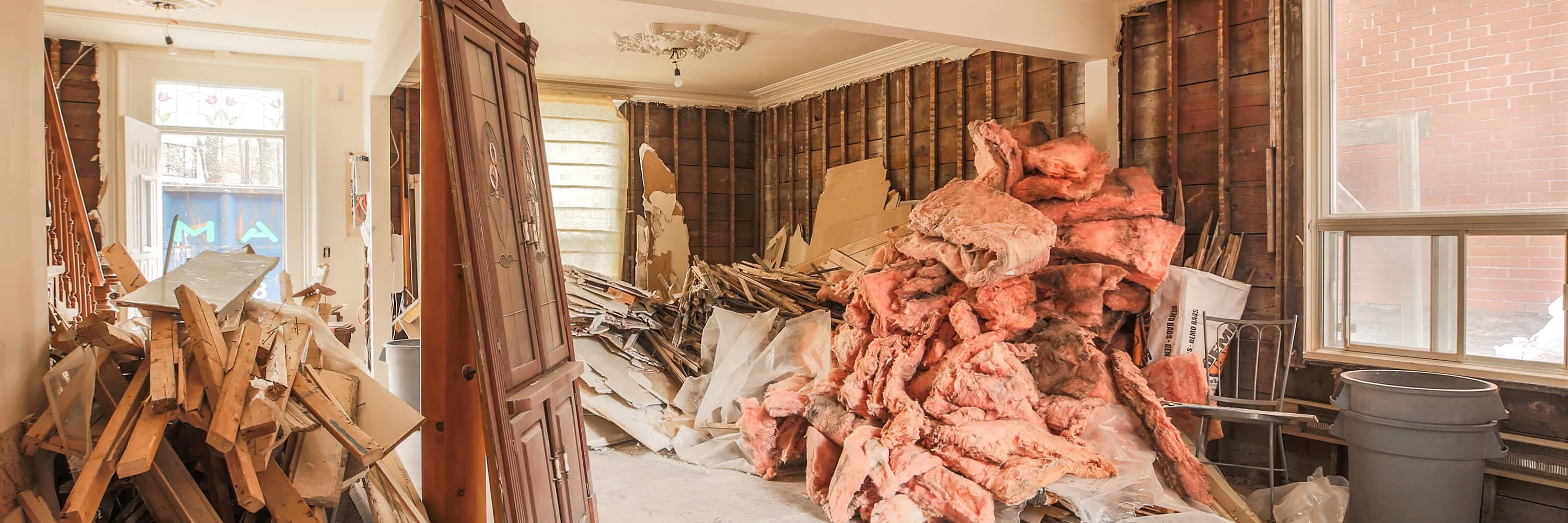
Construction worker wearing a white hard hat and dark jacket inside an unfinished wooden building, looking at a smartphone with a window showing roof shingles behind him.

Your construction business, in your pocket. 
Get the Billdr app today.

Your office goes wherever you build!

FAQs

Still have questions?

Have questions?
Talk to our team we’re here to help you get the most out of Billdr.

Contact us
Is Billdr built for my type of construction business?

Yes. Billdr is built for residential and commercial general contractors, home builders, and specialty contractors across North America. Whether you're a small & medium team (1-30 FTEs) or a growing business (30-100 employees), Billdr scales with the way you build.

Note: Billdr is not adapted for general contractors building high-rises, airports, industrial projects.

Can my entire team use Billdr?

Absolutely. Billdr is designed for owners, project managers, estimators, office staff, field crews, subcontractors, and even your clients through dedicated portals. Everyone stays connected in one system.

Does Billdr integrate with my accounting software?

Yes. Billdr syncs with QuickBooks Online, so invoices, expenses, purchase orders, bills, payments, and customers move across automatically and nothing gets entered twice. Your operations team works in Billdr while your accountant keeps working in QuickBooks

Can I try Billdr before committing?

Yes. You can book a personalized demo with our team or start your subscription and schedule a free onboarding session. We'll help you get set up quickly so you can experience Billdr with your own projects.

Can I import my data from Excel or another software?

Yes. Billdr includes import tools to help you migrate customers, contacts, projects, price lists, templates, and more. Our Customer Success team is available to guide you through the transition and ensure a smooth setup.