

Starting a Commercial Construction Company in Manitoba (2026): A Step-by-Step Licensing Guide
Executive Summary
In 2026, becoming a commercial general contractor (GC) in Manitoba requires navigating a decentralized regulatory landscape that demands strong administrative infrastructure. Unlike provinces with a single centralized "General Contractor" license, Manitoba separates authority between provincial consumer protection and municipal building by-laws. To succeed in the Winnipeg and broader Manitoba market, firms must satisfy the WCB Manitoba mandate, achieve COR™ or SECOR™ safety status, and adhere to the Builders’ Liens Act prompt payment requirements in effect since April 1, 2025 that now govern contracts for ICI (Industrial, Commercial, Institutional) projects.

Phase 1: Legal & Business Infrastructure
Establishing your firm as a legal entity is the prerequisite for all commercial bonding, bidding, and municipal permitting.
1. Business Registration (Manitoba Companies Office)
Your structure dictates your personal liability and tax obligations. Most commercial GCs incorporate to separate business assets from personal ones.
- Name Reservation: Before registering, you must submit a Name Reservation Request. In 2026, the fee is $45 (Regular) or $90 (Expedited).
- Articles of Incorporation: For a new Manitoba business corporation (share capital), the 2026 filing fee is $350.
- Annual Returns: To remain "Active" and in good standing (a requirement for most commercial tenders), you must file an Annual Return every year (approximately $65).
2. Provincial Vendor License (The "Prepaid" Rule)
Under the Consumer Protection Act, Manitoba has strict rules regarding deposits. If you are a GC who accepts any payment before the work is 100% complete, you are technically a "Prepaid Contractor."
- The Mixed-Use Trigger: While pure B2B commercial work is often exempt, GCs working on "mixed-use" projects (commercial main floor with residential above) or small-scale commercial renovations where a deposit is taken must hold this license.
- Penal Bond (Surety Bond): To get the license, you must post a Surety Bond to the Consumer Protection Office. The bond amount is determined by the province based on your projected sales volume. This protects the client if you disappear with their deposit.
- 2026 Licensing Fees: The base fee remains approximately $175, but if you employ "Direct Sellers" (sales reps who sign contracts away from your main office), each person must be licensed individually.
3. Workers Compensation Board (WCB) Manitoba
In 2026, WCB is not optional. Every commercial site in Manitoba requires a WCB Clearance Letter before a GC or subcontractor can set foot on the property.
- Mandatory Coverage: Construction is a "Mandatory Industry." You must register within 30 days of hiring your first employee (including family members or casual labor).
- Subcontractor Liability: As a GC, if your subcontractor is not registered or falls behind on their premiums, you are legally liable for their unpaid WCB costs.
- Clearance Letters: Use the myWCB portal to request clearance for every sub on your site. If they aren't "Clear," you must hold back a portion of their payment to cover potential WCB assessments.
4. 2026 Workplace Safety & Health (WSH) Updates
As of March 2026, new amendments to the Workplace Safety and Health Regulation have added specific infrastructure requirements for Manitoba employers:
- Sanitation (Hot Water): New rules require GCs and Prime Contractors to ensure that hot water for handwashing is provided at construction sites (effective for most sites by 2027, but planning must begin in 2026).
- Menstrual Products: Effective September 1, 2026, employers must ensure all workers have access to menstrual products in the workplace.
The Billdr Advantage: Phase 1 Organization
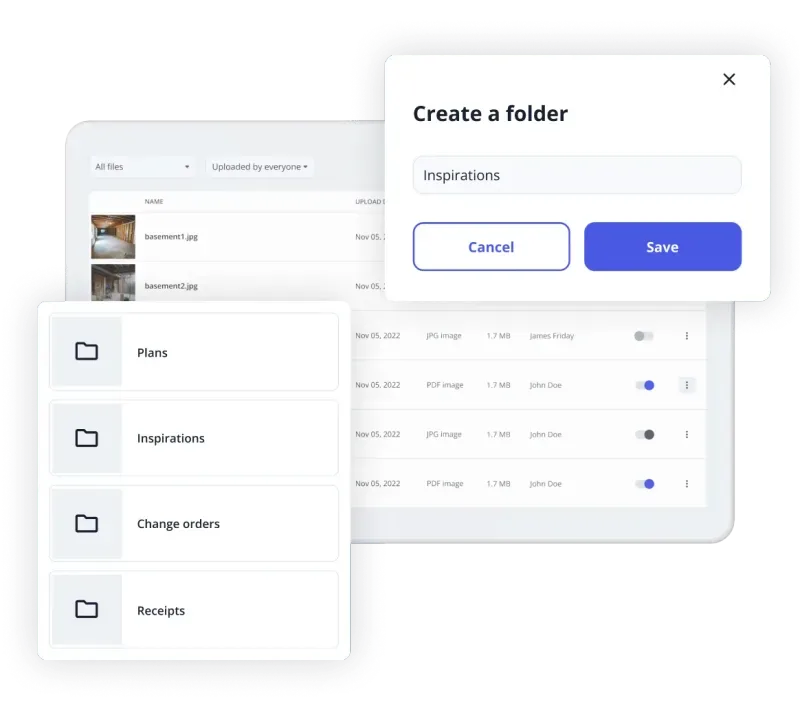
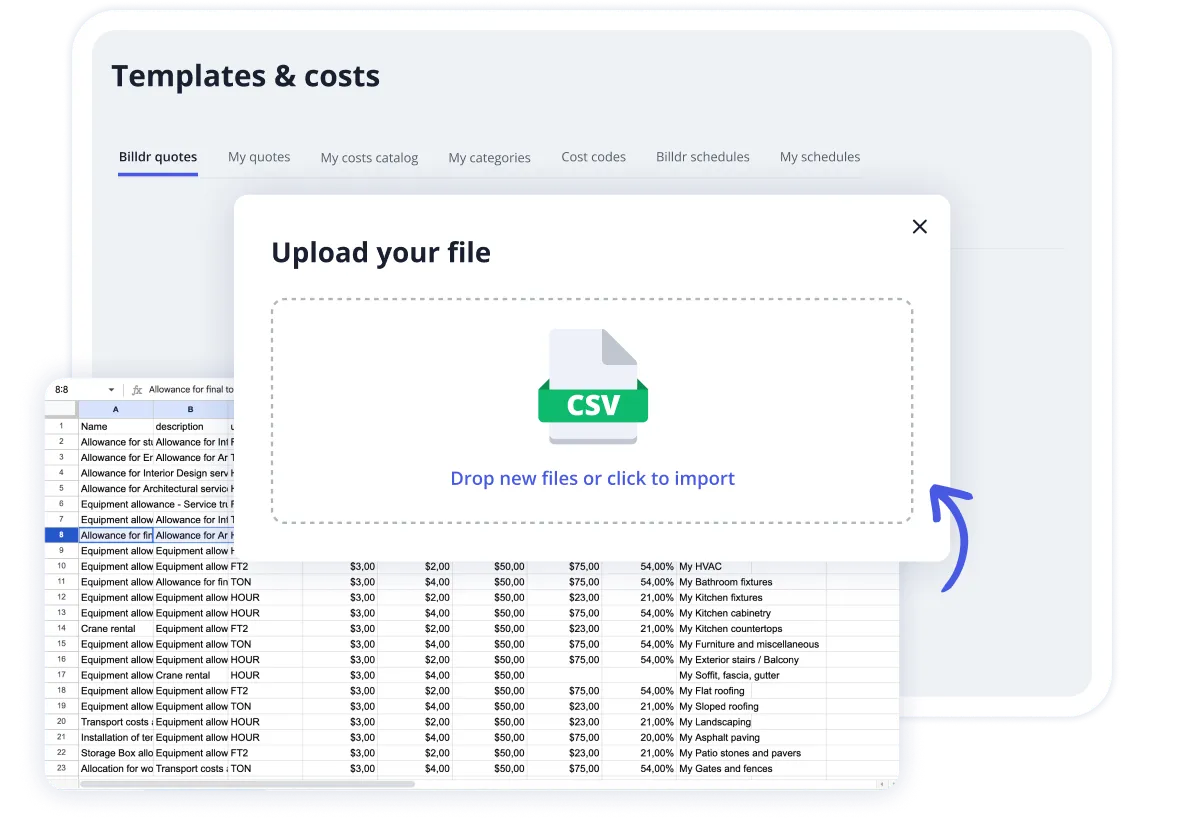
- Centralized Qualification Hub: Don't lose high-value tenders because you couldn't find your paperwork. Store your Articles of Incorporation, $5M Liability Insurance, and Bond capacity letters in a dedicated Cloud File Vault. When a lead asks for your "Qualifications Package," you can share a secure download link in seconds.
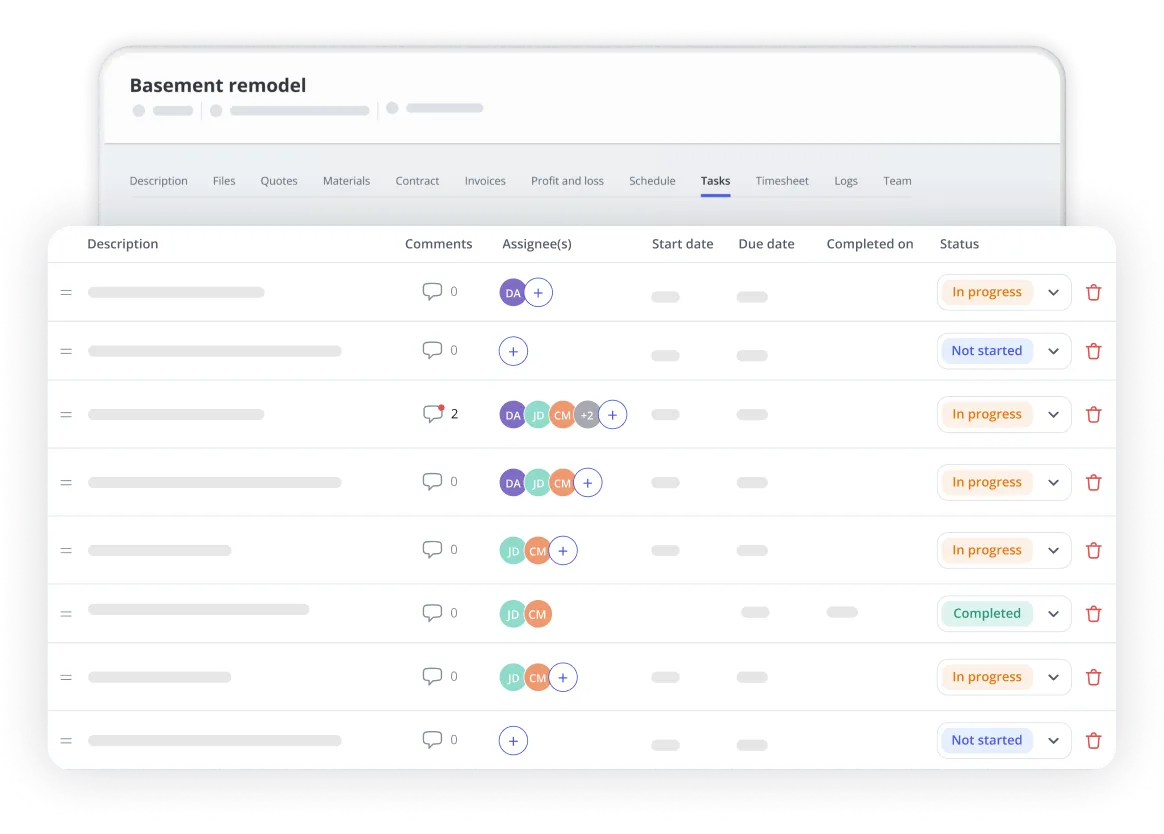
- Proactive Administrative To-Dos: Use the Task Management engine to set recurring reminders for critical "Good Standing" milestones. Whether it’s an annual provincial return or a municipal license renewal, these scheduled alerts ensure you never miss a deadline that could halt your site permits.
Phase 2: Municipal Licensing (Authority to Operate)
Operating as a General Contractor (GC) in Winnipeg requires a multi-layered approach. You must satisfy the administrative requirements of the Community Safety Business Licensing By-law while ensuring your technical leads hold the necessary contractor licenses to pull permits.
1. General Business License (Planning, Property & Development)
This license is mandatory for any GC operating within city limits. It is less about "building skill" and more about zoning and liability compliance.
- Zoning Verification: The City will not issue a license until they confirm your office or shop is located in a zone that allows for "Contractor's Office" or "Storage Yard" use.
- CGL Insurance Proof: You must provide a Certificate of Insurance showing a minimum of $2,000,000 in Commercial General Liability (CGL), though most commercial clients will require you to hold $5,000,000+ for site access.
- 2026 Fees: Expect a base application fee (approx. $300–$600 depending on the tier) and an annual renewal fee. Failure to renew can result in a "Late Permit Fee" penalty if you attempt to pull a permit with an expired license.
2. Technical Contractor Licenses (The Permit Keys)
In Winnipeg, the person who "pulls the permit" must be a Licensed Contractor for that specific trade. As a GC, you either hire these people as subcontractors or employ them in-house.
A. Electrical Contractor License (A, B, or C)
To perform any electrical construction, the firm must have a licensed lead who has passed the Winnipeg Electrical Contractor Exam.
- The Exam: Open-book, 3-hour exam based on the 2024 Canadian Electrical Code and the Winnipeg Electrical By-law.
- Prerequisite: Applicants must hold a valid Manitoba Journeyperson Electrician License (H, HC, or HI).
- 2026 Schedule: Exams are held roughly four times per year (e.g., June, September, November). You must register at least 3 days before the exam date.
B. Plumbing Contractor License
Winning a commercial plumbing contract requires a lead who has passed the City’s specific plumbing exam.
- The Exam: 3-hour open-book exam based on the National Plumbing Code of Canada and Manitoba amendments.
- Passing Grade: 70%.
- Prerequisite: A valid Manitoba Journeyperson Plumber Certificate or an Inter-provincial Red Seal.
C. Mechanical Contractor License (M1, M2, M3, M-Prime)
Mechanical work is highly specialized in Manitoba. Licensing is divided into specific "M" categories:
- M1: HVAC Systems (Heating, Ventilation, Air Conditioning).
- M2: Sprinklers and Fire Protection Systems.
- M3: Specialized Equipment (refrigeration, boilers, etc.).
- M-Prime: A newer designation for GCs who wish to act as the prime contractor on mechanical-heavy projects but will sub-out the actual M1 or M2 work to licensed specialists.
3. The "Qualified Contractor" Registry
For projects exceeding $100,000, the City of Winnipeg requires GCs to be "Pre-Qualified" for Safety.
- COR™/SECOR™ Advantage: If you hold a valid COR™ certificate from CSAM, you are automatically considered a Workplace Safety & Health Program Pre-Qualified Contractor.
- Verification: Bidders on City contracts must submit proof of an acceptable safety program within 5 business days of a request. Without this, you cannot be awarded the contract, regardless of your price.
Phase 3: Safety Certification (COR™ & SECOR™) – The Deep Dive
In Manitoba, "Safety" isn't just a policy in a binder. It is a verifiable management system. For a General Contractor, Phase 3 is about transforming your operational DNA to meet the CFCSA National Standard.
1. COR™ vs. SECOR™: Identifying Your Path
The program you enter is strictly defined by your peak workforce size over the previous 12 months (including all owners, managers, and part-time staff covered under your WCB account).
- COR™ (Certificate of Recognition): Mandatory for firms with 11 or more employees. This requires a comprehensive health and safety management system (HSMS) and a multi-tiered audit process.
- SECOR™ (Small Employer COR™): Tailored for firms with 10 or fewer employees. While the paperwork is streamlined, the core safety requirements remain high.
- Strategy Note: If you expect to hire your 11th employee mid-year, skip SECOR™ and start on the full COR™ track immediately; a SECOR™ certificate is automatically invalidated the moment you hit 11 staff.
2. The Modernized 2026 Audit Hierarchy
To achieve or renew your certification, you must score at least 80% overall, with no less than 50% in any single element of the 15-section audit instrument. In 2026, auditors prioritize real-world evidence over paperwork:
- Documentation Review: A look at the last 12 months of hazard assessments and inspections.
- Worker Interviews: Private, one-on-one sessions where auditors verify if your staff actually knows the safety procedures you've claimed in your manual.
- Site Observations: Physical walk-throughs of your active commercial sites to verify that your "paper program" matches your "field reality."
3. The Financial Windfall: WCB Prevention Rebate
One of the strongest incentives for Manitoba GCs is the WCB Prevention Rebate Program. As of January 1, 2026, the WCB has updated its surplus distribution model, and the rebate remains a massive competitive advantage:
- Large Employers: Receive a rebate of 15% of your annual WCB assessment premium.
- Small Employers: Receive the greater of 15% or $3,000.
- The 2026 Cap: Note that the total rebate is now capped at 50% of your total assessment premium (aligned with maximum surplus distributions).
- Eligibility Tip: You must submit your annual payroll and total hours worked to the WCB by the deadline to remain eligible for the rebate.
4. 2026 Legislative Updates: Your Responsibilities
Under the Manitoba Workplace Safety and Health Act, the GC (Prime Contractor) is legally responsible for every person on-site. New 2026 amendments have added fresh layers to your safety program:
- Hot Water Planning: As of March 20, 2026, amendments require prime contractors to begin planning for hot water handwashing stations at construction sites (with full implementation required by April 1, 2027).
- Menstrual Product Access: Effective September 1, 2026, you must ensure all workers have access to menstrual products at your work sites.
- Asbestos Certification: New registration requirements for asbestos-related work took effect in late 2025; ensure your specialized trade partners are fully certified before they step on-site.
The Billdr Advantage: Safety Excellence
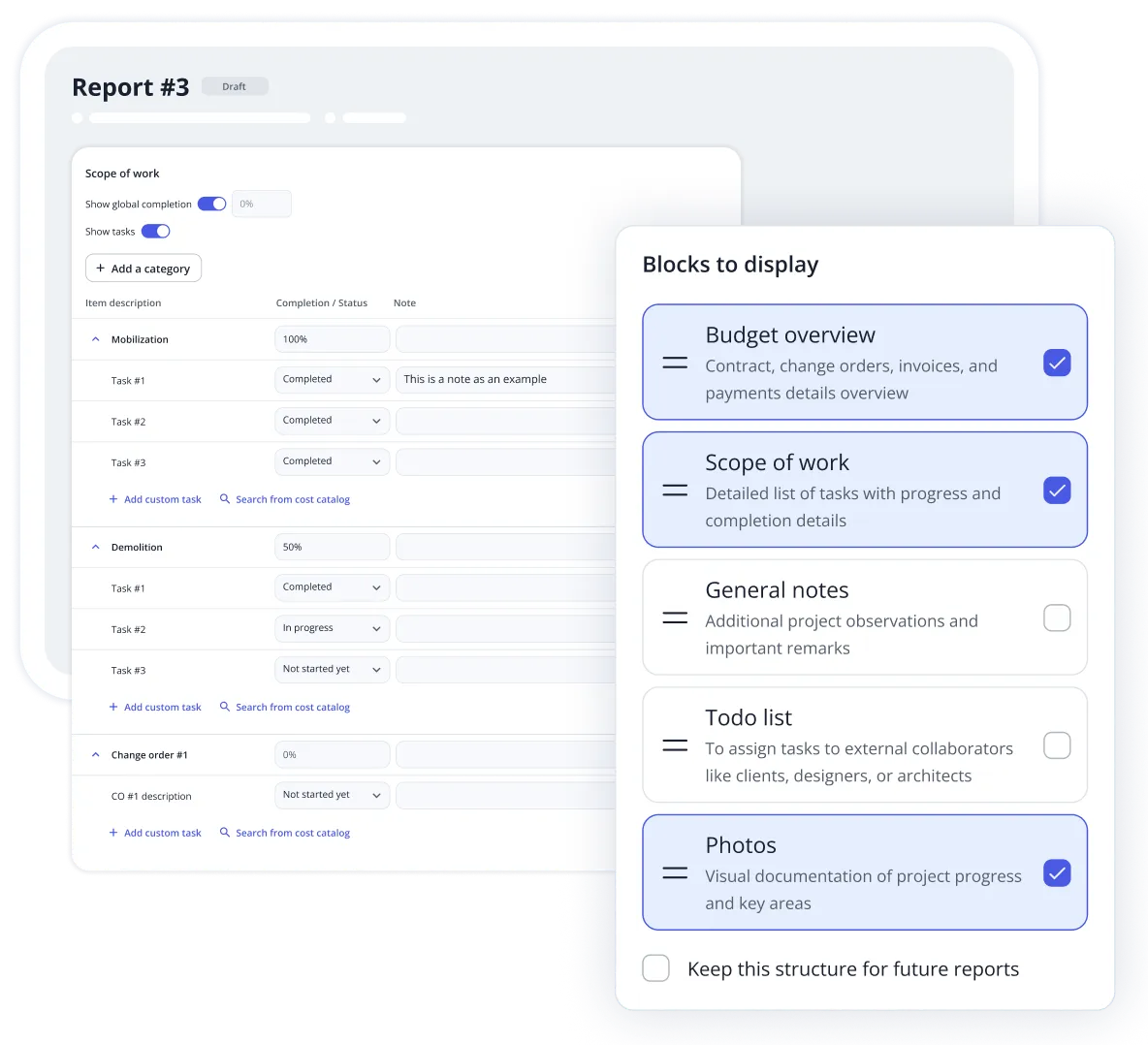
- Verifiable Field Sign-Offs: Ensure your team is actually prepared for auditor interviews. Use Daily Reports to log safety briefings and capture digital signatures from workers on-site. This provides timestamped proof of training, allowing you to show an auditor exactly when each worker was briefed on your Emergency Response Plan.
Phase 4: The 2026 Regulatory Environment
The Manitoba construction market is now defined by a rigid "contractual rhythm" designed to protect cash flow and eliminate bidding ambiguity. As of 2026, the province operates under a strict statutory regime that mandates exactly when money must move and exactly what work each trade must perform.
1. Prompt Payment (The Builders’ Liens Act)
Manitoba’s prompt payment rules, introduced through the Builders' Liens Amendment Act, have been in effect for all contracts signed on or after April 1, 2025. By 2026, these rules are the baseline for every commercial project in the province.
The "Proper Invoice" Trigger
The entire payment clock starts with the delivery of a Proper Invoice. If your invoice is missing even one of the following 2026 legal requirements, the owner can reject it, and your 28-day countdown never starts:
- Identification: Contractor's name, address, and the specific contract/project ID.
- Description: A clear breakdown of services/materials supplied during the period.
- Terms: The amount payable, the payment terms, and the period covered.
- Contact: Direct contact information for the person receiving payment.
- Contractual Extras: Any other specific requirements dictated by your CCDC or bespoke contract.
The Statutory Timeline
- 28 Days: Once a Proper Invoice is received, the owner must pay the Contractor.
- 7 Days: Once you are paid, you have 7 days to pay your subcontractors.
- 14 Days for Dispute: If an owner intends to dispute an invoice, they must deliver a Notice of Non-Payment within 14 days of receiving the Proper Invoice. If they miss this window, they are legally obligated to pay the full amount.
Adjudication: The 30-Day Resolution
In 2026, payment disputes are handled by the Manitoba Adjudication Authority. This is a "pay now, argue later" system:
- Fast-Track: Most determinations are required within 30 days of the adjudicator receiving the evidence.
- Binding: The adjudicator’s decision is binding and can be enforced as an order of the Court.
- Work Suspension: If a determination is made and you aren't paid within 10 days, you have the statutory right to suspend work until paid, including compensation for demobilization and remobilization costs.
2. Manitoba Trade Definitions (MTD) Ver 5.0
Released by the Winnipeg Construction Association (WCA) on January 1, 2026, Version 5.0 is the definitive "Rulebook" for the ICI sector.
Eliminating "Scope Creep"
Version 5.0 is an all-inclusive listing of project tasks, categorizing every possible job site activity by trade. It is the GC's best tool for:
- Bidding Gaps: Ensuring that "miscellaneous metals" or "site cleanup" doesn't accidentally fall into a gap where no sub-trade has priced it.
- Standardized Bidding: When you tell a sub to "bid per MTD 5.0," they know exactly what is in their scope, preventing the $50,000 "I thought the other guy was doing that" dispute.
- 2026 Updates: Version 5.0 includes significant updates to Trade Definition 01 (General Requirements) and expanded sections on Building Automation Systems (BAS) and EV Infrastructure, reflecting the current shift toward green building in Manitoba.
The Billdr Advantage: 2026 Financial Readiness
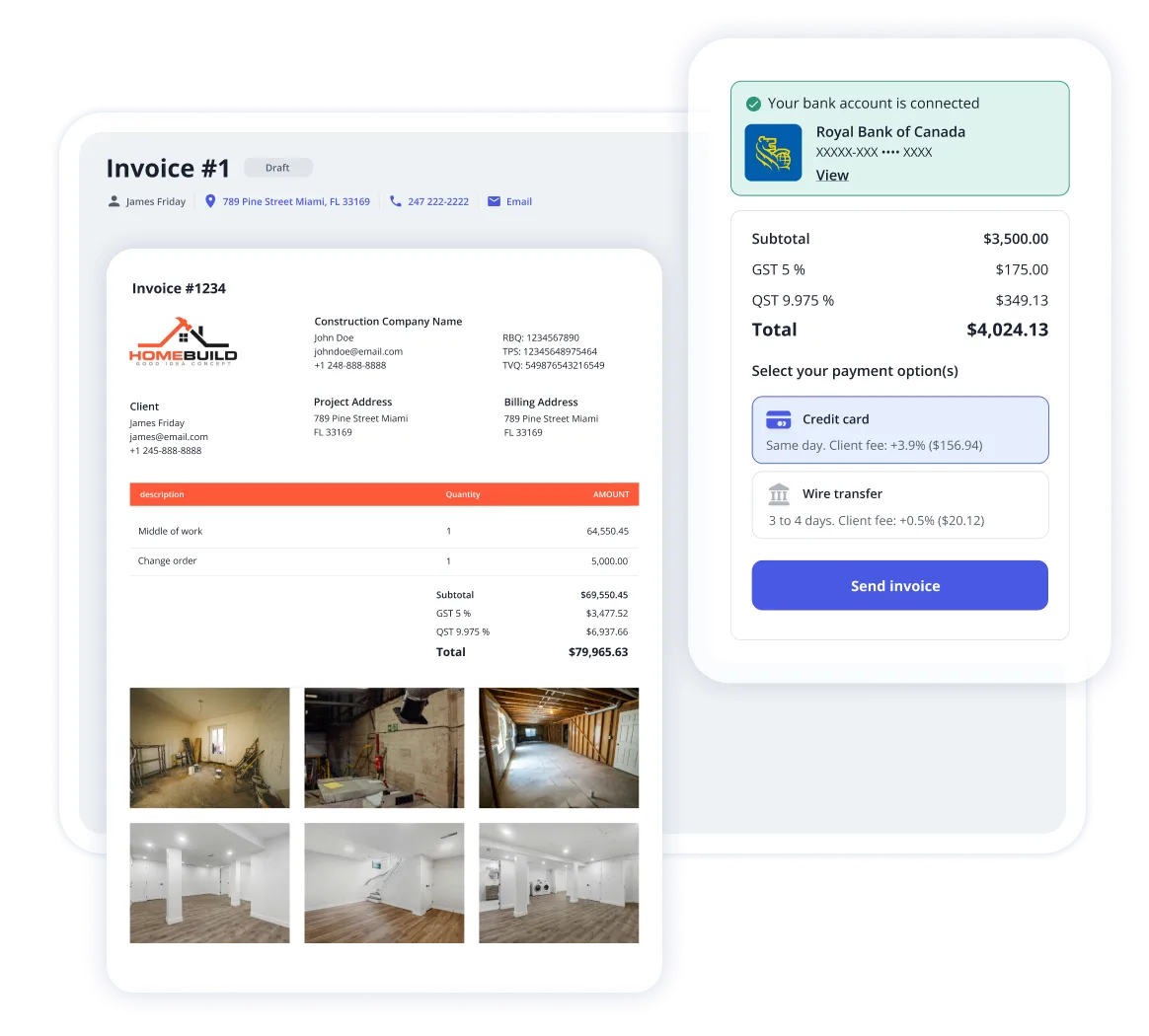
- Audit-Trail Invoicing: Protect your right to get paid under the Builders’ Liens Act. Use Billdr to generate and send digital invoices that meet "Proper Invoice" criteria. Because every invoice is timestamped and tracked, you have a solid record of exactly when the 28-day payment clock started, providing the proof needed if you ever have to file for adjudication.
- Scope-of-Work Accuracy: Protect your margins by aligning your bids with Manitoba Trade Definitions (MTD) Ver 5.0. Use the Customizable Template engine to build detailed scope-of-work checklists. By clearly defining trade responsibilities in the app, you eliminate the "scope creep" and bidding gaps that lead to costly disputes during construction.
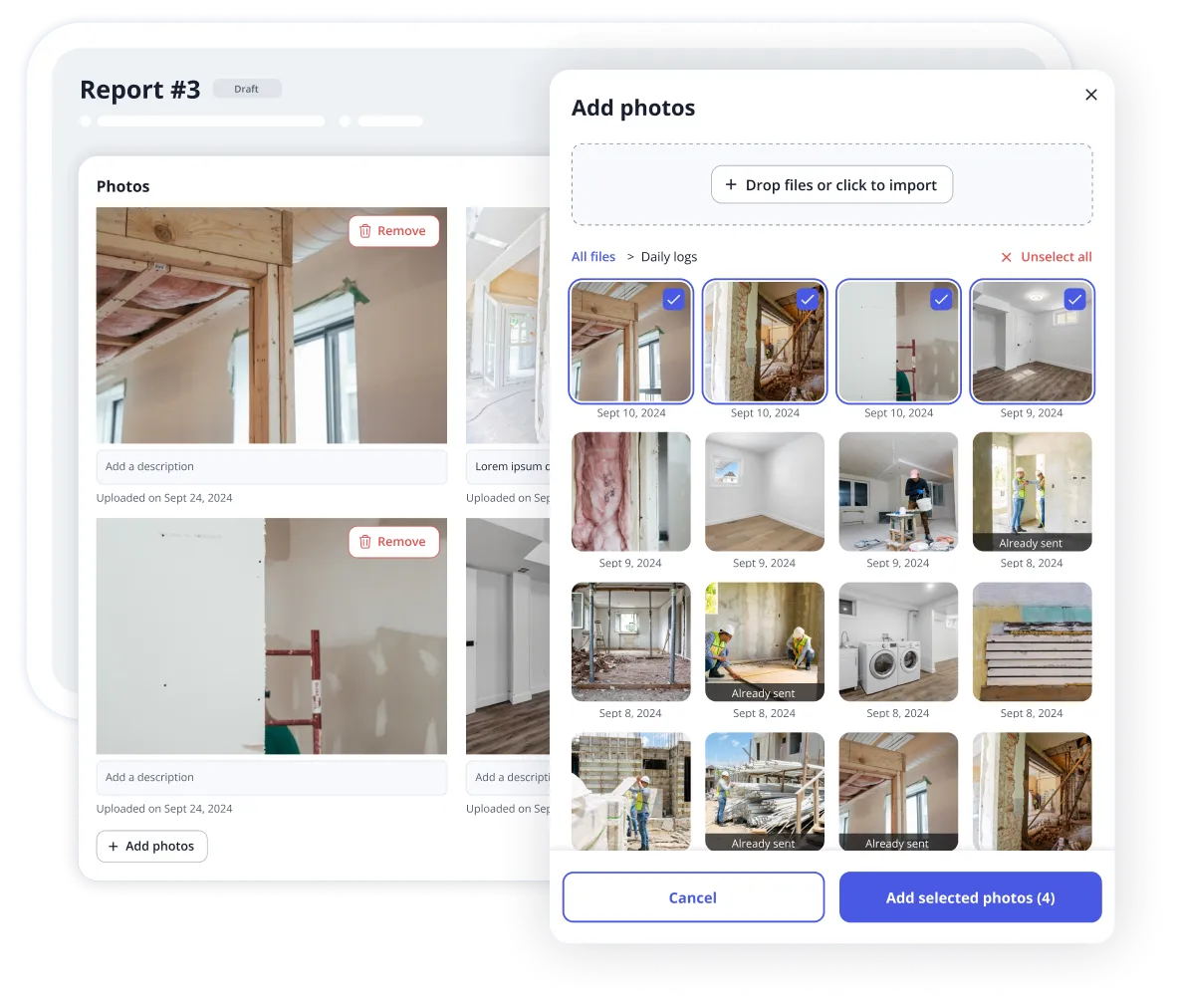
- Evidence-Based Dispute Resolution: If a payment dispute occurs, you need facts, not memories. Billdr centralizes every Daily Log, Change Order, and Site Photo in a single project timeline. In the event of a 30-day adjudication process, you can instantly export a complete history of the project to prove that work was completed to standard and on schedule.
2026 Manitoba Startup Costs (Estimated)
| Category | Requirement | 2026 Est. Cost (CAD) | Timeline |
|---|---|---|---|
| Provincial | Vendor License (Prepaid) | $175 – $770 | 2-4 Weeks |
| Municipal | Winnipeg Business License | $250 – $600 | 4-8 Weeks |
| Safety | COR™/SECOR™ Courses | $300 – $800 | 3-6 Months |
| Risk | CGL Insurance ($5M+) | $3,000 – $7,500+ | 2 Weeks |
| TOTAL | Estimated Initial Outlay | $4,000 – $10,000+ | 6-12 Months Total |
Note: Costs exclude legal/incorporation fees, surety bond premiums, and ongoing WCB assessments. Requirements vary by project owner. Always verify with the City of Winnipeg (311), WCB Manitoba, CSAM, and BizPaL for current 2026 data.
Conclusion: Navigating the Manitoba Advantage
Becoming a commercial general contractor in Manitoba in 2026 rewards the well-organized. With the release of Manitoba Trade Definitions (MTD) Ver 5.0 and the stability of the Builders’ Liens Act prompt payment regime, the industry has shifted toward a model of extreme clarity and financial accountability.
Success in this market belongs to the GCs who prioritize safety culture through COR™/SECOR™ and operational transparency. By combining these regulatory "must-haves" with modern management tools like Billdr, your firm will be well-positioned to lead Manitoba’s next generation of ICI infrastructure.
Official Manitoba Construction Resources
1. WCB Manitoba (Workers Compensation Board)
- Website: wcb.mb.ca
- The "myWCB" App: This is the critical tool for field operations. Use the mobile app to request clearance letters instantly before a subcontractor unloads their equipment.
- WCB Job Connections: A 2026 update to the employer portal, this platform helps you manage "Training-on-the-Job" (TOJ) programs, allowing you to recruit and train new workers with provincial financial support.
- Annual Returns: You must report your actual assessable earnings from 2025 and your 2026 estimates through this portal by the end of February to avoid late-filing penalties.
2. CSAM (Construction Safety Association of Manitoba)
- Website: constructionsafety.ca
- Online Audit Tool: CSAM has moved to a fully digital audit submission process. Use this tool to upload your safety manual and field evidence for your COR™/SECOR™ verification.
- 2026 Training Calendar: Access the latest schedules for mandatory certification courses like Safety Auditor and Principles of Safety Management. In 2026, many of these are offered as "Hybrid" models (online theory + in-person practical).
- The Toolbox Talk Library: CSAM provides a massive library of pre-written safety talks tailored to Manitoba's specific 2026 legislative updates (e.g., new sanitation and heat-stress rules).
3. City of Winnipeg Licensing
- Website: winnipeg.ca/business-licences
- Community Safety Portal: Use this to apply for your Community Safety Business License. You must upload your proof of $2M+ CGL Insurance and zoning verification here.
- Contractor Exam Registration: If you are self-performing, this is where you book your Master Plumber or Electrical Contractor exams. Exams are scheduled quarterly, and seats fill up months in advance.
4. BizPaL Manitoba
- Website: bizpalmanitoba.ca
- Permit Bundling: BizPaL is an "Answer Engine." You select your industry (e.g., "Commercial Construction") and your location, and it generates a Master Checklist of every federal, provincial, and municipal permit you need.
- The 2026 "Project Launch" Tool: This newer feature allows you to save your permit checklists to a dashboard, ensuring you don't miss obscure requirements like "Signage Permits" or "Temporary Road Closure" applications.
5. Manitoba Companies Office
- Website: companiesoffice.gov.mb.ca
- MyNetCorp Portal: This is the gateway for your Articles of Incorporation.
- Certificate of Status: You will frequently need to pull a "Certificate of Status" (approx. $50) from this site to prove to bonding companies and the City of Winnipeg that your corporation is still active and in good standing.
6. Manitoba Adjudication Authority (New for 2026)
- Website: Access via manitoba.ca (Search: Adjudication Authority)
- Prompt Payment Hub: This is the official registry for Certified Adjudicators. If you are facing a payment dispute on an ICI project, this is where you file your "Notice of Adjudication" to trigger the 30-day resolution clock.
Important Disclaimer
Note on Billdr:
Billdr is a project management software designed to streamline compliance and documentation. Billdr is not a licensing body and does not grant COR™/SECOR™ status or municipal business licenses. All certifications and legal authorities must be obtained through the appropriate government and industry bodies. Billdr serves as a tool to help you organize the evidence required for these authorities, but final legal compliance remains the responsibility of the contractor.