
Start a Home Building Business in Colorado | 2026 Licensing & Steps
Colorado is a "home rule" state, which remains one of the most unique environments for contractors in 2026. There is no statewide general contractor license. Instead, licensing is managed locally by individual cities and counties. To build homes, you must navigate a patchwork of municipal regulations, each with its own specific exams, experience requirements, and bond amounts.

Phase 1: Legal and Business Foundation
Establishing your business at the state level is the critical first step. In Colorado, this isn't just a formality. It creates the legal identity that city building departments will verify before issuing a license.
1. Secretary of State (SOS) Registration
Your company must be registered to do business in Colorado. For most home builders, this means forming a Limited Liability Company (LLC) or a Corporation.
- Formation Filing: You must file Articles of Organization (for LLCs) or Articles of Incorporation (for Corporations) via the Colorado SOS online portal.
- Registered Agent: You must designate a Registered Agent with a physical Colorado address to receive legal documents.
- Fees (2026): Formation fees are typically $50, but verify current rates as they are subject to annual adjustment.
2. Certificate of Good Standing
Once registered, you must maintain your "Good Standing." This certificate proves you have filed your mandatory Periodic Reports and paid all state fees.
- The Periodic Report: You must file this annually. The filing window opens two months before your anniversary month and closes two months after.
- The Certificate: Most building departments (like Denver or Pikes Peak) require a copy of this certificate dated within the last 30–60 days.
- Pro Tip: In 2026, you can download a Certified PDF of your Good Standing for FREE directly from your SOS business dashboard.
3. Tax Registration & EIN
A builder cannot operate without proper tax identification.
- Federal EIN: Obtain your Employer Identification Number for free from the IRS website. This acts as your "business social security number."
- Colorado Sales Tax License: Even though "services" aren't taxed in Colorado, home builders often need a Standard Retail Sales Tax License if they sell materials or operate in certain jurisdictions.
- Fee (2026): The license fee is $16 (pro-rated based on a two-year cycle) plus a $50 refundable deposit.
- SUTS Portal: Use the Sales & Use Tax System (SUTS) to manage tax filings for Colorado’s many "Home Rule" cities in one place.
4. State-Level Trades (DORA)
It is a common mistake to assume all licensing is local. While you get your General Contractor (GC) license from the city, Colorado regulates high-risk trades at the state level via the Department of Regulatory Agencies (DORA).
- Electrical & Plumbing: You cannot self-perform electrical or plumbing work unless you (or a full-time employee) hold a state-issued Master license in that trade.
- Verification: Before hiring a sub-contractor, use the DORA License Lookup to ensure their state license is active.
- Electrical Board Rulemaking (2026): Stay updated on new SB 25-165 regulations concerning EV power transfer infrastructure, which now impacts how residential builders plan new multi-family units.
Billdr Advantage: Foundation Management
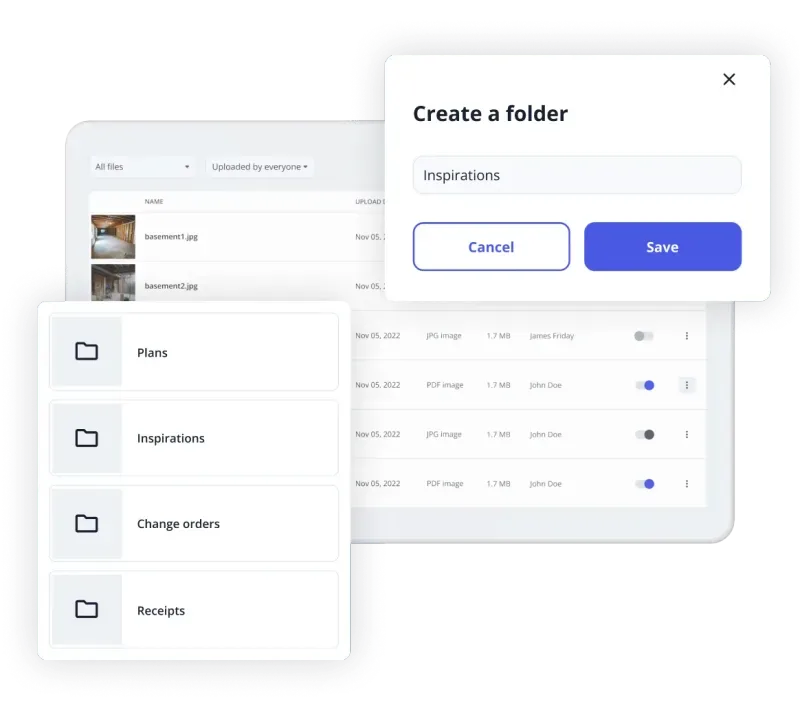
- Entity Archive: Store your Articles of Organization and EIN Confirmation Letter in the Billdr Document Hub. This allows for instant "one-click" uploads when applying for licenses in multiple cities.
Phase 2: Meeting Local Licensing Requirements
Because Colorado is a "home rule" state, your primary license is issued at the municipal level. Most cities use the International Code Council (ICC) national standards to categorize these licenses. Understanding these classifications is essential to ensuring you apply for the correct "scope of work."
| Classification | Type | Scope of Work (General Overview) |
|---|---|---|
| Class A | General Contractor | Unlimited: Any residential or commercial structure of any size or height. |
| Class B | Building Contractor | Limited Commercial: Most residential and commercial buildings up to 3 stories or 75ft. |
| Class C | Residential Contractor | Home Building: Single-family homes, duplexes, and multi-family units up to 3 stories. |
The "Big Three" 2026 Local Standards
Navigating the three largest building departments in Colorado requires meeting specific, and very different administrative hurdles.
1. Denver: The Two-Step Supervisor Process
Denver does not license the company until a specific individual is certified as a "Supervisor."
- Step 1: Supervisor Certificate: You must prove 2 years of hands-on field experience (for Class C) via notarized letters of experience from past employers or customers. These letters must include specific project dates, addresses, and the specific trades supervised.
- Step 2: Company License: Once your "Supervisor of Record" is approved and passes the ICC F13 exam, the company can apply for the contractor license.
- Renewal: Both the supervisor certificate and company license must be renewed every 3 years.
2. Pikes Peak Regional (Colorado Springs & El Paso County)
Pikes Peak (PPRBD) is known for its rigorous committee review process.
- The Exam: Requires a passing score on the ICC F13 exam (or G13, depending on the specific code cycle adopted).
- Judicial Review: PPRBD performs a name-based judicial record check on all applicants. Significant criminal history related to financial fraud or construction can lead to a denial.
- Committee Approval: Applications are reviewed by a Licensing Committee (comprised of local architects, engineers, and builders) that meets on the 2nd Thursday of every month. You must submit all documents at least three weeks before the meeting.
3. Aurora: Compliance & High-Limit Insurance
Aurora focuses heavily on financial and insurance verification.
- Insurance Requirements: You must provide a Certificate of Insurance (COI) listing the City of Aurora as an additional insured. Minimum limits are $1,000,000 per occurrence and $2,000,000 aggregate.
- Job References: Unlike Denver’s notarized letters, Aurora typically requires three professional references who can verify your competency in residential construction.
- Surety Bonds: While not always required for standard residential builds, "Right-of-Way" work (sidewalks or curb cuts) requires a $20,000 license and permit bond.
Billdr Advantage: Mastering Local Compliance
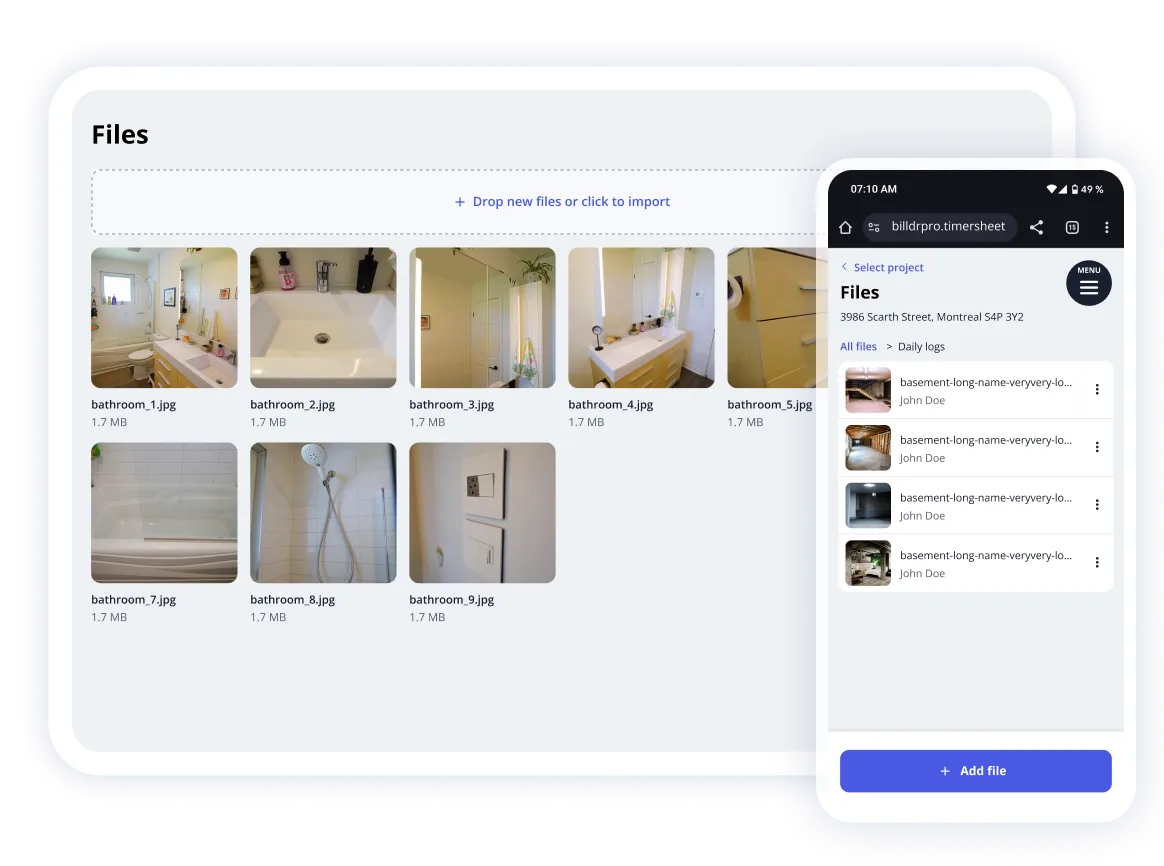
- Notarized Letter Archive: Since Denver and Pikes Peak require proof of past work, use the Document Hub to store your "Letters of Experience." You only need to get them notarized once; Billdr keeps them organized for every new city you expand into.
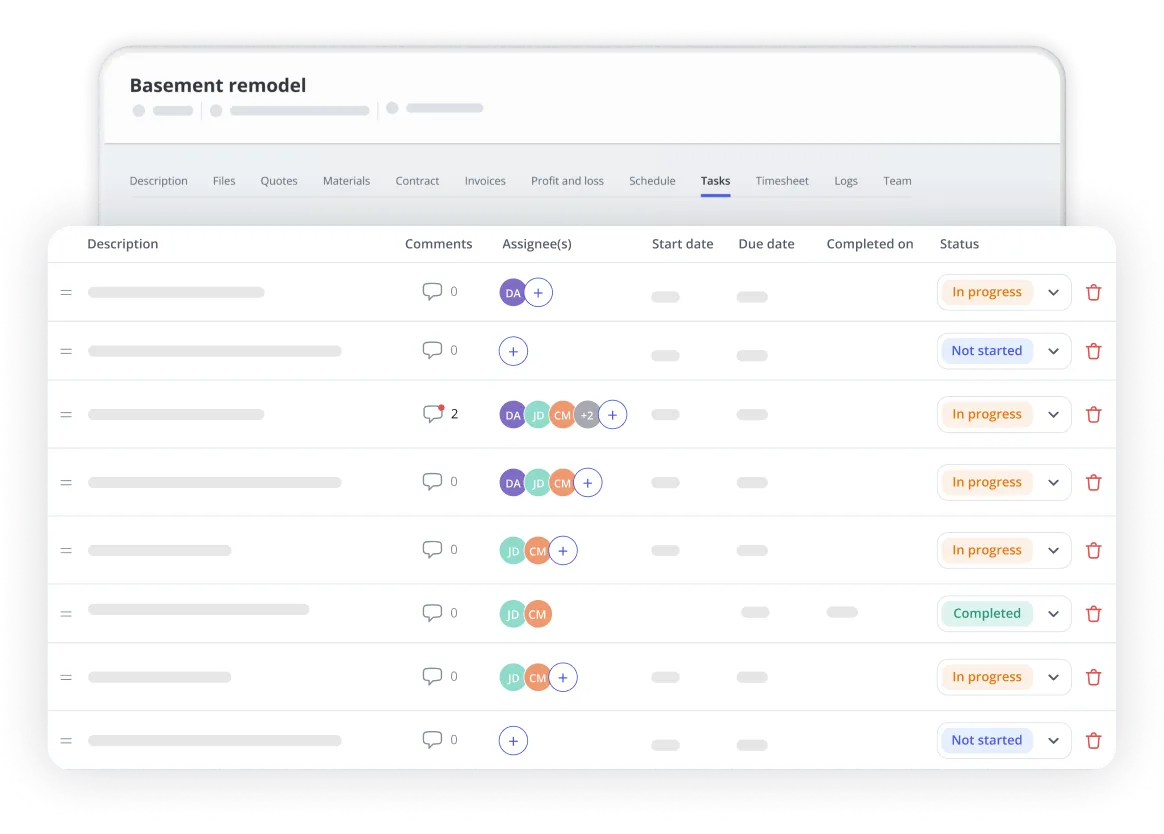
- The Supervisor Continuity System: Avoid the 30-day "grace period" panic that occurs when a Supervisor of Record leaves your firm. Using Billdr's Project Scheduling and Task Management, you can maintain a live dashboard of all key licensing milestones. The platform alerts you 90 days before any certification expires, giving you total control over the replacement or renewal process so your building permits, and your revenue remain active.
Phase 3: Exams, Insurance, and Bonding
In 2026, financial accountability and verified knowledge are the two pillars of Colorado's local licensing. While the state doesn't have a single license, most municipalities have coalesced around a standardized set of requirements to protect homeowners and ensure structural integrity.
1. The ICC F13 Exam
Most Colorado cities require a passing score on the ICC F13 (National Standard Residential Building Contractor) exam. This test is designed to verify that you understand the International Residential Code (IRC).
- Format: Open-book, multiple-choice, computer-based exam.
- Content: 80 questions covering permits, building planning, structural systems (footings, foundations, framing), and the building envelope.
- Duration & Passing Score: You have 4 hours to complete the exam and must achieve a score of 70% or higher.
- Cost (2026): The registration fee is approximately $115, though total costs can rise to $500+ if you include required code books and optional exam prep courses.
- Strategy: Since it’s open-book, success is less about memorization and more about your ability to navigate the code book quickly using indices and tabs.
2. General Liability Insurance
While Colorado state law doesn't mandate liability insurance, local building departments and clients do. You cannot pull a permit in a major city without a Certificate of Insurance (COI).
- Standard Limits: Expect to carry $1,000,000 per occurrence and $2,000,000 general aggregate.
- Additional Insured: Most cities (like Denver or Aurora) require that the municipality be named as an "Additional Insured" on your policy.
- Cost Factor: Premiums vary based on your experience and projected annual revenue, typically starting around $1,500 - $3,000 for new builders.
3. Workers’ Compensation
This is a state-mandated requirement for any business with even one employee (full-time or part-time).
- The Rule: You must carry workers' comp insurance or face fines of up to $500 per day.
- Owner Opt-Out: If you are a corporate officer or LLC member with at least 10% ownership and no other employees, you can reject coverage.
- Form WC 43/45: You must file the official Rejection of Coverage form with the Colorado Division of Workers’ Compensation and provide a copy to your local building department.
4. Surety Bonds
Bonds provide a financial guarantee to the city that you will follow all local codes and ordinances. If you disappear or fail to fix a code violation, the city can claim the bond.
- Denver: Requires a $50,000 bond for general contractors. This is subject to underwriting, meaning your credit score will impact the price.
- Arvada & Centennial: Typically require a $20,000 bond.
- Pikes Peak / Colorado Springs: Bond amounts vary by project type but often start at $5,000 for specialty work.
- Premium Cost: Usually 1% to 3% of the bond amount annually (e.g., $500/year for a $50k bond) for those with good credit.
Summary: Colorado Home Builder Startup Checklist (2026)
| Category | Requirement | Estimated 2026 Cost | Frequency |
|---|---|---|---|
| State Level | Secretary of State Registration & Good Standing | $50 + $10/year | Annual |
| State Level | Sales Tax License (via SUTS) | $16 + $50 deposit | Every 2 Years |
| Education | ICC F13 Residential Contractor Exam | $115 - $200 | Once (Standard) |
| License (Denver) | Supervisor Certificate & Company License | $310 total | Every 3 Years |
| License (Other) | Aurora, Colo. Springs, etc. | $150 - $250 | Annual/3-Year |
| Insurance | General Liability ($1M/$2M Limits) | $1,500 - $3,500 | Annual |
| Bonding | License/Permit Bond (e.g., $50k in Denver) | $500 - $1,500 | Annual |
| TOTAL EST. | Initial Licensing & Business Startup | $2,341 - $5,626 |
Conclusion: Navigating the Colorado Patchwork
Becoming a home builder in Colorado is a journey of local mastery. Because there is no single state license, your success depends on your ability to manage multiple sets of rules, deadlines, and relationships across different municipalities. While the "home rule" system adds administrative weight, it also rewards builders who are organized, digitally native, and proactive about compliance.
By establishing a strong state-level foundation, mastering the ICC F13 exam, and maintaining rigorous financial and insurance standards, you position your business as a trusted leader in the Colorado market. You don't have to manage this complexity alone leveraging a platform like Billdr ensures that while you focus on the job site, your "back office" remains compliant, documented, and ready for growth.
Sources and Resources
1. State-Level Registration
- Colorado Secretary of State (SOS) - Business Center
- Purpose: The primary hub for forming your LLC or Corporation.
- Key Tasks: Use the Business Search tool to check name availability and the Filing portal to submit your Articles of Organization.
- Certificate of Good Standing: Once registered, you can download your official certificate (usually required for local license applications) directly from this site.
2. Examination & Technical Certification
- ICC (International Code Council) - Exam Catalog
- Purpose: The governing body for the national contractor exams used by Colorado cities.
- Key Task: Search for Exam F13 (National Standard Residential Building Contractor). You can filter by state (Colorado) to ensure you are selecting the version adopted by your target municipality.
- Registration: This is where you pay your exam fee and choose between a Pearson VUE testing center or Proctored Online Testing (PRONTO).
3. Major Municipal Portals
- City of Denver CPD - Contractor Licensing
- Purpose: The main page for builders operating in the City and County of Denver.
- Supervisor Certificates: Use the Supervisor Certificates link to find experience requirements and application forms for the individual "Supervisor of Record."
- Online Portal: Most Denver applications are now processed through their e-permits system for faster review.
- Pikes Peak Regional (PPRBD) - Licensing Portal
- Purpose: Manages licensing for Colorado Springs, El Paso County, and surrounding member jurisdictions.
- Key Task: Access the online license application to begin your name-based judicial record check and upload your ICC exam results.
- Committee Meetings: Check the Licensing Committee schedule to see when your application will be reviewed for final approval.
Disclaimer
This guide is provided for informational purposes only and does not constitute legal or professional advice. Colorado licensing laws are highly decentralized and subject to frequent change at the municipal level. Billdr is a project management tool designed to facilitate administrative workflows; it does not guarantee the approval of any contractor license or permit. Always verify specific requirements directly with the local building department in the jurisdiction where you intend to work.