

As of February 2026, the Georgia State Licensing Board for Residential and General Contractors has fully transitioned all operations to the GOALS (Georgia Online Licensing Services) portal. Following the 2025 passage of HB 635, enforcement against unlicensed practice has reached an all-time high, with mandatory financial affirmations now required for every biennial renewal.

Phase 1: Entity Formation & The GOALS Registration
In 2026, Phase 1 for Georgia homebuilders is no longer just about filling out a form; it's about navigating a sophisticated digital ecosystem. The state has moved aggressively to centralize its oversight, making the "Business Entity" and "Individual License" connection more transparent than ever through the Georgia Online Application Licensing Services (GOALS) portal and the enforcement of HB 635.
Before you touch a hammer or an exam book, you must establish your business as a legal entity. Georgia does not "license" you as a person in a vacuum; they register you as an agent for a specific business entity.
1. Secretary of State (SOS) Registration
- The Filing: You must file Articles of Organization (for LLCs) or Articles of Incorporation (for Corps) with the Georgia SOS Corporations Division.
- The Cost: The standard online filing fee is $100, plus a $10 service fee (Total $110).
- The "Qualifying Agent" Choice: This is a critical legal fork in the road. You must decide if you are applying as an Individual or a Qualifying Agent (QA).
- Individual: You perform work in your own name (e.g., John Doe Construction). You are personally liable for all project debts and lawsuits.
- Qualifying Agent (QA): You perform work on behalf of your legal entity (e.g., Doe Homes LLC). The company holds the license, and you "qualify" it.
- Pro Tip: Most homebuilders apply as a QA. This allows the business entity to hold the liability, shielding your personal home, cars, and savings from construction-related lawsuits.
2. The Federal Employer Identification Number (EIN)
You cannot apply for a Georgia QA license with just a Social Security Number. You must obtain an EIN (also known as a Federal Tax ID) from the IRS.
- Why it matters: This is the "Social Security Number" for your business. It is free to obtain via the IRS website and is a required field for your GOALS portal business profile.
3. GOALS Portal Onboarding & HB 635 Compliance
As of 2026, HB 635 mandates that all licensing actions from your initial application to your biennial renewal occur through the Georgia Online Licensing Services (GOALS) portal.
- The Registration Trap: Georgia uses a "Personal-First" verification system. You must create a Personal User Profile (verified with your SSN and a secure PIN) before you can link or create a Business Account.
- The "Inconsistent Identity" Flag: If the name on your SOS filing is "Doe Homes LLC" but your EIN is registered to "John Doe," the GOALS system will trigger a red flag. HB 635 grants the Board power to deny applications that show "Inconsistent Identity," which can delay your approval by 4–8 weeks.
4. Annual Maintenance: The Good Standing Rule
- The Deadline: Georgia requires an Annual Registration filing between January 1 and April 1 every year.
- The Cost: $50 (plus a $10 online fee).
- The Risk: If you miss this deadline, your SOS status changes to "Admin. Dissolved." Under 2026 rules, the GOALS portal will automatically suspend your contractor license until the SOS status is reinstated to "Active/Compliance."
Phase 2: Financial Thresholds & Experience Affidavits
This phase is the "bottleneck" of the Georgia application. Approximately 60% of applications are rejected or delayed here due to missing notary seals, insufficient project details, or financial documents that don't meet Board standards. Under HB 635 (2025) and the 2026 GOALS portal protocols, your documentation must be "audit-ready" before you hit submit.
1. The Financial Responsibility Mandate
Georgia requires every builder to prove they have the "financial muscle" to complete projects without leaving homeowners stranded. You must meet a minimum Net Worth (Total Assets minus Total Liabilities) based on your license tier.
The Three Paths to Proving Wealth:
If your bank account doesn't show the required net worth, 2026 rules offer two alternative "safety valves":
- Path A: Net Worth Affirmation: A self-signed statement of your assets (equity, cash, equipment).
- Path B: The $25,000 Surety Bond: For Residential and Limited tiers, you can purchase a Contractor License Bond for roughly $180–$250/year. This is the most popular route for new builders.
- Path C: Line of Credit: A formal letter from a bank (not a credit card statement) confirming you have a $25,000+ line of credit available.
⚠️ The GC Unlimited Audit Trap: For the Unlimited Tier, a self-affirmation is not enough. You must provide a CPA-reviewed or audited financial statement prepared under GAAP standards. If your CPA hasn't included "Notes to the Financial Statements," the GOALS portal will trigger an automatic rejection.
2. The Experience Affidavits (The "Evidence" Phase)
The Board doesn't just want to know you can build; they want proof you have built. You must submit Project Reference Affidavits that document your hands-on oversight.
- Residential Basic: Requires 2 years of experience. You must provide notarized affidavits for 2 completed residential projects where you had significant responsibility, completed within the 2 years prior to application.
- Residential-Light Commercial: Requires 4 years of experience. You must prove involvement in at least 2 "Light Commercial" projects (e.g., multi-family units or small office buildings).
- General Contractor: Requires 4 years of experience (or a 4-year degree in a related field + 1 year of experience). You must document at least 1 commercial project where you had primary management responsibility.
The "Notary" Rule for 2026:
Every affidavit must be signed by a Licensed Contractor or a Registered Architect/Engineer who oversaw your work.
- Digital vs. Wet Seal: While the GOALS portal accepts digital uploads, the Board often flags "e-notaries" that lack a verifiable tracking ID. To be safe, use a traditional "Wet Seal" Notary and scan the original document in high-resolution (300 DPI) to ensure the seal is visible to the reviewer.
Phase 3: Financial Responsibility & Insurance
Before you can receive an "Invitation to Test," the Board must verify that you are a "financially responsible" entity. In Georgia, this means proving you have the capital to finish projects and the insurance to protect the public.
1. Proving Financial Responsibility (Net Worth vs. Bond)
Georgia requires every contractor to demonstrate financial stability. The standard for this is Net Worth (Total Assets minus Total Liabilities).
- The Net Worth Thresholds:
- Residential Basic: $25,000
- Residential-Light Commercial: $25,000
- GC Limited Tier: $25,000 (Projects capped at $1,000,000)
- GC Unlimited Tier: $150,000
- The Surety Bond Workaround: If you are a new builder or do not personally have $25,000 in net worth, the Board allows Residential applicants to provide a $25,000 Surety Bond (Contractor License Bond) instead. This bond acts as a financial guarantee that you will follow state codes.
- The CPA Requirement: For General Contractor (Unlimited) applications, you cannot simply self-affirm your net worth. You must submit a financial statement reviewed or audited by a Certified Public Accountant (CPA).
2. Mandatory Insurance Limits
You must maintain active General Liability insurance. Your Certificate of Insurance (COI) must name the "State Licensing Board for Residential and General Contractors" as the certificate holder.
Statutory Employer Alert: Even if you have zero employees, Georgia law may consider you the "Statutory Employer" of your subcontractors. If a sub is uninsured and their worker is injured, the liability climbs directly to you.
3. The Two-Part PSI Examination
Once your financial and experience documents are approved, you will receive your "Invitation to Test" via the GOALS portal. You have one year from this date to pass both parts.
- Part 1: Business & Law (Open Book):
- Format: 50 questions | 120 minutes | 70% to pass.
- Topics: Estimating, Bidding, Georgia Lien Laws, OSHA, and Tax Compliance.
- Part 2: The Trade Exam (Open Book):
- Residential Basic: Focused on the 2024 IRC and GA Amendments.
- General Contractor (NASCLA): 115 questions | 330 minutes. This is a "National" exam. Passing it in Georgia allows you to bypass trade exams in 15+ other states.
4. Reciprocity Secrets
Georgia has specific reciprocity agreements that allow you to skip the trade exam if you are already licensed in Louisiana, Mississippi, or South Carolina.
- The "3-Year Rule": Your out-of-state license must have been active and in good standing for at least 3 consecutive years.
- The Application: You must still submit the full Georgia application, pay the $200 fee, and pass the Georgia Business & Law exam. Reciprocity only waives the Trade portion.
Billdr Advantage: Financial Transparency
The "Net Worth Affirmation" is only as good as your record-keeping. Billdr ensures you are never guessing when it’s time for your biennial renewal.
- Net Worth Tracking: Use the Financial Hub to track your business assets (equipment, cash-on-hand) versus liabilities. Billdr can generate a "Statement of Financial Position" that gives your CPA the raw data they need to sign off on your $150,000 affirmation for the Unlimited tier.
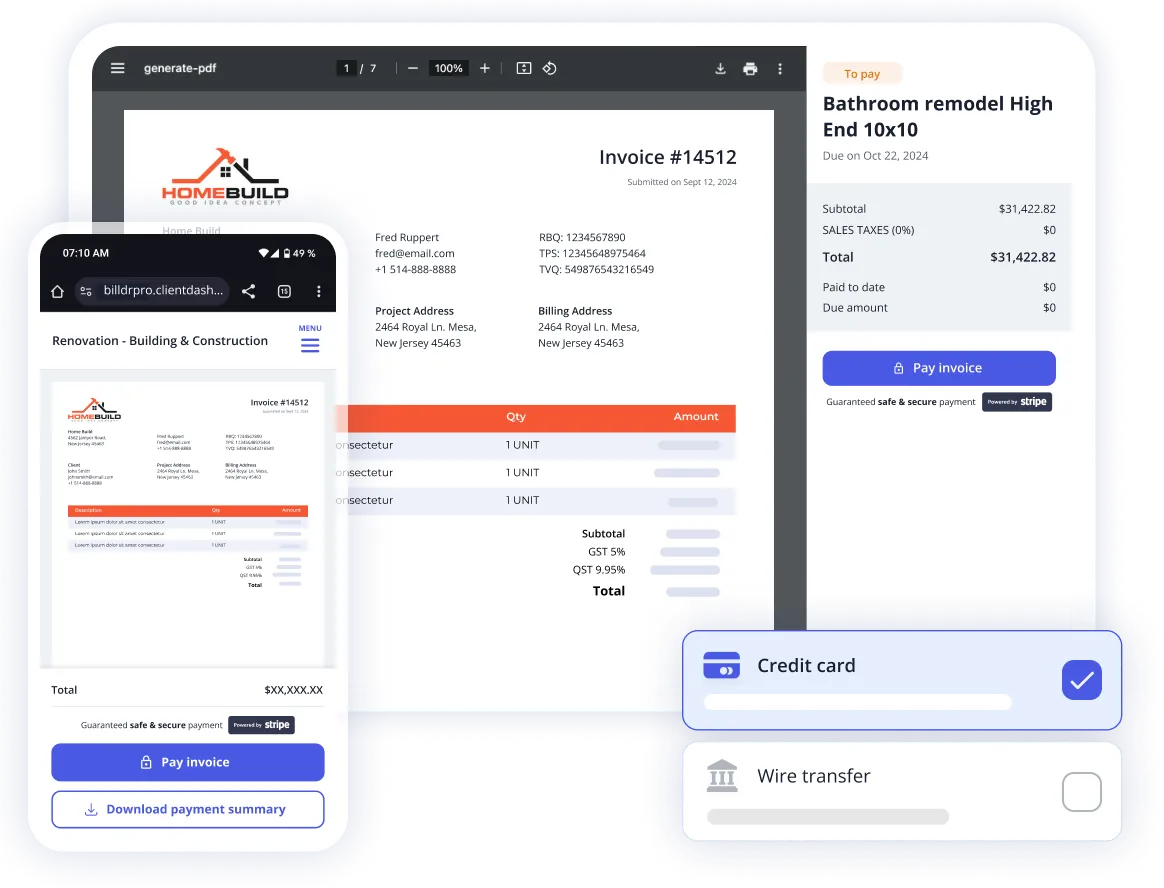
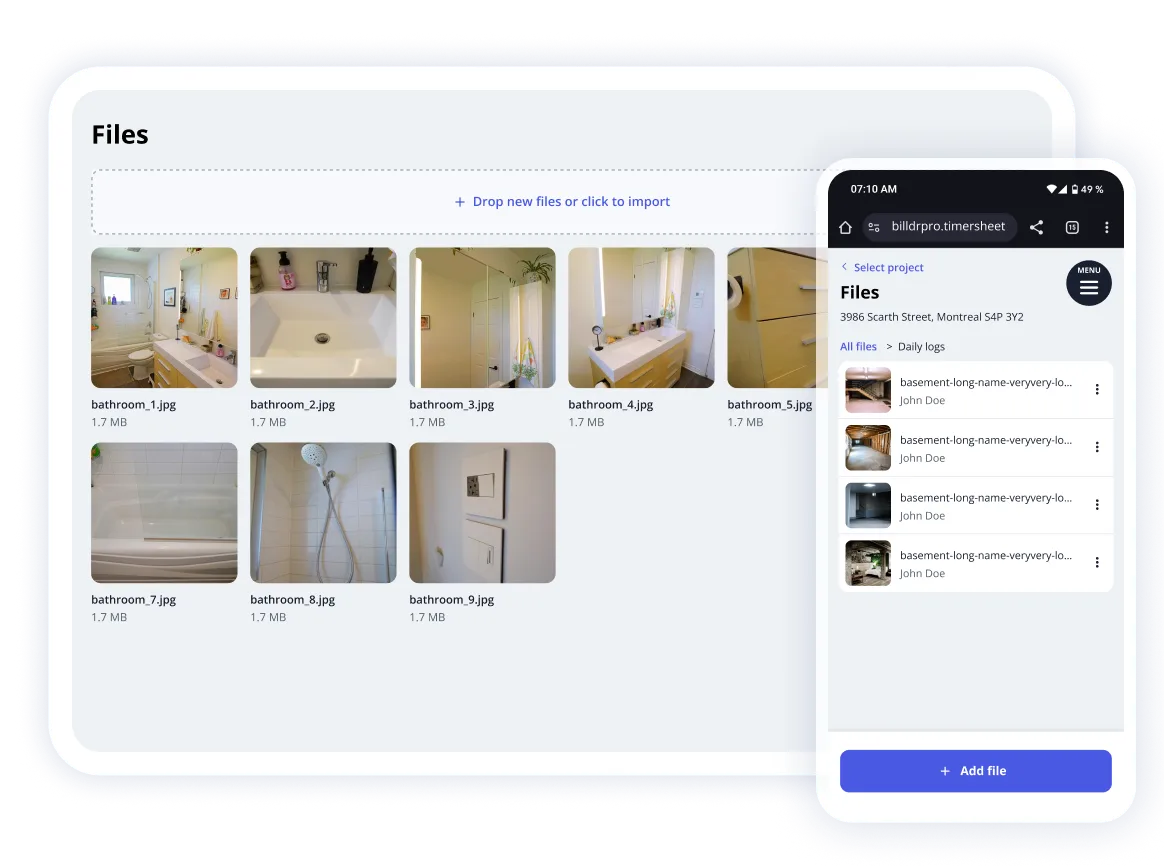
- Project-Based COI Storage: Instead of searching through emails, use the Files Management feature to store your subcontractors' COIs directly in the project folder. You can create a "Compliance" subfolder so that your site lead can pull up proof of coverage on their phone in seconds if an inspector arrives.
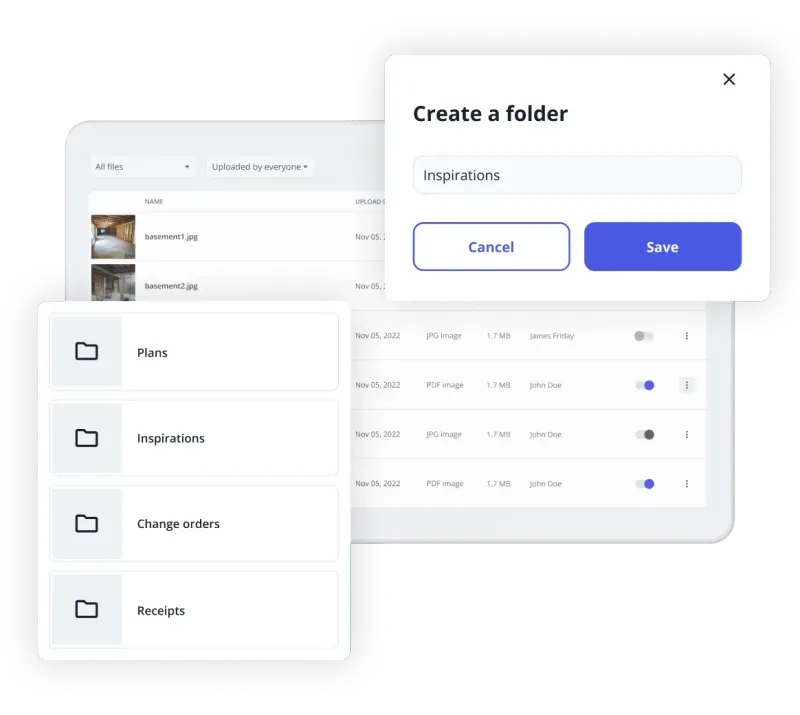
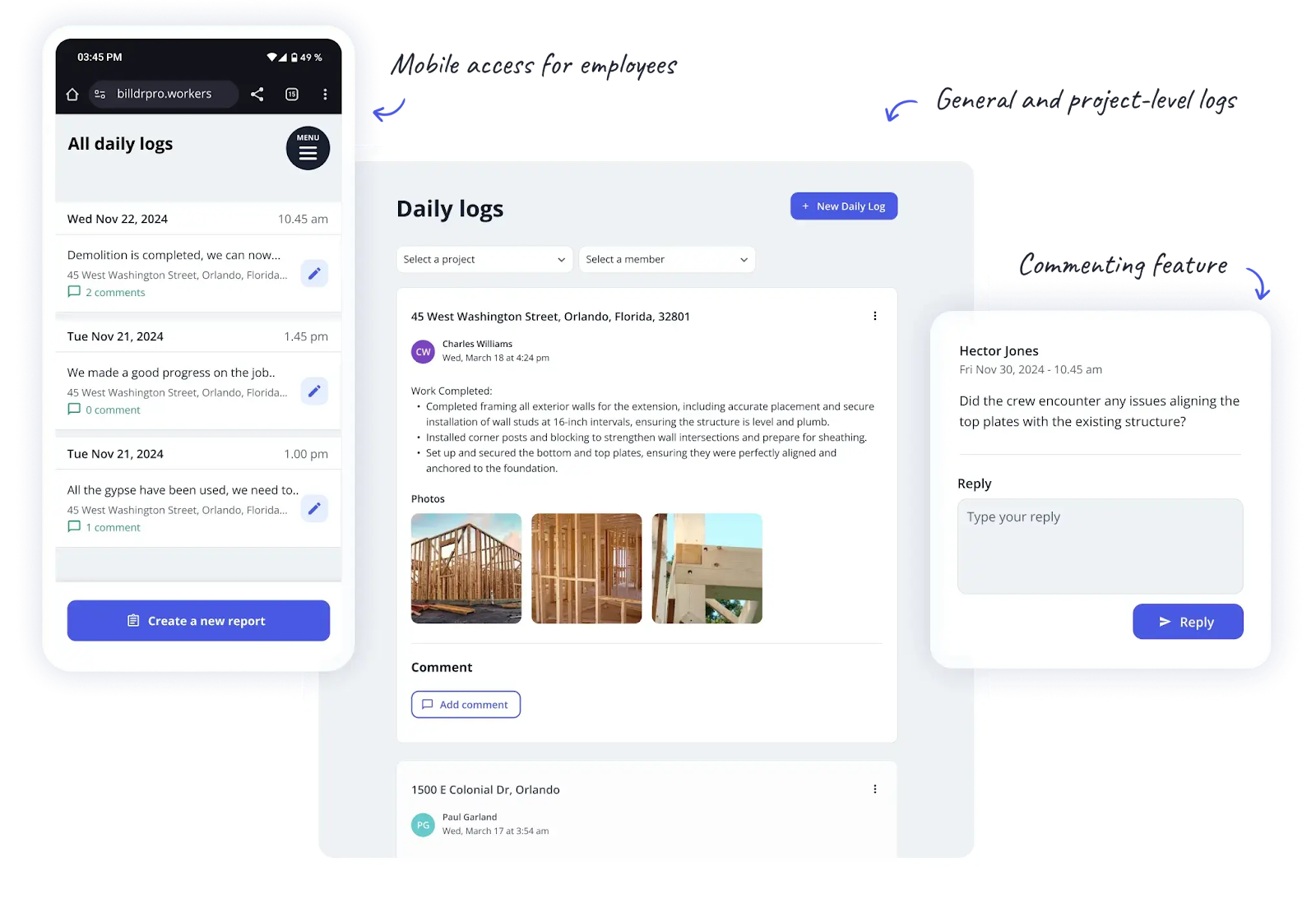
- Daily Log Accountability: Since the software doesn't "auto-block" subs based on insurance dates, use the Daily Logs to stay vigilant. Require subs to take a site photo every morning via the app. This creates a time-stamped record of who was on-site, which is your first line of defense in a "Statutory Employer" insurance audit.
Phase 4: Post-License Compliance & Building Codes
Getting your license is the start; keeping it is the real job. Georgia is no longer a "set it and forget it" state.
1. The 2026 Building Code Revolution
As of January 1, 2026, the Department of Community Affairs (DCA) has made the 2024 International Residential Code (IRC) and the 2026 Georgia Amendments to the 2023 NEC mandatory for all new permit applications.
- Energy Efficiency & Heat Pump Mandates:
- "Heat Pump Ready" Wiring: All new residential builds must include dedicated 240V circuits and conduit pathways to air handler and water heater locations to facilitate future heat pump installations.
- The 2024 IRC Thermal Envelope: Georgia has tightened air infiltration standards. Expect inspectors to be far more rigorous with Blower Door Testing results. Mandatory sealing around all "envelope penetrations" (doors, windows, plumbing stacks) is now a primary focus for building officials.
- The 2023 NEC Shift: * GFCI Protection Expansion: Required for almost all kitchen receptacles (removing the old distance-from-sink rule) and for outdoor outlets rated 50 amps or less in garages.
- Surge Protection: Mandatory for all dwelling units to protect modern smart-home infrastructure and high-efficiency HVAC systems.
2. Continuing Education (CE) & The Biennial Renewal Cycle
Your license expires on June 30th of even-numbered years. Under the 2025 HB 635 reforms, the Board now has a live tracking system for your hours.
- The CE Requirements:
- Residential Basic: 3 hours per year (6 hours total per renewal cycle).
- Residential-Light Commercial: 6 hours per year (12 hours total per renewal cycle).
- General Contractors: While currently exempt from state-mandated CE, GCs are increasingly participating in voluntary "Code Update" sessions to mitigate liability under the new 2024 IRC standards.
- The "Live" Webinar Exception: To assist builders in rural areas, the Board officially recognizes interactive, real-time webinars as "Live" instruction. However, at least 50% of your total credits must be earned through these live or in-person sessions on-demand, pre-recorded videos alone will not suffice for renewal.
Billdr Advantage: Digital Site Management
The exams prove you know the code; Billdr proves you follow it.
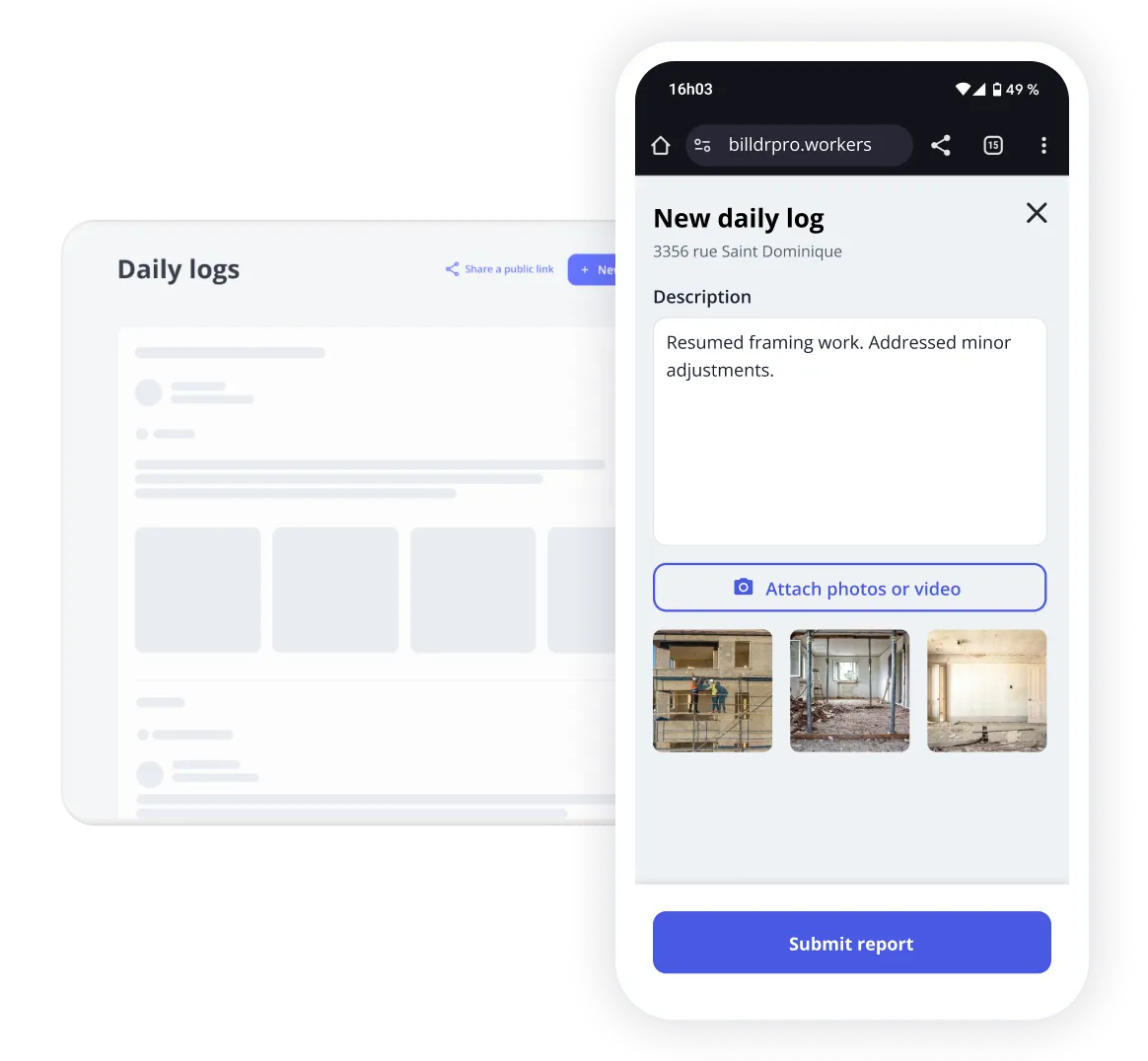
- Code-Correct Documentation: Georgia inspectors are notoriously strict about structural footings and erosion control (silt fences). Use Billdr's Daily Logs to upload high-res photos of these critical points. If an inspector flags a structural detail later, you have time-stamped, "pre-pour" evidence to resolve the issue without a tear-out.
- Exam Reference Library: Store digital PDFs of the Georgia IRC Amendments and the Contractor’s Guide to Business and Law in your Document Hub. While you can't use them in the exam, having them on your phone for quick site reference keeps you from making the same mistakes that lead to exam failures.
2026 Summary of Georgia Startup Costs
Official Sources & Resources
1. Primary Licensing & Legal Portals
- Georgia SOS GOALS Portal: goals.sos.ga.gov
- 2026 Focus: This is your primary hub for license issuance and "Qualifying Agent" management.
- Pro Tip: Your email address is now your User ID and is case-sensitive. Use the "Account Management" feature to link multiple business entities to a single profile, making renewal management significantly easier.
- PSI Exams (Testing Vendor): psiexams.com
- 2026 Focus: Once the Board approves your application, this is where you schedule your Trade and Business & Law exams.
- Resource: Search for the "Georgia Residential Basic Contractor Candidate Information Bulletin" for the most current list of approved open-book reference materials.
2. Building Codes & Technical Standards (2026 Updates)
- Georgia Department of Community Affairs (DCA): dca.georgia.gov/scac
- The 2026 Shift: As of January 1, 2026, Georgia has adopted a suite of new mandatory codes based on the 2024 International Codes.
- Key Mandatory Codes:
- 2024 International Residential Code (IRC) with 2026 Georgia Amendments.
- 2023 National Electrical Code (NEC) with 2026 Georgia Amendments.
- 2024 International Energy Conservation Code (IECC) for statewide efficiency standards.
- GA Soil & Water Conservation Commission (GSWCC): gaswcc.georgia.gov
- The "Blue Card" Requirement: Any individual in "responsible charge" of erosion control on a job site must hold Level 1A Fundamentals (Blue Card) certification. This is a one-day course and exam mandatory for almost all ground-breaking residential projects in Georgia.
3. Trade Associations & Education
- Greater Atlanta Home Builders Association (HBA): atlantahomebuilders.com
- Resource: They offer a high-success-rate 2-day Exam Prep Course in Marietta, GA. They also host an industry bookstore where you can buy the specific tabbed and highlighted books allowed in the PSI testing center.
- NASCLA (National Association): nascla.org
- The Go-To For: Managing your NASCLA Accredited Exam transcripts. If you plan to expand your business into Florida, North Carolina, or Alabama, this is where you initiate the transcript transfer.
Disclaimer
The information provided in this guide is for educational and organizational purposes only. While Billdr provides documentation and management tools, its use does not guarantee municipal approval or successful project completion. Georgia's laws, specifically the 2026 updates in HB 635, are subject to board interpretation; builders must independently verify all local ordinances and state statutes.