

Mastering ROC Classifications, the 20-Day Preliminary Notice, and Arizona Prompt Pay Statutes
Updated May 2026 — Arizona operates under a single centralized authority: the Arizona Registrar of Contractors (ROC). To succeed as a commercial GC in 2026, you must navigate specific license classifications, strict prompt pay laws, and a central compliance requirement in Arizona construction law: the "20-Day Preliminary Notice" system.

Phase 1: Classification & Statutory Licensing
In Arizona, you don’t receive a generic "GC license". You must select a specific classification that matches your project scope. The ROC is the sole issuing authority for these licenses.
1. Commercial License Classifications: Finding Your Lane
Selecting the wrong classification is a common pitfall that can lead to "scope creep" violations.
- General Commercial (B-1): This is the gold standard for large-scale GCs. It permits work on any commercial building, regardless of size or cost. If your roadmap includes high-rise builds, industrial complexes, or large retail centers, the B-1 is non-negotiable.
- General Small Commercial (B-2): Ideal for "Main Street" contractors. The $2,000,000 per-contract limit includes all labor, materials, and equipment. Note: If a project starts at $1.8M but change orders push it to $2.1M, you are technically in violation of your license scope.
- The Dual License Advantage (KA & KB-1): * KA (Dual Engineering): This is for heavy-duty firms. It covers everything from highways and water treatment plants (General Engineering) to commercial buildings. It is essentially the "infrastructure + vertical" license.
- KB-1 (Dual General Building): This is the most popular choice for modern GCs. It allows you to build a custom luxury home one month and a medical office the next, all under one ROC number and one bond.
2. The Qualifying Party (QP): The Legal Anchor
The "Qualifying Party" is the individual who proves to the state that the company is competent.
- Supervisory Experience: The ROC requires a Certification of Experience form. The four years of experience must be "hands-on" or management-level. Administrative roles (like pure accounting or sales) generally do not count toward the four-year requirement.
- NASCLA Portability: If your QP has passed the NASCLA Accredited Exam in another state, Arizona will waive the trade portion of the exam. However, the QP must still pass the Arizona Statutes and Rules Exam (SRE). This ensures they understand Arizona’s unique prompt pay and lien laws.
- Background & Fingerprinting: Arizona requires all QPs and any person owning 25% or more of the company to undergo a background check. You must submit a Fingerprint Clearance Card as part of the application package.
The Billdr Advantage: Qualification Tracking
To manage these high-stakes requirements, use Billdr to bridge the gap between your personnel and the ROC:
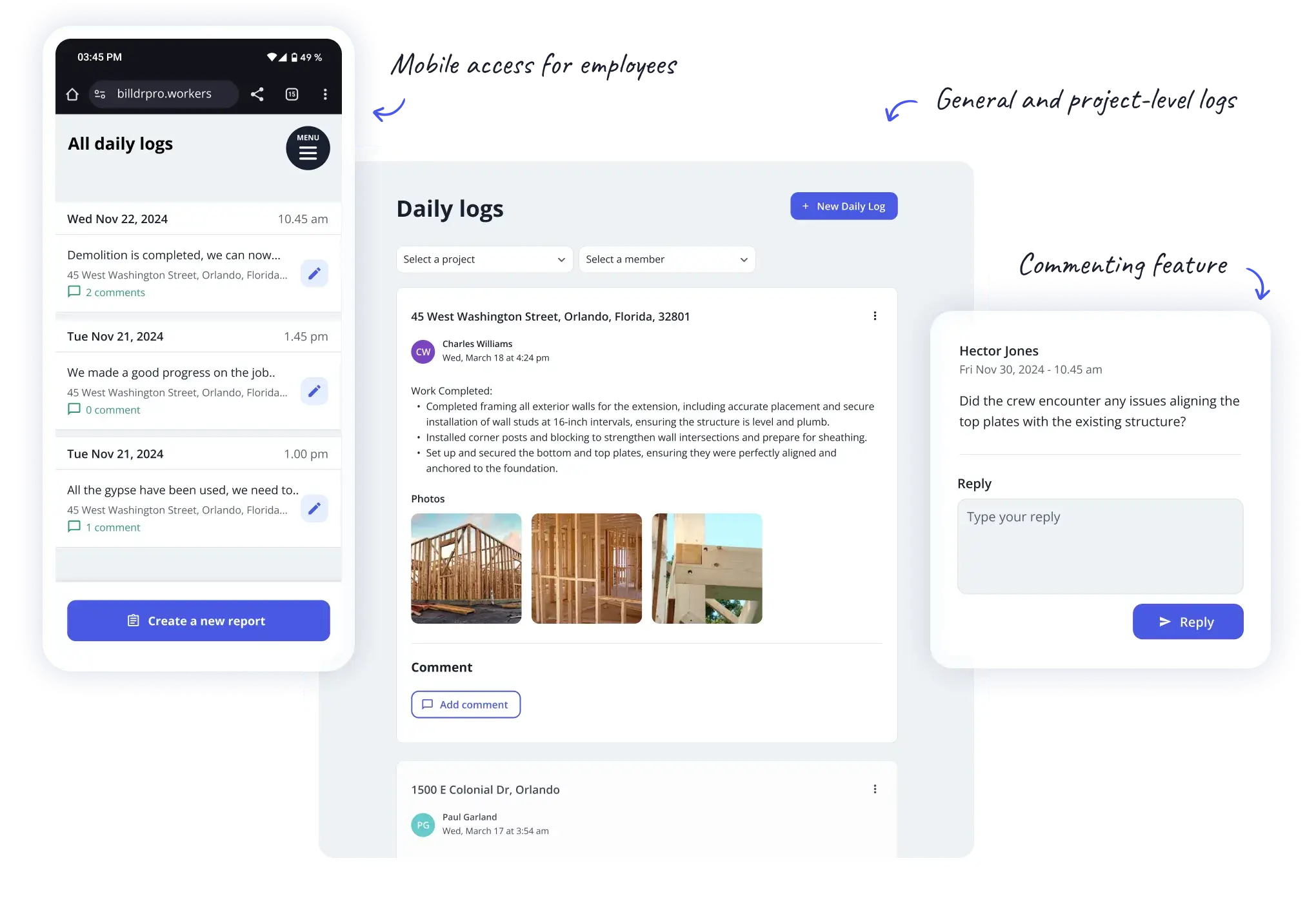
- Supervisory Log Archive: Build a verifiable "paper trail" for your future QPs. Use Daily Logs to document their time on-site and supervisory responsibilities. This filtered history provides the objective proof needed to satisfy the ROC’s management experience requirements.
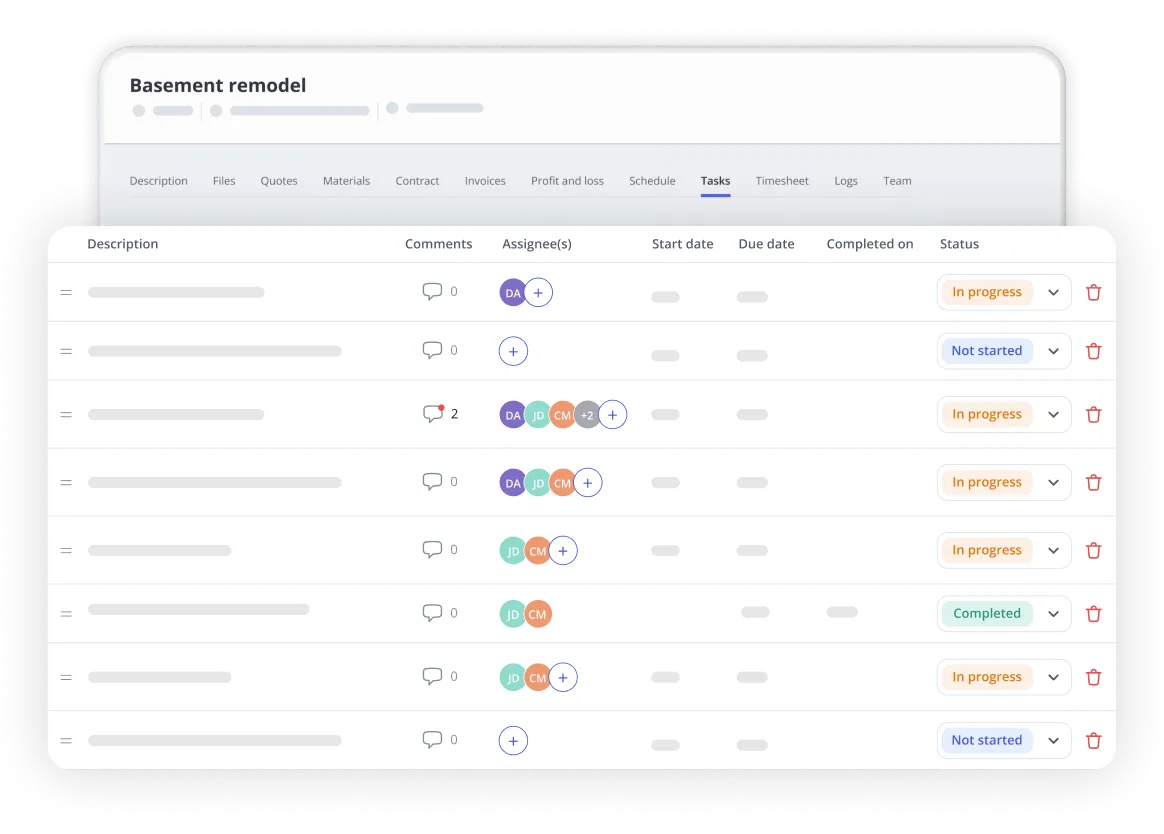
- Automated Background Alerts: Fingerprint cards and clearances eventually expire. Use the Task Manager to set "Refresh Alerts" for all corporate officers. This ensures your background checks are updated months before a license renewal is due.
Phase 2: Insurance, Bonding, and Solar Compliance
Arizona enforces strict financial responsibility standards. Compliance is measured by your firm's ability to maintain coverage that scales with your business volume.
1. The Arizona Contractor’s Bond: Scaling with Success
In Arizona, your bond is a "floating" requirement. As your business grows, the state expects your financial security to grow with it.
- The Revenue-to-Bond Link: The ROC requires you to self-report your "gross volume" (the total value of all contracts performed in Arizona) during every renewal. If you report a jump from $400k to $1.2M, the state may trigger a requirement to increase your bond.
- The Liability Shield: Unlike general liability insurance, this surety bond is specifically for the benefit of homeowners and subcontractors. If a GC fails to pay a supplier or abandons a project, the damaged party can file a claim against this bond via the ROC.
- The "Unlimited" Tier: For B-1 and KA licensees working on massive industrial or tech projects (like the recurring semiconductor fab builds in the Phoenix valley), the bond requirements often exceed $100,000 to reflect the catastrophic risk of a large-scale project failure.
2. Workers' Compensation: The Real-Time Link
Arizona is a "strict compliance" state regarding worker safety. The Industrial Commission of Arizona (ICA) is digitally integrated with the ROC.
- Real-Time Compliance Monitoring: If your Workers' Comp policy is canceled for non-payment or expires without a renewal being reported, the ICA’s system notifies the ROC. This can lead to an automatic Administrative Suspension of your license, meaning you cannot legally be on a jobsite the next morning.
- Corporate Officer Exclusions: Arizona allows certain corporate officers to opt-out of coverage, but only if they meet strict ownership criteria. Misfiling these exclusions is a common source of heavy fines during ICA audits.
3. The Solar Trap: Endorsements vs. Licenses
With Arizona's aggressive solar mandates for commercial buildings, many GCs inadvertently perform unlicensed work.
- The Scope Hurdle: A standard B-1 or B-2 license does not automatically allow you to install solar. You must either:
- Hold a Dual License (KA or KB-1) with specific solar endorsements.
- Obtain a specialty Solar License (R-11 for residential or C-11 for commercial).
- Subcontract the entire solar scope to a licensed specialty contractor.
- The Violation Risk: If a GC manages a solar installation without one of the above, the ROC views it as "acting outside of license scope," which carries penalties similar to being completely unlicensed.
The Billdr Advantage: Compliance Oversight
Managing these shifting financial targets requires more than a spreadsheet. Billdr acts as your digital compliance officer:
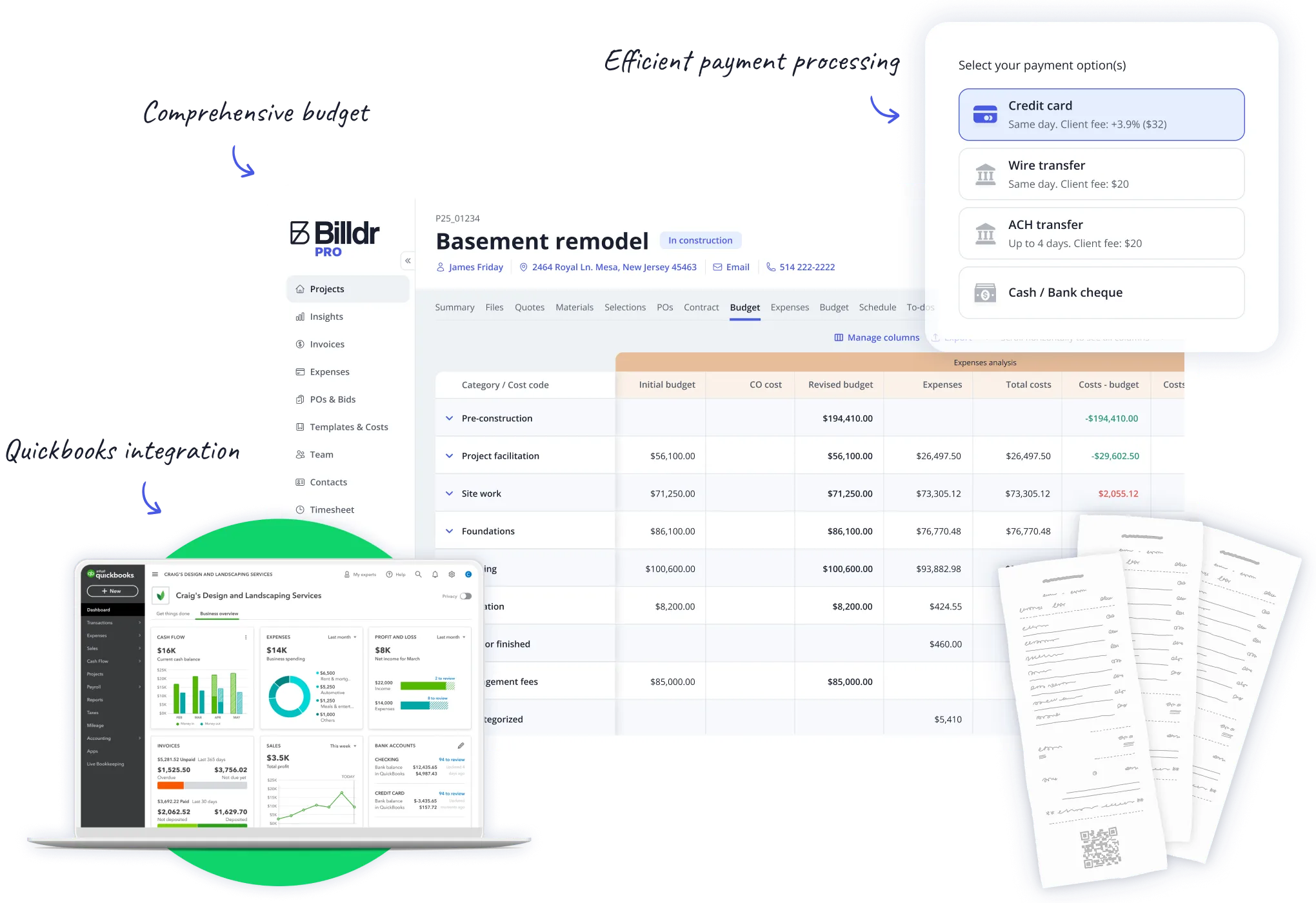
- Project-Specific Bond Tracking: Since Arizona commercial bonds scale with volume, you can use the Financial Reporting module to run a "Bonding Capacity Report." It aggregates your total active contract values against your current ROC bond tier, telling you exactly how much "room" you have left before you need to file a bond rider.
Phase 3: Arizona’s Prompt Pay Act (A.R.S. § 32-1129.01)
Arizona enforces strict "Progress Payment" statutes designed to maintain cash flow across construction projects in the state's high-growth market.
1. The 30/7 Payment Cycle: Statutory Speed
The law establishes a default timeline for the movement of capital. While some elements can be modified by contract, the statutory baseline is the standard for the industry.
- The Approval Trigger: The clock doesn't start when you finish the work; it starts when you submit a "certified and approved" billing. Under A.R.S. § 32-1129.01, once that billing is submitted, the owner has a limited window to find faults.
- The 30-Day Owner Window: On commercial projects, the owner must release payment within 30 days of approval. If your contract is silent on payment timing, this 30-day window is the legally enforceable default.
- The 7-Day "Flow-Through": This is the GC’s most significant legal risk. Once you receive payment from the owner that includes work performed by a subcontractor or materials provided by a supplier, you are generally required to pay that party within 7 days. Failing to do so can lead to an ROC complaint or a civil lawsuit.
2. The 14-Day "Deemed Approved" Rule
Arizona law puts the burden of proof on the party withholding money. This is the most powerful, and often overlooked, provision of the Act.
- The 14-Day Objection Window: Once the owner receives your progress billing, they have 14 days to certify and approve it.
- The Written Statement Requirement: If an owner intends to withhold any portion of the payment, they must provide a written statement detailing exactly what is being disputed. This cannot be a vague email; it must be a specific, line-item objection based on reasonable grounds (such as defective work or safety violations).
- Deemed Approval: If the owner does not provide that written statement within 14 days, the invoice is statutorily deemed approved. This removes the owner's legal right to delay payment later based on issues they should have caught during that window.
3. The 18% "Statutory Bite"
To ensure compliance, Arizona imposes one of the highest statutory interest rates in the country.
- 1.5% Per Month: Any payment not subject to a bona fide dispute that is held past the 30/7 deadlines accrues interest at 1.5% per month (18% annually).
- Mandatory Penalties: Because this rate is set by statute (A.R.S. § 32-1129.01), judges and the ROC have little discretion; if the payment is late and the 14-day dispute window was missed, the interest is typically awarded automatically.
The Billdr Advantage: Financial Transparency
Navigating these tight statutory windows requires a "digital paper trail" that holds all parties accountable. Billdr automates this defense:
- The 14-Day "Dispute Countdown": Use the Client Portal to track exactly when an owner views your pay app. By timestamping the "Viewed" status, you create a verifiable start date for the 14-day dispute clock. If no objection is received, you have the evidence needed to claim "Deemed Approval" under A.R.S. § 32-1129.01.
Phase 4: Site Compliance & The 20-Day Preliminary Notice
The 20-Day Preliminary Notice is a central compliance requirement in Arizona construction law. Failure to serve this notice can significantly limit or eliminate lien rights for early work performed.
1. The 20-Day Preliminary Notice: The "Pre-Lien" Gateway
In Arizona, the Preliminary Notice (A.R.S. § 33-992.01) is not a hostile act; it is a statutory prerequisite. If you do not serve this notice, you generally cannot file a valid mechanic’s lien later.
- The 20-Day "Look Back" Rule: The notice should be served within 20 days of first providing labor or materials. If you send it on Day 45, the law only protects your lien rights for work performed starting 20 days prior to that notice. Everything done in the first 25 days of the project becomes "unsecured" debt.
- Mandatory Recipients: You must serve the owner, the General Contractor, the construction lender (if any), and the person with whom you contracted.
- The "1-in-10" Rule: Under A.R.S. § 33-992.01(I), if your contract value increases by more than 20% above the amount stated in your original Preliminary Notice, you must serve a supplemental notice to cover the new, higher value.
2. Mechanic's Lien Deadlines: The Statutory Clock
If a project ends and you remain unpaid, the window to "perfect" your lien is remarkably short. Arizona courts strictly enforce these deadlines.
- Defining "Completion": Under A.R.S. § 33-993, completion is defined by specific milestones, such as the issuance of a Certificate of Occupancy or the "last day of work" (excluding minor warranty repairs).
- The Notice of Completion Trap: While the default recording window is 120 days from completion, an owner can slash this window in half. If the owner records a formal "Notice of Completion," your deadline to record a lien drops to just 60 days.
- The Foreclosure Deadline: A recorded lien is only valid for 6 months. If you do not file a lawsuit (Foreclosure Suit) within that window, the lien expires automatically and becomes unenforceable.
3. Site Compliance & Evidence Gathering
Because Arizona requires "substantial completion" to start the lien clock, your on-site documentation must be indisputable.
- The "Warranty Work" Trap: Performing "punch list" or warranty items (like fixing a leaky faucet) does not usually reset your 120-day clock. You must be able to prove when the "core contract scope" was finished.
- The "Blind Lien" Risk: As a GC, you are liable for payments to sub-tier suppliers you may not even know exist. If a sub-subcontractor serves you a 20-Day Preliminary Notice, you are legally on notice that they have a right to lien the property if they aren't paid.
The Billdr Advantage: Documentation Defense
To survive an Arizona lien challenge, your data must be time-stamped and geographically verified. Billdr provides the "Judicial-Grade" evidence required:
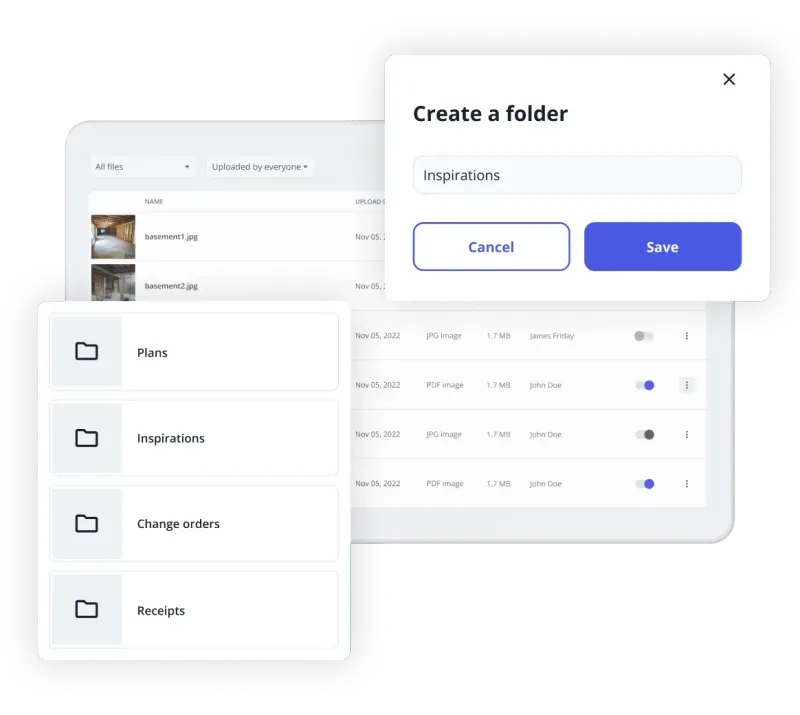
- The Sub-Tier Notice Hub: Eliminate the risk of "blind liens" from unknown suppliers. Log every sub-tier notice in the Document Hub and use Compliance Interlocks to block final payments to subcontractors until all required sub-tier lien waivers are verified.
- GPS-Stamped Completion Evidence: Defend your 120-day lien window with unalterable site data. Daily Logs capture GPS-stamped photos and weather data on the day you demobilize, creating a professional digital record of "Substantial Completion" that stands up in court.
Summary of Arizona Compliance Benchmarks (2026)
Building the Future
In 2026, Arizona's commercial market rewards administrative speed as much as trade skill. With the ROC's focus on financial transparency and the state's rigid 20-day notice system, managing projects with manual workflows is a high-risk strategy. By utilizing the digital oversight of Billdr, you can automate statutory notices, track your bond capacity in real-time, and ensure your firm remains the preferred partner in the Arizona desert.
Official Arizona Resources
1. Arizona Registrar of Contractors (ROC): ROC Official Portal
The ROC is a "unified" regulatory board, meaning it handles everything from initial testing and background checks to consumer complaints and license suspensions.
- What you do here: * License Search: Verify the status of your own license and, more importantly, vet your subcontractors. Arizona law is strict regarding "vicarious liability". If you hire an unlicensed sub, you can face ROC disciplinary action yourself.
- Classification Management: If you need to upgrade from a B-2 (Small Commercial) to a B-1 (General Commercial), this is where you submit the "Increase in Scope" application.
- Bonding Updates: When your gross volume increases and you move into a higher bond tier (e.g., from a $15,000 bond to a $50,000 bond), you must upload the new rider here to avoid automatic license suspension.
- Official Link: Arizona Registrar of Contractors (ROC)
2. Industrial Commission of Arizona (ICA): Workers’ Comp Verification
Arizona law is "no-fault" regarding workers' compensation, and the ICA is the state agency that ensures every employer with one or more employees (including corporate officers) carries insurance.
- What you do here:
- Coverage Search: Use the "Compliance" tool to verify that your insurance carrier has properly reported your policy to the state.
- Certificate Tracking: Because Arizona county permit offices can cross-reference the ICA database, you must ensure your data is accurate to prevent delays in pulling building permits.
- Officer Exclusions: If you are a small firm and choose to exclude certain corporate officers from coverage, the specific waivers must be filed and tracked through this agency.
- Official Link: Industrial Commission of Arizona
3. Arizona Department of Revenue (ADOR): TPT (Transaction Privilege Tax) Info
In Arizona, "Sales Tax" for contractors is technically called the Transaction Privilege Tax (TPT). It is a tax on the privilege of doing business in the state.
- What you do here:
- TPT Licensing: Every GC must have a TPT license. Commercial contractors often utilize the "Prime Contracting" classification, where the tax is calculated based on 65% of the gross proceeds of the project.
- Exemption Certificates (Form 5000): You use this portal to manage certificates that allow you to purchase materials "tax-free" from suppliers, as the tax is paid by the end customer (the owner) or accounted for in your prime contract.
- Multi-Jurisdiction Filing: AZTaxes.gov allows you to file for state, county, and city taxes in a single location, critical since Arizona cities (like Phoenix vs. Scottsdale) often have different tax rates.
- Official Link: Arizona Department of Revenue – AZTaxes
Important Platform Disclaimer
Requirements current as of May 2026. The User remains solely responsible for ensuring all legal deadlines and statutory requirements are satisfied according to Arizona Revised Statutes (A.R.S.).