

2026 Nova Scotia Commercial GC Guide: Licensing, COR™ Safety, and Prompt Payment Act

Executive Summary
In 2026, the Nova Scotia commercial construction landscape is defined by an evolving legal framework and high standards for safety and administrative excellence. Becoming a General Contractor (GC) in the "Ocean Playground" requires more than just technical skill; it demands a strong administrative and legal foundation. This guide outlines the four-phase roadmap to establishing a compliant, bid-ready commercial firm in Nova Scotia, with a specific focus on Halifax (HRM) and upcoming provincial payment reforms.
Phase 1: Legal Business Foundation
Establishing your firm as a legal entity is the prerequisite for all commercial bonding, bidding, and municipal permitting.
1. Business Registration (Registry of Joint Stock Companies)
In Nova Scotia, almost all commercial General Contractors (GCs) choose to incorporate. This creates a separate legal entity, protecting your personal assets and providing the structure needed for high-value commercial bonding.
- The Incorporation Process: You must file a Memorandum of Association and Articles of Association with the Registry of Joint Stock Companies (RJSC).
- Name Reservation: You must first reserve your business name. In 2026, the RJSC name reservation typically takes 2–3 business days and is valid for 90 days.
- 2026 Fees: * Incorporation Fee: Approximately $200 (base government fee).
- Annual Renewal: You must renew your registration every year (approx. $118.35 as of 2026).
- Note: When factoring in legal assistance for drafting articles and name searches, most GCs spend between $450–$600 to get fully registered.
2. Workers’ Compensation Board (WCB) Nova Scotia

WCB is a mandatory "collective liability" insurance. In the construction industry, coverage is mandatory once you hire your third worker.
- The "3-Worker" Rule: Registration is mandatory if you have three or more workers (including full-time, part-time, casual, and even officers of the company).
- The 2-Day Injury Reporting Rule (New for 2026): Effective January 1, 2026, the Workers’ Compensation Act was amended to require employers to report any workplace injury within two business days (previously five). This is a critical administrative change; late reporting can now result in significant penalties.
- Successor Liability: Commercial owners will not pay your final invoice without a Clearance Letter. This ensures that if you haven't paid your WCB premiums, the owner isn't held liable for your debt.
3. Commercial General Liability (CGL) Insurance
While the provincial government doesn't "license" GCs, the market (owners and lenders) enforces insurance standards.
- The $5 Million Standard: For ICI (Industrial, Commercial, Institutional) work, a $5,000,000 CGL policy is the industry standard. This covers third-party bodily injury and property damage.
- Pollution & Professional Liability: If your GC firm provides design-build services or handles site remediation, you may need additional riders for Environmental/Pollution Liability and Errors & Omissions (E&O).
4. Bonding (Bid & Performance Security)
For any public project in Nova Scotia over $100,000, you will likely need to provide bonding.
- Bid Bond: Guarantees that if you win the bid, you will sign the contract.
- Performance Bond: Protects the owner if you fail to complete the project.
- Labor & Material Payment Bond: Ensures you pay your subcontractors and suppliers.
- 2026 Trend: Bonding companies now require audited financial statements and a proven track record of safety (COR™) before they will issue a bond line to a new GC.
The Billdr Advantage: Phase 1 Organization
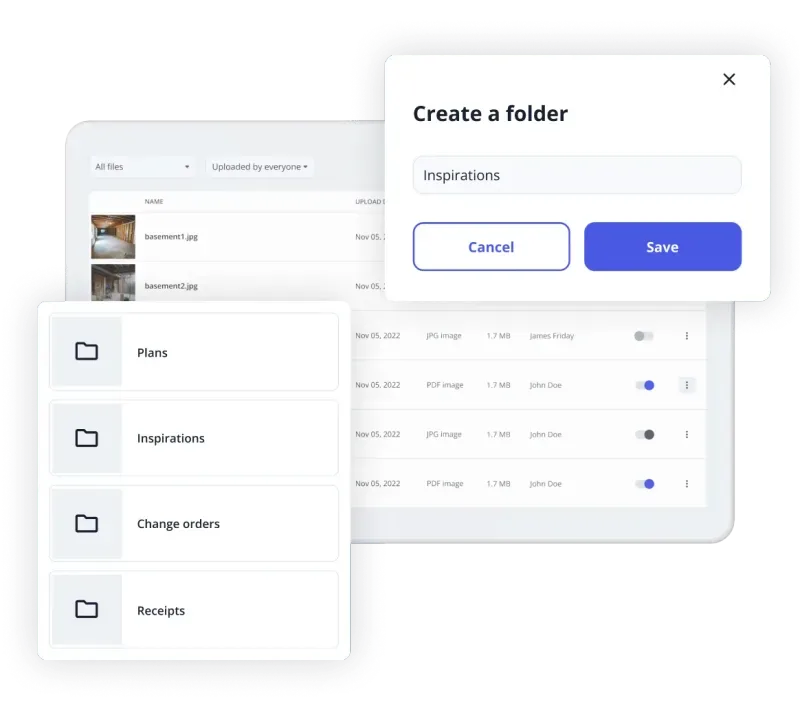
- Centralized Compliance Hub: Don't lose out on a major tender because you couldn't find your incorporation papers. Use Billdr to store your Certificate of Incorporation and RJSC Renewal documents in a secure, cloud-based folder. When a bonding company or client requests your qualifications, you can find and export everything they need in seconds.
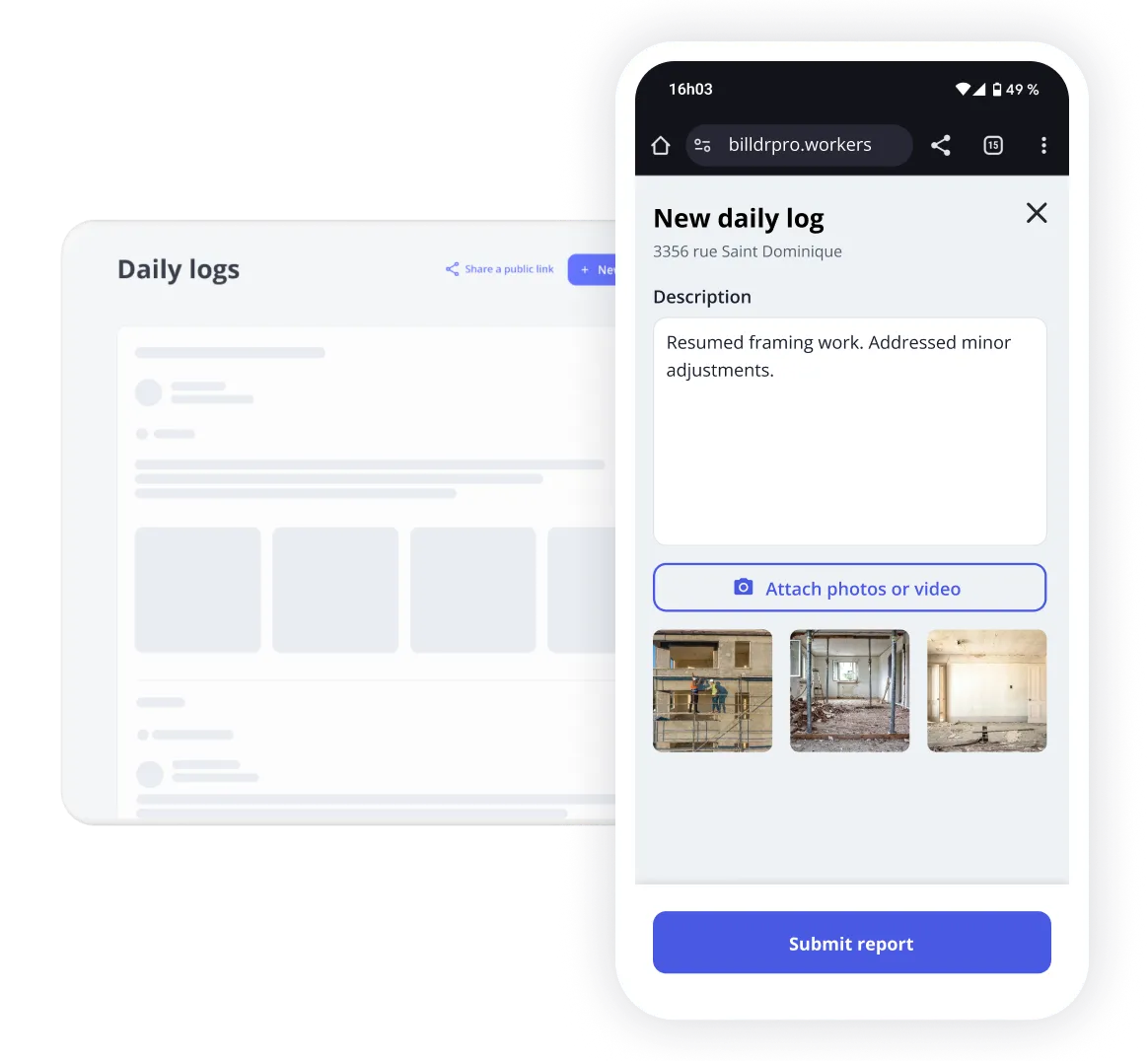
- Rapid Incident Documentation: With Nova Scotia’s new 2-Day Reporting Rule, speed is your best defense. Use Daily Logs on the Billdr mobile app to document any site incident instantly with photos and notes. This ensures your office team has the immediate evidence required to file with WCB within the strict 48-hour window.
Phase 2: Safety Certification (COR™ & SECOR™)
In the Nova Scotia ICI (Industrial, Commercial, Institutional) sector, safety is not a "side task". It is the primary competitive gatekeeper. Most provincial tenders (Public Works) and large private developers in the Halifax Regional Municipality (HRM) now require a Letter of Good Standing before a bid is even opened.
1. COR™ vs. SECOR™: Which path is yours?
The program you enter is strictly defined by your peak workforce size over the previous 12 months (including all owners, managers, and part-time staff covered under your WCB account).
- COR™ (Certificate of Recognition): Targeted at firms with 10 or more employees. This requires a comprehensive health and safety management system (HSMS) and a multi-tiered audit process.
- SECOR™ (Small Employer COR™): Tailored for firms with fewer than 10 employees. While the paperwork is streamlined, the core safety requirements remain high.
- Owner/Operator Track: For solo contractors, CSNS offers a specific "Owner/Operator" track that focuses on personal safety compliance and basic hazard management.
2. The 4 Mandatory Training Pillars (2026)
To achieve certification, your firm must designate a "Safety Champion" (usually an owner or manager) to complete four core CSNS training modules. In 2026, these are often delivered in a hybrid format (online theory + virtual or in-person workshop):
- Principles of Health & Safety Management: The foundation of your manual and internal policies.
- Hazard Identification & Control: Learning to identify and mitigate site-specific dangers.
- COR™ Evaluation/Auditor Training: Training your staff to perform the internal audits required for maintenance.
- Leadership for Safety Excellence: Focused on building a top-down safety culture and understanding legal due diligence.
3. The Audit & The "Letter of Good Standing"
Certification isn't a one-time event; it’s an annual cycle.
- The External Audit: To get your initial COR™, an independent CSNS advisor will conduct an external audit. They will review your documentation, conduct private interviews with workers, and perform site observations.
- Maintenance Years: In years two and three, you perform an Internal Audit (conducted by your trained staff) and submit it to CSAM for verification.
- Letter of Good Standing: Once your audit is approved, you receive this letter. It is valid for one year and is the standard proof of safety required for 2026 tenders.
4. Financial Incentives: WCB Safety Certified Rebate
Beyond winning contracts, safety pays for itself in Nova Scotia.
- Premium Rebates: Firms that achieve COR™ or SECOR™ status are eligible for the WCB Safety Certified rebate program.
- The Payoff: Certified employers can see meaningful reductions in their annual WCB premiums often ranging from 10% to 20% depending on the current WCB surplus and rate group performance.
Phase 3: Municipal Licensing & Technical Permits
Navigating the transition from "Business Entity" to "Active Job Site" requires a deep understanding of the HRM Customer Portal and the specific technical hierarchies of the Nova Scotia building code.
1. The HRM Customer Portal: Your Digital Headquarters
In 2026, all commercial construction activity in Halifax is managed through a centralized digital portal.
- Professional Account Registration: As a GC, you must register as a "Professional" user. This involves a validation step where the city authenticates your business registration.
- The Contractor Profile: Once registered, you must create a Contractor Profile. This profile links your business to your active permits and allows you to add authorized employees or sub-contractors to specific files.
- 2026 Submission Standards: All plans must be submitted as OCR-searchable PDFs with specific naming conventions (e.g., ARCH-FloorPlan-V1.pdf). Failure to follow these leads to immediate automated rejection.
2. Development vs. Building Permits
One of the most common delays for new GCs is confusing these two distinct approvals:
- Development Permit: Approves what you are building and where (land use, setbacks, parking, and landscaping). You generally need this before you can apply for a building permit.
- Building Permit: Approves how you are building it (structural integrity, fire safety, and National Building Code compliance).
- New for 2026: Effective April 1, 2026, all new commercial building permit applications must comply with Tier 2 of the 2020 National Building Code, introducing significantly higher energy efficiency and insulation standards for ICI projects.
3. Technical Permit Restrictions (The Red Seal Barrier)
While the GC oversees the entire project, Nova Scotia law protects "Compulsory Trades."
- Electrical & Plumbing: Only a Red Seal Journeyperson or a registered Master of the trade can "pull" these technical permits.
- GC Coordination: As the GC, you provide the sub-contractor with the Main Building Permit Number. They then apply for their specific technical permits linked to that master file.
- 2026 Licensing Update: As of January 8, 2026, the Apprenticeship Management System (AMS) has replaced old paper renewals. You can now verify a sub-contractor's trade qualification in real-time through the AMS portal to ensure they are legally eligible to pull permits.
4. Professional Credentials: The Gold Seal Standard
While not legally required to operate, the Gold Seal Certification is the "Ph.D. of Construction Management" in Canada.
- What it represents: It signifies 5+ years of ICI experience, mandatory ethics training, and passing a rigorous national exam.
- Why it matters in 2026: Many large-scale HRM tenders (especially in the $5M+ range) now award "points" during the RFP evaluation for having a Gold Seal Certified (GSC) Project Manager or Superintendent on the team. It is the gold standard for proving your firm can handle complex commercial risk.
The Billdr Advantage: Phase 3 Management
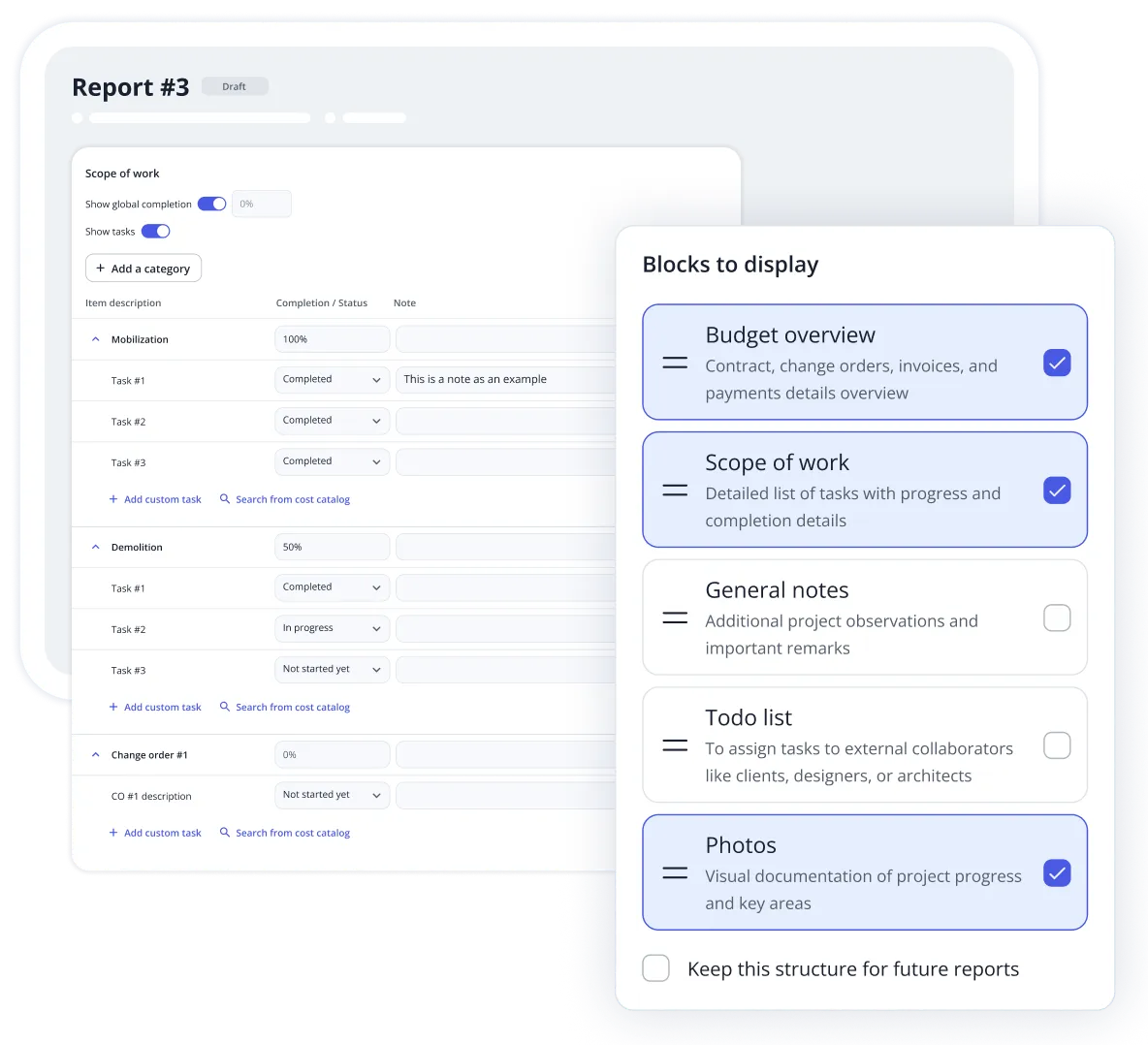
- GSC Experience Vault: Gold Seal Certification (GSC) requires proof of leadership and site experience. Use Billdr to archive your Daily Logs, project schedules, and safety reports. These historical records provide a complete, timestamped audit trail of your "Industry Experience," simplifying your application to the Canadian Construction Association.
Phase 4: The 2026 Regulatory Environment
The Nova Scotia construction market is moving away from the "pay-when-paid" culture and toward a statutory system of cascading cash flow. By 2026, the Builders’ Lien and Prompt Payment Act has become the primary administrative focus for all commercial general contractors.
1. The Statutory Payment Clock
The 2026 regulatory framework is built on a 28/7/7 cycle. The clock is "statutory," meaning it overrides any conflicting terms in your private contract unless they are more favorable to the payee.
- Trigger: The Proper Invoice: The clock only starts upon the delivery of a Proper Invoice. If an invoice is missing even one mandatory 2026 requirement (such as a WCB clearance or a specific project ID), the owner has 7 days to reject it. If they don't, it is "deemed" proper.
- The 28-Day Rule: Once a Proper Invoice is accepted, the owner has 28 days to pay the GC in full.
- The 7-Day Flow-Down: Once you (the GC) receive that payment, you have exactly 7 days to pay your subcontractors. They, in turn, have 7 days to pay their sub-subcontractors.
2. Notice of Non-Payment: The 14-Day Window
If an owner disputes an invoice (due to work quality or scope disagreements), they cannot simply ignore it.
- The Deadline: They must deliver a formal Notice of Non-Payment within 14 days of receiving the invoice.
- Undisputed Amounts: If only 10% of an invoice is in dispute, the owner is legally required to pay the other 90% within the 28-day window. Holding back the entire payment for a minor deficiency is now a violation of the Act.
3. Statutory Adjudication (CanDACC & NS Authority)
In 2026, Nova Scotia has streamlined its dispute resolution to mirror the federal CanDACC model. This is an "interim" binding process designed to keep money moving while the project continues.
- Timeline: Once an adjudicator is appointed, a determination is typically reached within 30 to 45 days.
- Binding Nature: The adjudicator’s decision is binding on an interim basis. You must pay the determined amount immediately. If you disagree, you can continue to litigate or arbitrate after the project is finished, but you cannot withhold the cash in the meantime.
- Enforcement: An adjudicator's order can be filed with the Supreme Court of Nova Scotia and enforced just like a court judgment.
4. 2026 "Best Practice" Transition
Because the regulations are now active or in the final stages of proclamation, GCs are moving toward "Adjudication-Ready" project management:
- Digital Proper Invoicing: Using templates that ensure every invoice meets the 2026 statutory requirements.
- Progress Photo Documentation: Since adjudication happens in weeks, not years, having timestamped site photos is the most effective way to win a dispute over "work completed."
- Holdback Modernization: GCs are adjusting to the Progressive Release of Holdback, allowing for the release of the 10% lien holdback at major milestones rather than waiting for the entire project to finish.
The Billdr Advantage: 2026 Compliance
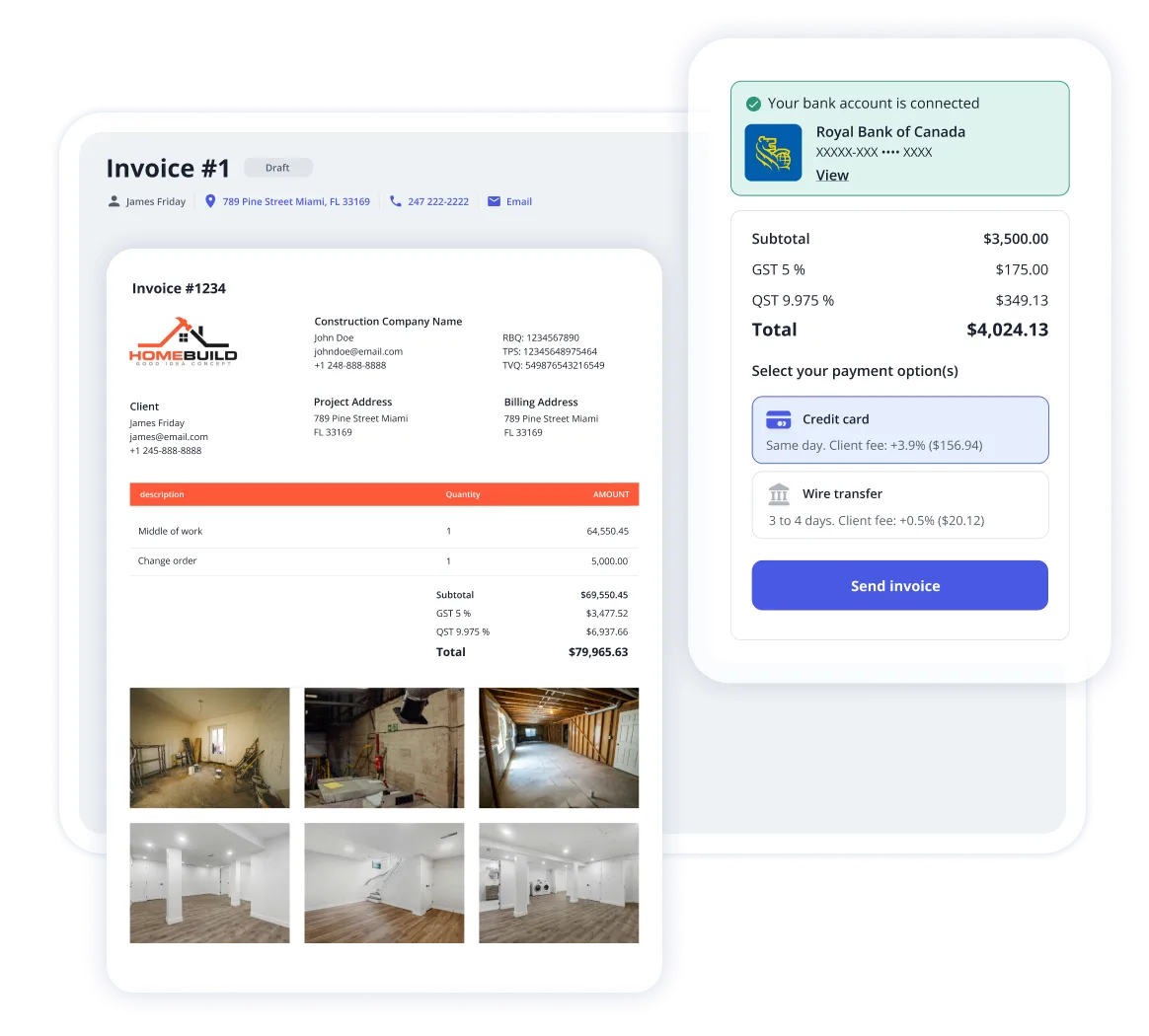
- Audit-Trail Invoicing: Under the Builders’ Lien and Prompt Payment Act, the "Proper Invoice" is the trigger for your 28-day payment clock. Billdr ensures your invoices are professional, timestamped, and clearly documented. By sending every bill through the platform, you create an indisputable digital record of exactly when your "Proper Invoice" was delivered, giving you the leverage needed to enforce statutory deadlines.
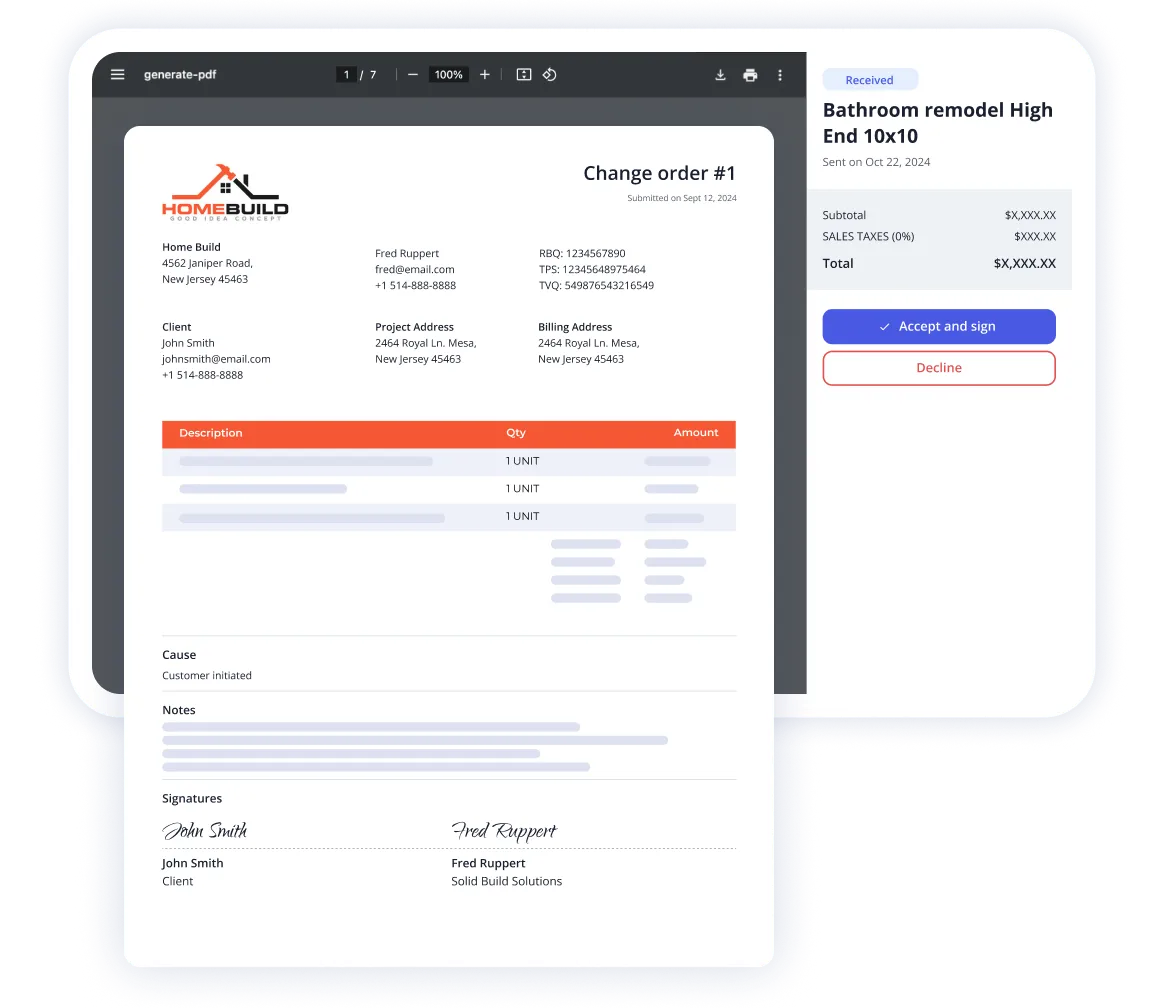
- Scope-of-Work Protection: Avoid the "Notice of Non-Payment" traps caused by vague descriptions. Use the Quoting & Change Order tools to clearly define every task and material. When you attach signed digital change orders directly to your invoices, you eliminate the "quality of work" excuses owners often use to delay payment in the 14-day notice window.
2026 Nova Scotia Startup Costs (Estimated)
| Category | Requirement | 2026 Est. Cost (CAD) | Timeline |
|---|---|---|---|
| Legal | RJSC Incorporation | $450 – $600 | 1 - 2 Weeks |
| Safety | COR™/SECOR™ Training | $500 – $1,500 | 3 - 12 Months |
| Risk | CGL Insurance ($5M) | $4,500 – $8,000 | 2 Weeks |
| WCB | Mandatory Account | Varies by Payroll | 1 Week |
| TOTAL | Estimated Initial Outlay | $5,500 - $10,000+ | 6 - 12 Months Total |
Official Nova Scotia Resources
1. Business Infrastructure
- Registry of Joint Stock Companies (RJSC)
- Purpose: This is your first stop. Use the RJSC to reserve your business name, file Articles of Incorporation, and complete your annual renewals.
- 2026 Tip: Use their Search the Registry tool before picking a name to ensure your preferred "Commercial Construction" branding isn't already taken.
- Nova Scotia Business Registry (Access NS)
- Purpose: The central "hub" for obtaining your Nova Scotia Business Number and linking your provincial tax accounts.
2. Safety & Workers' Compensation
- WCB Nova Scotia (MyAccount Portal)
- Purpose: Mandatory for firms with 3+ workers. Use the MyAccount portal to download Clearance Letters for clients and report workplace injuries.
- 2026 Tip: Check your "Assessment Rates" in the portal every January to see how your COR™ certification is lowering your premiums.
- Construction Safety Nova Scotia (CSNS)
- Purpose: The authority for COR™ and SECOR™ certification. Use their site to book mandatory training modules like Hazard Identification & Control and Principles of Health & Safety Management.
- Resource: Visit their Training Calendar to find upcoming 2026 hybrid and in-person sessions.
3. Permitting & Municipal Authority
- HRM Customer Portal (Halifax Regional Municipality)
- Purpose: The mandatory portal for all commercial building, development, and occupancy permits in Halifax.
- 2026 Tip: You must create a "Contractor Profile" within your personal account to apply for permits on behalf of your company. This profile allows you to link specific "Projects" and organize all related files in one digital folder.
- Nova Scotia Apprenticeship Agency
- Purpose: Use the Apprenticeship Management System (AMS) to verify that your sub-contractors hold valid Red Seal Journeyperson status before they pull technical permits on your site.
4. Legal & Regulatory Updates
- Prompt Payment Engagement Page
- Purpose: The official government updates page for the Builders' Lien and Prompt Payment Act. Monitor this for the final proclamation dates of the 2026 regulations.
Disclaimer: Billdr is a project management tool and does not provide legal or licensing authority. Requirements are subject to change; always consult with Construction Safety Nova Scotia and the Registry of Joint Stock Companies for the most current 2026 regulations.