

While Washington doesn't require a trade exam for General Contractors, it is notoriously aggressive regarding Contractor Registration and Consumer Protection. As of 2026, the state has implemented the final phase of SHB 1534, creating a high-stakes environment where administrative errors lead to immediate "Stop Work" orders.

Phase 1: Entity Formation & The UBI Mandate
In Washington, you aren't a builder until the Department of Revenue (DOR) and the Secretary of State (SOS) say you are. This phase is about creating the legal "skeleton" of your business. Without a valid UBI and SOS registration, you cannot secure the mandatory $30,000 bond or apply for L&I registration.

1. Secretary of State (SOS) Registration
Your first step is filing your Certificate of Formation (for LLCs) or Articles of Incorporation (for Corps).
- The Cost: Online filing is $200 (expedited in 2–3 business days). Paper filing is $180 but can take weeks.
- The "L.L.C." Naming Rule: Your name must be unique. Washington is strict about identifiers; you must include "Limited Liability Company" or "LLC" in the name. Tip: Check the SOS database first to avoid rejection.
- The Initial Report: You must file an Initial Report within 120 days of formation. If you file it alongside your Certificate of Formation, it is free; otherwise, it’s an additional $10–$30.
2. The Unified Business Identifier (UBI) & Master License
The UBI is a 9-digit number that links your business across all Washington state agencies (L&I, Revenue, Employment Security).
- How to Get It: Apply via the My DOR portal. This is often referred to as your "Master Business License" application.
- The Fee: The base business license processing fee is $50.
- Reseller Permit: During this application, ensure you check the box for a Reseller Permit. This allows you to purchase construction materials (lumber, hardware, etc.) tax-free, as you will collect the sales tax from the final homeowner later.
3. The "Primary Principal" & SSN/ITIN Requirement
To curb "Phoenixing", the illegal practice where contractors close a company with debt or safety violations and reopen as a "new" business, Washington now requires deep transparency for the Primary Principal (the person with the most control over the business).
- Traceable Identity: You must provide a Social Security Number (SSN) or Individual Taxpayer Identification Number (ITIN) for every owner, partner, or officer.
- The 2026 Inclusion Rule: As of 2024–2025 legislative shifts, Washington allows ITINs for all professional licenses, ensuring that all builders are accountable to the state’s tax and safety systems regardless of citizenship status.
- Liability Link: L&I cross-references these numbers. If a Principal was part of a previous company with an unpaid $25,000 judgment from the Homeowner Recovery Program, they will be blocked from registering a new entity until that debt is cleared.
Billdr Advantage: Building Your Administrative Foundation
Washington’s L&I and SOS registration is a one-time setup that requires long-term maintenance. Billdr ensures your business "DNA" is organized from day one.
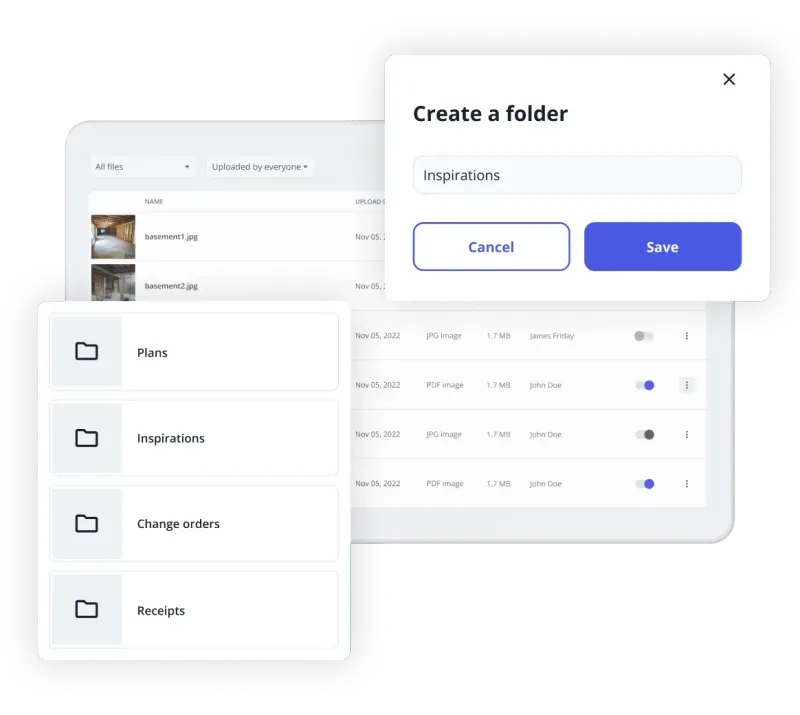
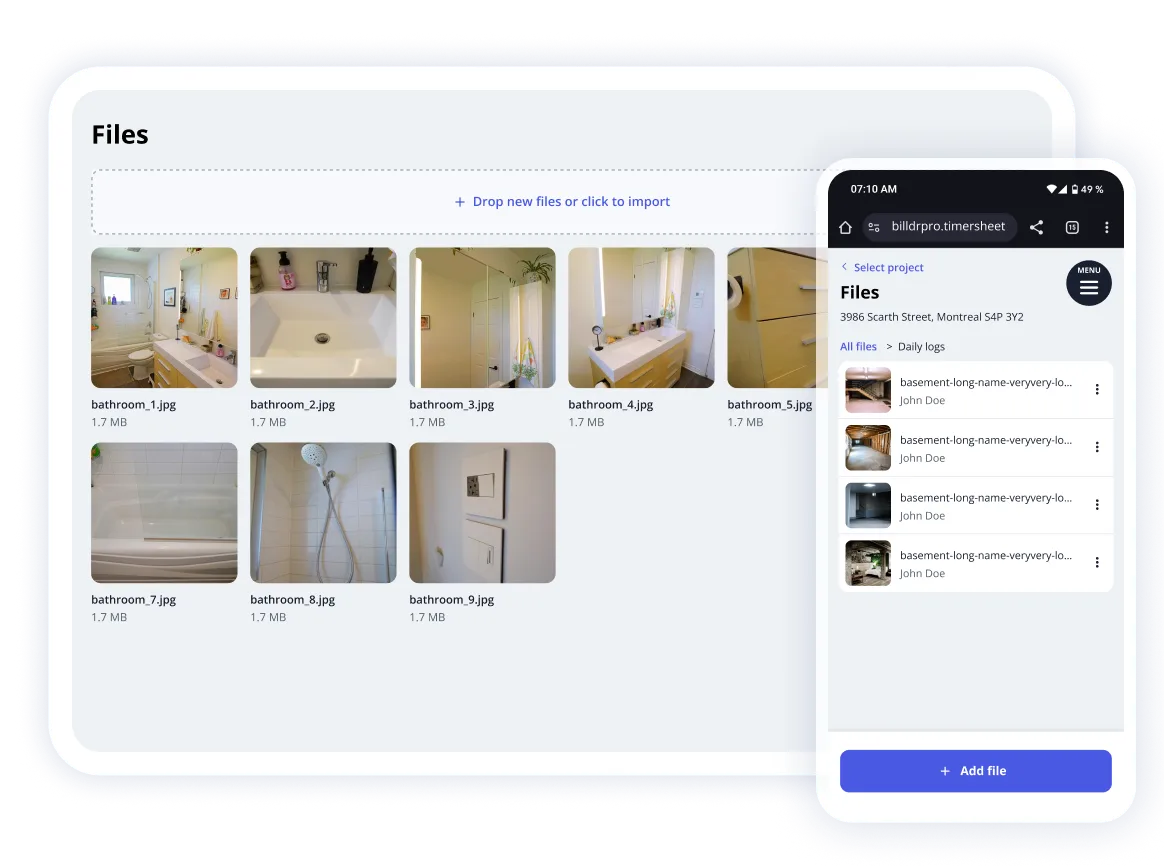
- The Digital Compliance Vault: Washington requires your business name to match exactly across your UBI, Bond, and Insurance. Use the Files Management feature to store your "Master Copies" of these documents in one central folder. When you go to renew or apply for local permits, you can pull up your SOS Certificate of Formation or UBI confirmation instantly to ensure you are typing your name to the character.
Phase 2: Enhanced Bonding & Insurance Requirements
In Washington, your "license" is legally anchored by your bond and insurance. Because the state does not require a trade exam, it relies on high-value financial securities to filter for professional stability. In 2026, the Department of Labor & Industries (L&I) is completing its transition to a fully digital oversight model.
1. The $30,000 Continuous Bond (F625-003-000)
Washington recently increased bond amounts for the first time in over 20 years to match modern construction costs. This bond is not insurance for you; it is a pool of funds that the state, subcontractors, or homeowners can draw from if you violate the law or fail to pay your bills.
- General Contractors: Must hold a $30,000 bond.
- Specialty Contractors: Must hold a $15,000 bond.
- Restriction: Specialty contractors cannot hire subcontractors; if you plan to manage a team, you must register as a General.
- Bond Alternatives: You can choose an Assignment of Savings (F625-008-000) instead, which involves locking the full amount ($30k) in a dedicated bank account with an L&I branch. However, most builders prefer the liquidity of a surety bond (typically costing $300–$900/year).
2. Liability Insurance: The "Standard" vs. The "Minimum"
L&I requires proof of insurance before issuing a registration number.
- State Minimums: You must carry a $250,000 combined single-limit policy OR a split-limit policy ($200k public liability / $50k property damage).
- The 2026 Municipal Standard: While L&I accepts $250k, King County, Pierce County, and Snohomish County permit offices frequently require a $1M per occurrence / $2M aggregate policy for residential projects. If you bid on a new build in Seattle or Bellevue, a "minimum" policy will result in an immediate permit rejection.
3. The "Exact Match" Rule & EBIPS Migration
The most common cause of registration delay in 2026 is a naming mismatch.
- Character-Level Accuracy: L&I’s computer system performs an automated verification. If your SOS filing says "John Doe Builders LLC" but your insurance certificate says "John Doe Builders, LLC" (with an extra comma), the system will flag it as a mismatch.
- EBIPS (Electronic Bond and Insurance Policy System): Effective in 2026, L&I no longer accepts paper insurance certificates or bond riders for existing contractors. Your insurance agent must submit these documents electronically via EBIPS. Only first-time applicants have a temporary allowance for paper/in-person submissions.
4. Workers’ Comp: The Washington State Fund
Washington is one of the few "monopolistic" states for workers' compensation. You cannot buy this from a private carrier.
- Department Fund: You must open an account with L&I’s Industrial Insurance division.
- Premium Basis: Unlike other states that charge a percentage of payroll, Washington charges based on employee hours worked.
- Sub-Contractor Liability: In 2026, you are strictly liable for the premiums of any subcontractor you hire who is not properly registered and insured.
Phase 3: The 2026 Homeowner Recovery Program
This is the most significant structural change for Washington builders in a generation. Effective since July 1, 2024, the Homeowner Recovery Program (established by 2SHB 1534) transitions from a funded account into a fully operational claims system. For the first time in state history, a government agency will reimburse homeowners for losses caused by registered contractors, and then come for the contractor to settle the debt.
1. What it is: The $25,000 Safety Net
The program acts as a secondary layer of protection for homeowners after they have exhausted a contractor's bond.
- The Payout: Eligible homeowners can receive up to $25,000 per contractor, per parcel.
- Eligibility: To qualify, the claimant must own and occupy the residential property (single-family or multi-family up to 4 units) and have obtained a final judgment in superior court that remains unsatisfied.
- The 90-Day Clock: Homeowners must apply for recovery within 90 days of the conclusion of their civil action against you.
2. The Risk: Automatic Registration Suspension
This program creates a "pay-to-play" loop that can effectively end your business if you lose a legal dispute.
- Subrogation: When the state pays a homeowner, they take over the homeowner’s right to collect from you. The Department of Labor & Industries (L&I) becomes your new, most aggressive creditor.
- Immediate Suspension: Upon any payment from the fund, your contractor registration is automatically suspended.
- The "Satisfaction" Barrier: You cannot reinstate your registration until the fund is reimbursed in full, including interest. While L&I can establish a payment plan (up to 36 months), any plan longer than 12 months incurs a mandatory 1% monthly interest rate.
3. Aggressive Enforcement: Funding the Hunt
The Homeowner Recovery Account is funded almost entirely by contractor infractions. This creates a direct incentive for L&I to increase site visits and enforcement actions.
- Fines as Funding: As of 2024–2026, all fines and penalties collected under the Contractor Registration Act (which used to go to the general fund) now stay within the Homeowner Recovery Account.
- The $10,000 Penalty: L&I has raised the maximum penalty for violations such as working while suspended or failing to register to $10,000 per infraction.
- Successor Liability: L&I now has the authority to deny registration to any applicant who is a "successor" to a business entity with an unsatisfied judgment or unpaid penalties. You can no longer simply close your LLC and open a new one to escape a Recovery Program debt.
Billdr Advantage: The "Audit-Ready" Defense
In the world of the 2026 Recovery Program, a "judgment" is your greatest threat. Billdr is your best defense against the litigation that leads to those judgments.
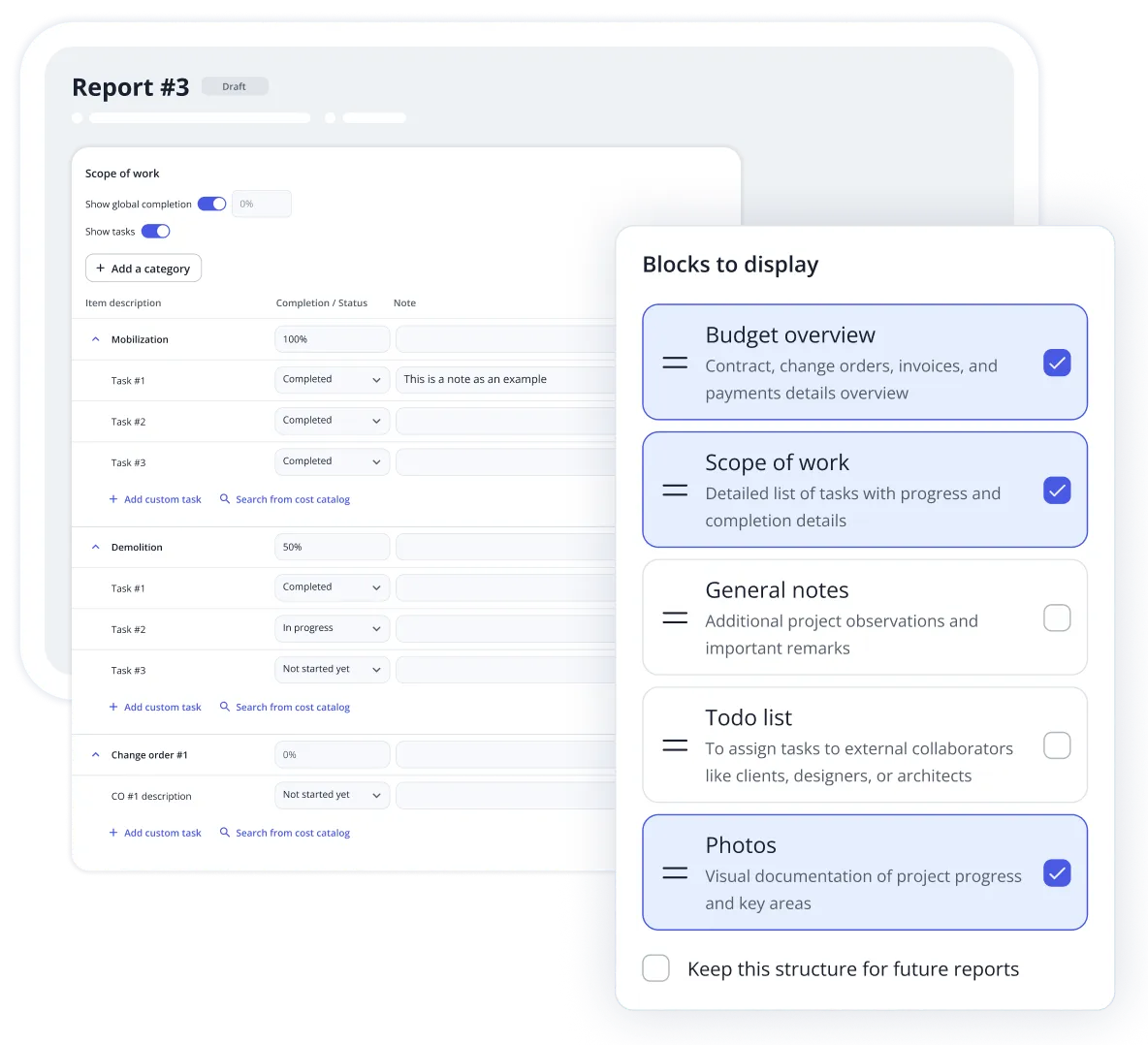
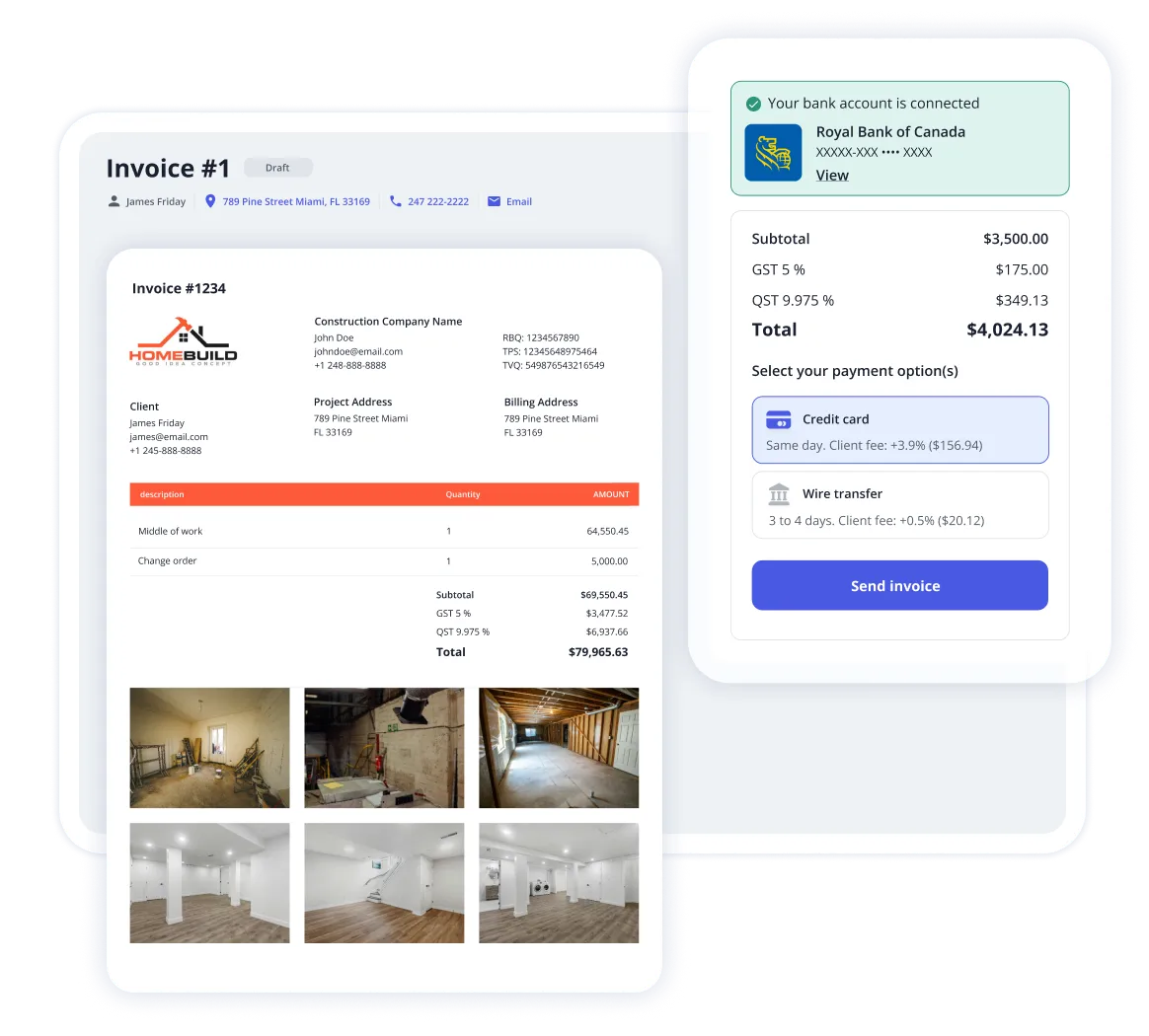
- Digital Paper Trail: Every communication, photo, and approval is time-stamped and stored. If a homeowner claims you abandoned a project, you can present a complete Project Lifecycle Report showing every milestone met and signed off by the client.
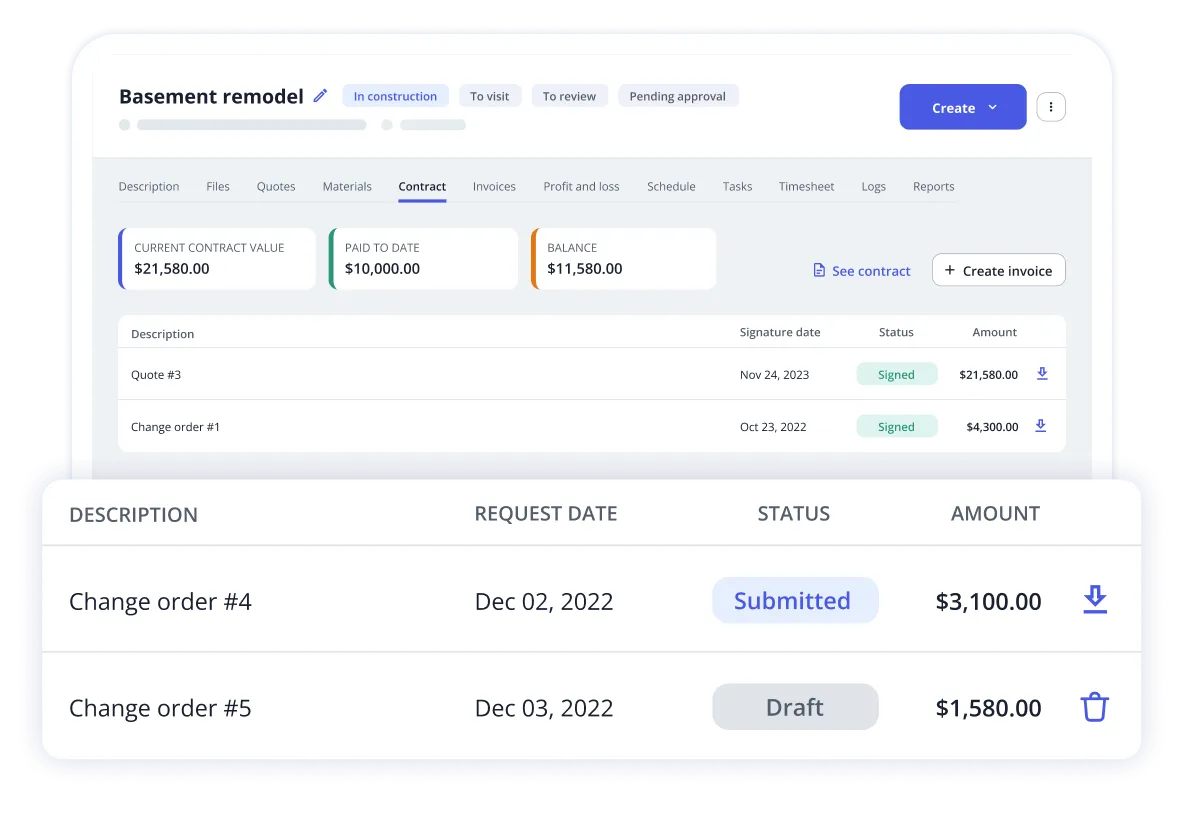
- Change Order Lockdown: "Scope creep" and verbal agreements are the leading causes of the lawsuits that trigger Recovery Program claims. Billdr PRO’s Digital Change Order system requires a client's e-signature and a payment update before work proceeds, making it nearly impossible for a homeowner to win an "unsatisfied judgment" based on miscommunication.
- Subrogation Protection: Since the state will pursue you for any funds paid out, having an "audit-ready" record of subcontractor payments and lien waivers ensures that you aren't held liable for the mistakes of a third-party trade partner.
Phase 4: Energy Codes & The Nov 2026 Deadline
Washington is currently in the "compressed" 2024 code cycle. While the 2021 codes remain the baseline for early 2026, the Washington State Building Code Council (SBCC) has finalized a timeline that every builder must mark on their calendar.
- The 2024 Code Cycle (Effective Nov 1, 2026): Final adoption of the 2024 Washington State Building Codes is slated for May 2026. Following a six-month grace period, these rules become mandatory statewide on November 1, 2026.
- Airtightness & Blower Door Testing: Building envelopes are getting tighter. While previous cycles hovered at 5.0 ACH50, the 2026 standard moves toward 3.0 – 4.0 ACH50 (Air Changes per Hour). This makes mid-build "pre-drywall" blower door tests a necessity rather than an option.
- The "Ready" Mandates:
- EV Ready: New residential construction must include at least one 40-amp branch circuit terminated in a junction box in the garage or near the parking area to support future Level 2 EV charging.
- Heat Pump Ready: Even if gas is utilized, builders must provide a dedicated electrical circuit and a physical pathway (conduit) for a future heat pump water heater or space heating system.
- The Credit System (WSEC-R Table R406): To pull a permit, you must achieve a specific number of "credits" (typically 3 to 7 depending on house size). Credits are earned through high-efficiency HVAC, triple-pane windows, and advanced air sealing.
Billdr Advantage: The "Audit-Ready" Defense
In Washington, L&I and local building officials operate on a "zero-tolerance" policy for code gaps. Billdr is designed to be your administrative "Paper Shield."
- Recovery Audit Trail: With the 2026 Homeowner Recovery Program now live, your best defense against unsatisfied judgments is a bulletproof digital record. Billdr stores every signed change order, time-stamped daily log, and client communication in one place. If a dispute arises, you can export a full project history to prove work was performed to code.
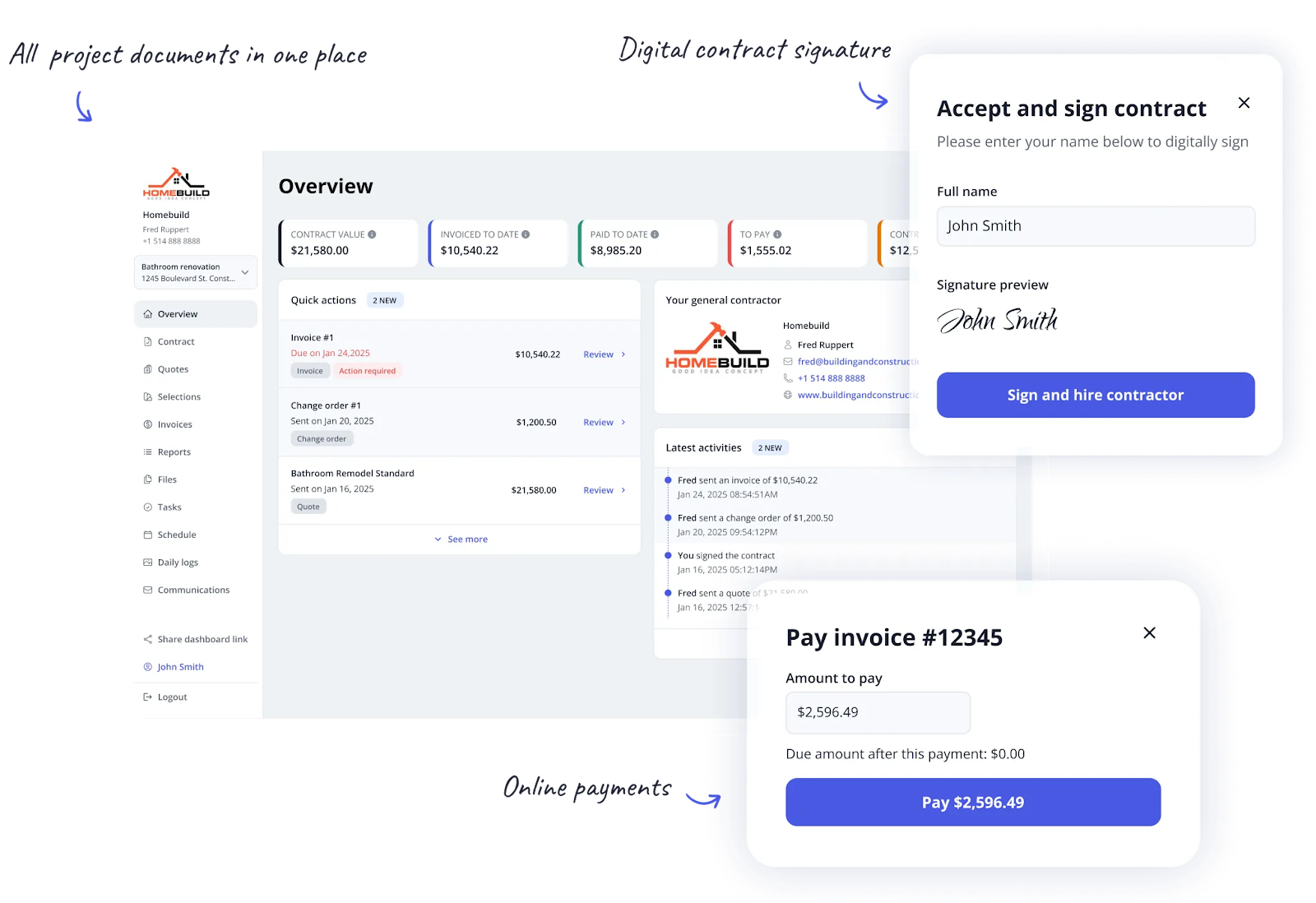
- Financials Hub for Credits: Some energy code credits require proof of specific appliance efficiency ratings (Energy Star). Use the Files Management feature to store spec sheets and purchase receipts against the project, ensuring your "Credit Total" is verifiable during final close-out.
2026 Washington Startup Cost Summary
No exam fees; biennial renewal.
Disclaimer: Requirements as of February 2026. Always verify with the Washington Department of Labor & Industries for the latest fee schedules and code amendments.
Official Sources & Resources
In 2026, Washington’s construction regulatory environment is moving toward a "Digital First" model. The following expanded resources provide the direct portals and legal references needed to navigate the July 1, 2026 fee and recovery program updates.
1. Primary Regulatory & Licensing Portals
- WA L&I Contractor Hub: lni.wa.gov/contractors
- 2026 Focus: This is the primary portal for the Homeowner Recovery Program.
- Resource: Access the Verify a Contractor Tool to check your current registration status and ensure no "unsatisfied judgments" are flagged against your UBI.
- WA Dept of Revenue (MyDOR): dor.wa.gov
- 2026 Focus: Use the Business Licensing Wizard to apply for your Unified Business Identifier (UBI).
- Pro Tip: This is where you manage your Reseller Permit, allowing you to purchase materials tax-free.
- Secretary of State (SOS) - Corporations: sos.wa.gov/corps
- 2026 Focus: Filing your Annual Report ($70) is mandatory to maintain "Good Standing." L&I now checks this status electronically before approving registration renewals.
2. Building Codes & Environmental Standards
- WA State Building Code Council (SBCC): sbcc.wa.gov
- The 2026 Shift: This site hosts the 2024 Washington State Energy Code (WSEC-R) amendments.
- Resource: Download the R406 Credits Table (updated for 2026) to calculate your compliance path for new residential builds.
- WA Energy Code Support: waenergycodes.com
- Resource: Provides free compliance software and training for the 2024 code cycle. This is the gold standard for preparing your energy credits before permit submission.
3. Legal & Enforcement References
- Revised Code of Washington (RCW 18.27): app.leg.wa.gov/RCW/default.aspx?cite=18.27
- The Go-To For: Reviewing the exact legal definitions of the 2026 Homeowner Recovery Program and successor liability rules.
- SHB 1534 Official Text: leg.wa.gov
- The Go-To For: Understanding the legislative intent behind the $30,000 bond increase and the new enforcement powers of L&I inspectors.
4. Professional Development & Advocacy
- Building Industry Association of WA (BIAW): biaw.com
- Resource: BIAW offers ROII (Retroactive Rating) programs Washington’s unique way of earning "safety refunds" on your workers' comp premiums.
- Master Builders Association (MBA) of King & Snohomish: mbaks.com
- Resource: Essential for builders in the Puget Sound area to stay updated on local $1M/$2M insurance mandates that exceed state minimums.
IMPORTANT DISCLAIMER: Billdr is a project management and administrative tool designed to assist homebuilders in organizing their business operations and documentation. Acquiring a Billdr subscription does not guarantee that you will receive a contractor license or registration from the state of Washington. All licensing decisions are made solely by the Washington Department of Labor & Industries (L&I). While Billdr can facilitate specific phases of the process such as document storage, task management, and financial record-keeping. It is the user's sole responsibility to ensure all state requirements, fees, and legal mandates are met.