

Texas Commercial General Contractor Requirements 2026: License & Compliance Guide
Updated April 2026 – Requirements can vary significantly by city and project type. Always verify local municipal mandates, as Texas does not have a centralized state licensing board for general contractors.
Executive Summary
Texas remains one of the most robust construction markets in North America, but it features a unique regulatory environment. Unlike states with a centralized board, Texas does not issue a single, statewide "Commercial General Contractor License." Instead, authority is decentralized to "Home Rule" municipalities. To succeed in the 2026 Texas market, your firm must master a patchwork of local registrations, fulfill specialized state trade licensing mandates, and maintain the high insurance and bonding standards expected by commercial developers.
Phase 1: Legal & Business Infrastructure
Establishing a professional legal foundation is the first step toward bidding on high-value commercial projects.
1. Texas Secretary of State (SOS) Registration
Your "Certificate of Formation" is your business’s birth certificate. It defines your legal limits and protects your personal assets (home, car, savings) from business debts.
- Choosing Your Entity (LLC vs. Corporation):
- LLC (Limited Liability Company): The standard for 2026 commercial firms. It offers "pass-through" taxation (profits go directly to your personal tax return) and has fewer administrative hurdles (no mandatory annual board meetings).
- Corporation (Inc.): Preferred if you plan to seek heavy outside investment or go public. It requires a more rigid structure, including a Board of Directors and formal bylaws.
- The Registered Agent Requirement: * Texas law requires every filing entity to have an agent who can receive legal documents (like lawsuits or subpoenas) during business hours.
- The Pro-Tip: While you can be your own agent, commercial GCs often hire a professional service. This ensures that a process server doesn’t show up at a jobsite or your home in front of clients or family.
- BOI Reporting Alert: While most domestic U.S. companies became exempt in 2025, always perform a final check at FinCEN.gov. Even if exempt from daily reporting, your initial SOS filing must be accurate to avoid "piercing the corporate veil" during a legal dispute.
2. Federal and State Tax Setup
Texas is one of the few states with no state income tax, but it makes up for it with a complex Sales and Use Tax system for contractors.
- The Federal EIN: Your Employer Identification Number is required to open a business bank account and to hire employees. It is the primary key for your 2026 Surety Bonding applications.
- Sales Tax Permit (Non-Residential Focus):
- In Texas, "New Construction" is taxed differently than "Repair and Remodel."
- Commercial Remodeling: This is a taxable service. You must collect sales tax from your customer on the entire bill (labor + materials).
- New Commercial Construction: Generally, labor is non-taxable, but you must pay tax on materials.
- Billdr Tip: Use a Sales Tax Permit to issue "Resale Certificates" to your suppliers. This allows you to buy materials tax-free, provided you are collecting the tax from the end client on a "Separated Contract."
3. Specialized State Licensing (TDLR & TSBPE)
Texas does not license General Contractors at the state level, but it fiercely protects the specialized trades.
- The "Master" Requirement: To offer "turnkey" services in-house, you must have a Master-level licensee on payroll for each trade. If you are a "paper GC" (subbing everything out), you don't need these, but you must verify them.
- TDLR (Electrical, HVAC, & Well Drilling): Manages the "Texas Electrical Safety and Licensing Act." Verify your subs' licenses via the TDLR License Search.
- TSBPE (Plumbing): Regulates everything from medical gas to basic commercial piping. Plumbing enforcement in Texas is exceptionally strict in 2026.
- 2026 Verification Mandate: Under revised 2026 prime-subcontractor liability rules, a GC can be held liable for a sub's "unlicensed work" even if they weren't aware of the lapse. Always keep a digital copy of your subs' Master Licenses in your compliance vault.
The Billdr Advantage: Phase 1 Infrastructure
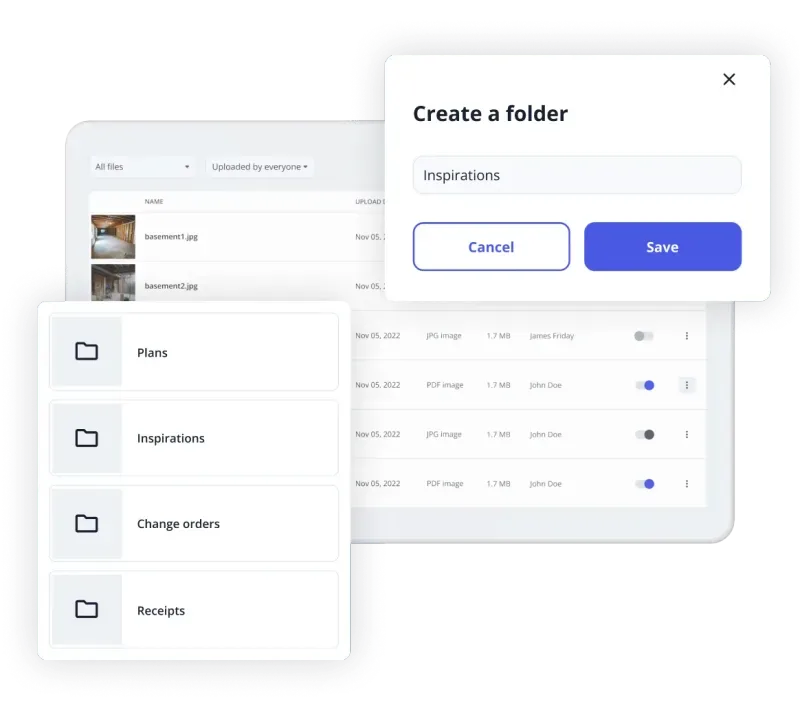
- Resale Certificate Archive: Don't let your tax exemptions get buried in a truck dashboard. Use Billdr's Document Management to store your Texas Sales Tax Permit and pre-filled Resale Certificates. When you go to a new supplier, you can email the certificate directly from the app.
Phase 2: Municipal Licensing & The "Home Rule" Strategy
In a "Home Rule" state, city hall is the true gatekeeper. Requirements vary widely. Some cities focus on registration tiers and bonds, while others emphasize project-specific permits and insurance proof.
1. Local Contractor Registration: Navigating the Patchwork
While there is no statewide "license," most major cities require a formal registration before you can pull a commercial permit. In 2026, this process is increasingly tied to digital portals and specific "tiers" of work.
- Dallas & Austin: The Tiered Portal System
- Dallas: Requires GCs to register through the Develop Dallas portal. Depending on the project scope, you may need to register as a "General Contractor" (unlimited) or a "Building Contractor" (limited to 3 stories). As of 2026, Dallas often requires a Contractor Bond ranging from $10,000 to $50,000 to finalize registration.
- Austin: Operates via the Austin Build + Connect (AB+C) portal. While registration itself is often free, you must obtain an AB+C ID and a Letter of Authorization (LOA). GCs must register once but are required to update their digital profiles annually with current insurance and bond information.
- Houston: The Project-First Model
- Houston is unique; it does not issue a standing "General Contractor License." Instead, it requires a Basic Business License (BBL) for the firm and manages quality through project-by-project permitting. In 2026, you must register your firm with the city's Administration & Regulatory Affairs division before your first permit application will be reviewed.
- San Antonio: The ICC Standard
- San Antonio requires GCs to register with the Development Services Department. For new commercial builders in 2026, the city may require proof of ICC (International Code Council) Certification (typically the G13 or F13 exam) to demonstrate code competency.
2. Insurance & Risk Mitigation: The 2026 Commercial Standard
In the Texas commercial market, "minimums" are rarely enough. By 2026, the complexity of urban projects has pushed insurance expectations to a new baseline.
- Commercial General Liability (CGL):
- While a city might technically accept a $500,000 policy, most 2026 commercial landlords and institutional lenders mandate a $2,000,000 per occurrence / $4,000,000 aggregate policy.
- High-Value Tip: Ensure your policy includes "Products and Completed Operations" coverage, which protects you from claims after the project is turned over to the owner.
- Workers’ Compensation: The "Non-Subscriber" Trap
- Texas remains the only state that allows private employers to "opt out" of Workers' Comp (Non-subscription). However, in 2026, this is a dangerous path for commercial GCs.
- The Legal Risk: If an employee is injured, non-subscribers lose "Common Law Defenses." You cannot argue that the employee was negligent or that they "assumed the risk" of the job. You face unlimited liability in court.
- The Contractual Wall: Virtually all 2026 public projects and high-value private contracts require Workers' Comp. If you don't carry it, you are effectively locked out of the best bidding opportunities in the state.
The Billdr Advantage: Phase 2 Operations
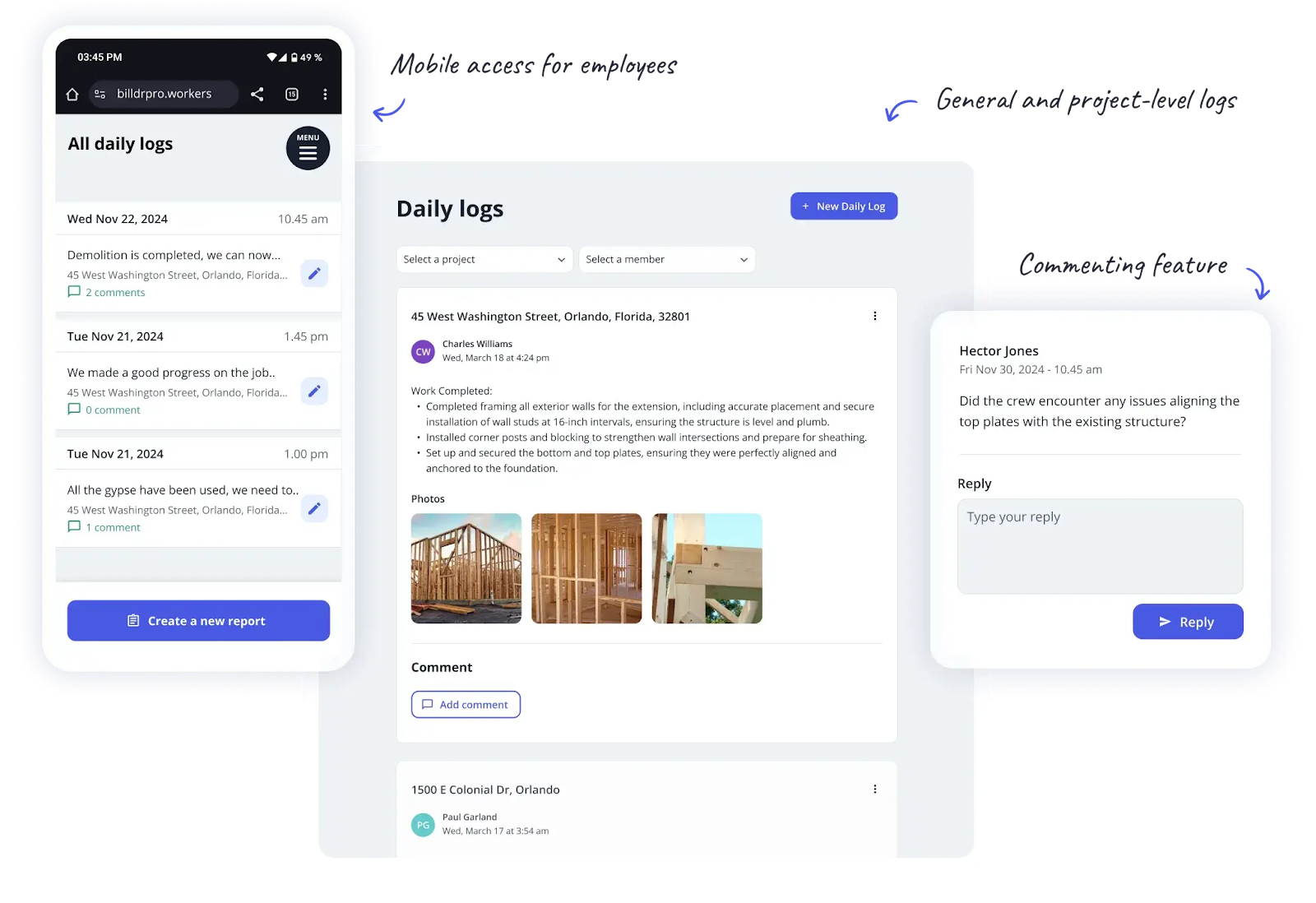
- Safety Documentation for Non-Subscribers: Even if you choose the "Active" path with Workers' Comp, Texas law (and insurers) demand rigorous safety documentation. Use Billdr's Daily Logs to record daily safety huddles and site inspections. This digital "paper trail" is your best defense against negligence claims and is often required for premium audits in 2026.
Phase 3: Financial Capacity & Surety Bonding
Bonding is the "Financial Passport" that separates small builders from professional commercial firms. Under Texas Government Code Ch. 2253, specific thresholds apply to public works.
1. The Bonding Trifecta: Statutory Mandates
Under Texas Government Code Chapter 2253 (historically known as the McGregor Act), bonding is not optional for public work. As of 2026, these mandates have become even more critical as municipalities look to mitigate risk in a volatile economy.
- Bid Bond (5% – 10% of Bid): * Most Texas municipalities (such as Houston and Dallas) require a 5% bid guarantee for state-funded construction over $100,000.
- If you win the bid but refuse to sign the contract or cannot provide the final performance bond, the surety pays the owner the "bid spread" (the difference between your bid and the next lowest bidder).
- Performance Bond (100% of Contract Value): * Required for all public work contracts exceeding $100,000.
- This guarantees you will finish the project according to the exact plans and specifications. If you default, the surety must step in to complete the build or pay for its completion.
- Payment Bond (100% of Contract Value): * Required for all public work contracts exceeding $25,000 ($50,000 if the entity is a municipality).
- Because you cannot place a lien on a public building in Texas, the payment bond is the only legal protection for your subcontractors and suppliers.
2. Bonding Capacity: The "Working Capital Multiplier"
Your "Bonding Capacity" is the total amount of bonded work you can have open at one time (Aggregate) and the largest single project you can take on (Single Limit). In 2026, sureties have tightened their underwriting standards.
- Working Capital Multiplier: Sureties typically look at your Working Capital (Current Assets minus Current Liabilities). A standard rule of thumb for a new or emerging GC is a 10x to 15x multiplier.
- Example: If your balance sheet shows $100,000 in liquid working capital, a surety may grant you a $1M to $1.5M aggregate bonding limit.
- The "Character" Audit: In 2026, sureties don't just look at cash. They evaluate your "Three C’s":
- Character: Your credit history and professional reputation.
- Capacity: Your team’s ability to actually perform the work.
- Capital: Your net worth and liquidity.
The Billdr Advantage: Phase 3 Financials
- Balance Sheet Readiness: To get bonded, you need a CPA-prepared financial statement. Use Billdr's Financials & Budgeting module to export clean, project-by-project profit/loss reports. This level of professional transparency makes it much easier for your CPA to generate the "Reviewed" or "Audited" statements your surety agent will demand.
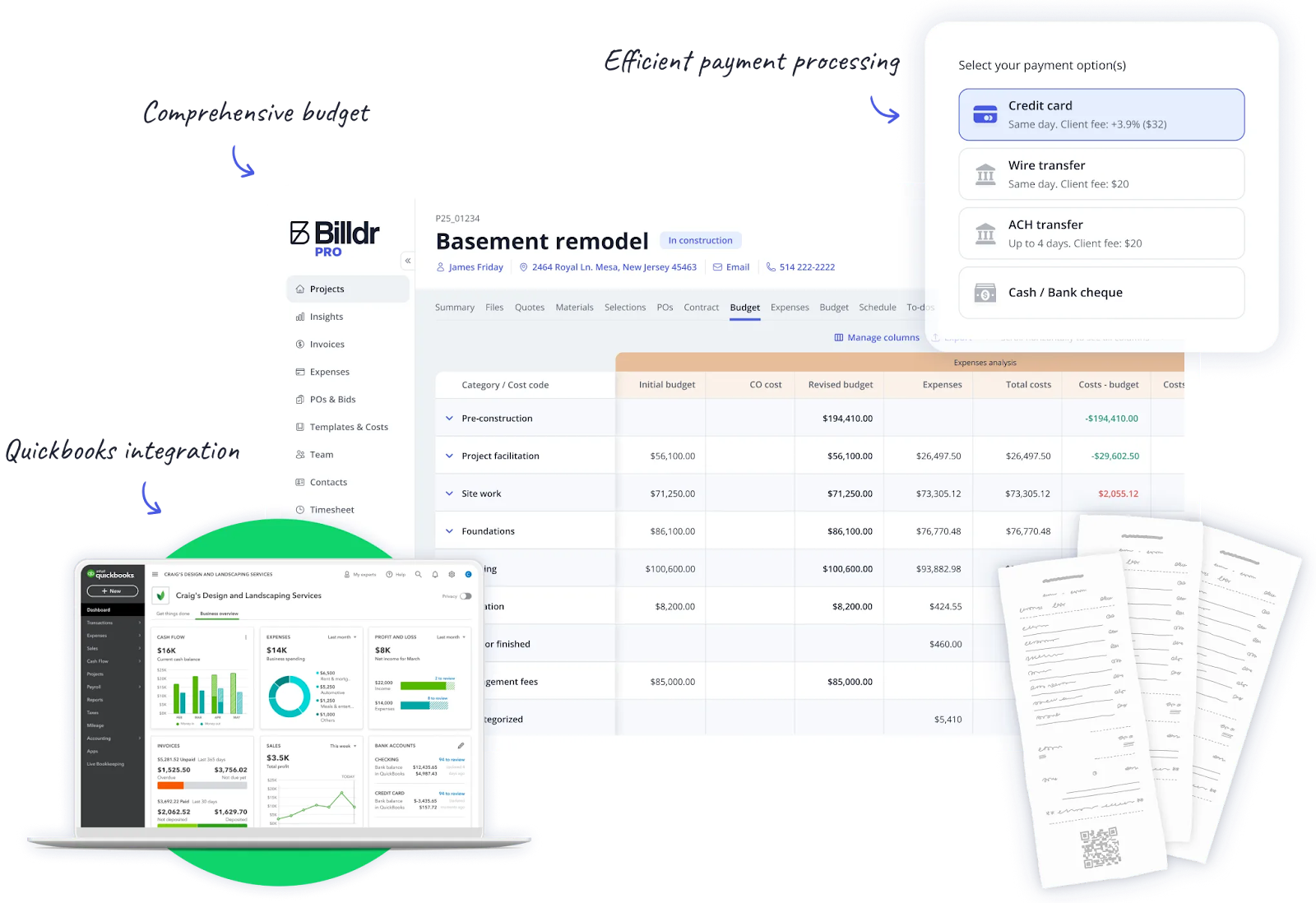
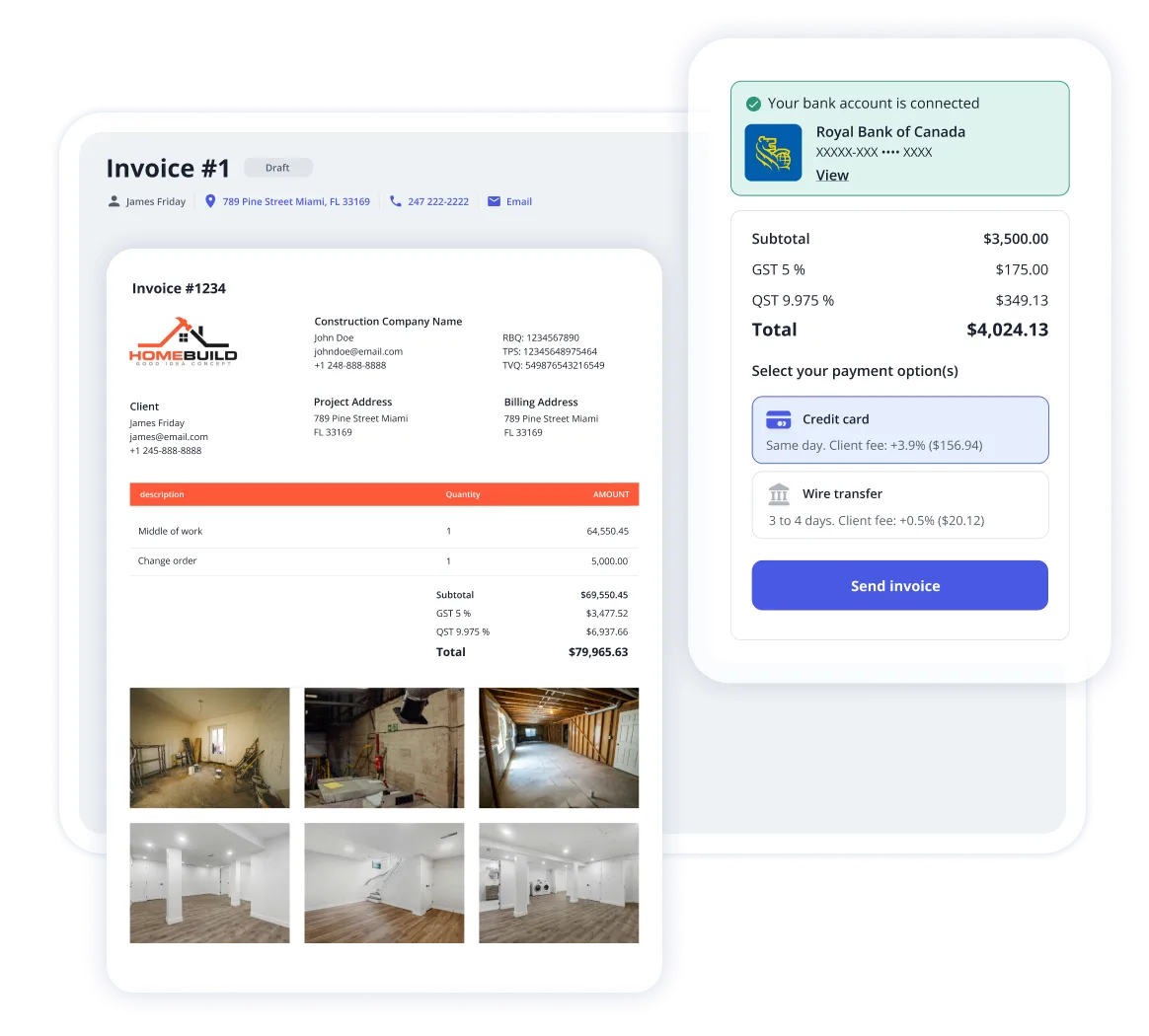
- Subcontractor Payment Tracking: Since the Payment Bond puts the GC on the hook for sub-payments, you must avoid "double-payment" risks. Use Billdr's Invoice & Payment Tracking to ensure you never release a payment without a signed Texas Conditional Waiver and Release. This keeps your payment bond "clean" and protects your relationship with your surety.
Phase 4: Tools for Maintaining Compliance
Managing a multi-city commercial portfolio in Texas requires an airtight audit trail. Specialized project management software can help streamline these operations.
1. Multi-Zone Credential Hub
Texas is a "Home Rule" state, meaning each city functions as its own regulatory island. A mistake in city-specific documentation can lead to immediate work stoppages or "Red Tags."
- The Compliance Challenge: Keeping track of the Dallas Contractor Bond, the Houston Basic Business License, and the San Antonio trade registrations in a single spreadsheet is a recipe for disaster.
- The Digital Solution: Use Billdr's Document Management to create a "Municipal Master Folder." Store the specific bonds, insurance riders, and competency cards required for each zone. Because the platform is cloud-based, your Project Managers can pull up the specific city registration on their tablets the moment an inspector walks onto a site in a new jurisdiction.
2. Automated Subcontractor Shielding
Texas has strict laws regarding the use of licensed trades. In 2026, the liability for a subcontractor’s expired license often "rolls up" to the General Contractor.
- The Compliance Challenge: Manually checking the TDLR (Electric/HVAC) or TSBPE (Plumbing) status of every sub on a large commercial project is a full-time job. A single lapse can void your project insurance.
- The Digital Solution: Leverage Billdr's License Management features. When you onboard a subcontractor, you upload their state license and insurance. The system then monitors the expiration dates. If a plumber's license expires, the software can automatically flag their next invoice for a hold, ensuring you never pay for unlicensed work, protecting both your firm and the project owner.
3. Audit-Proof Site Logs & Supervision Proof
Texas building officials and OSHA inspectors in 2026 are increasingly focused on "Qualified Supervision." You must be able to prove who was on-site, what they were overseeing, and that safety protocols were followed.
- The Compliance Challenge: Paper logs are easily lost, damaged, or falsified. If a structural issue arises three years after completion, a physical binder in a warehouse won't help you in a Texas court.
- The Digital Solution: Use Billdr's Daily Logs to create a chronological, "defensive" record of the project.
- GPS-Tagged Documentation: Every photo taken in the app is timestamped and geolocated, proving the supervisor was actually on-site during a critical foundation pour or steel inspection.
- The "Lien Law" Safeguard: Texas Chapter 53 Lien Laws are incredibly complex. Use the Daily Logs to record exactly when materials were delivered. This data is vital if you ever need to defend against a "Notice of Unpaid Balance" or file a lien yourself.
The Billdr Advantage: Phase 4 Compliance
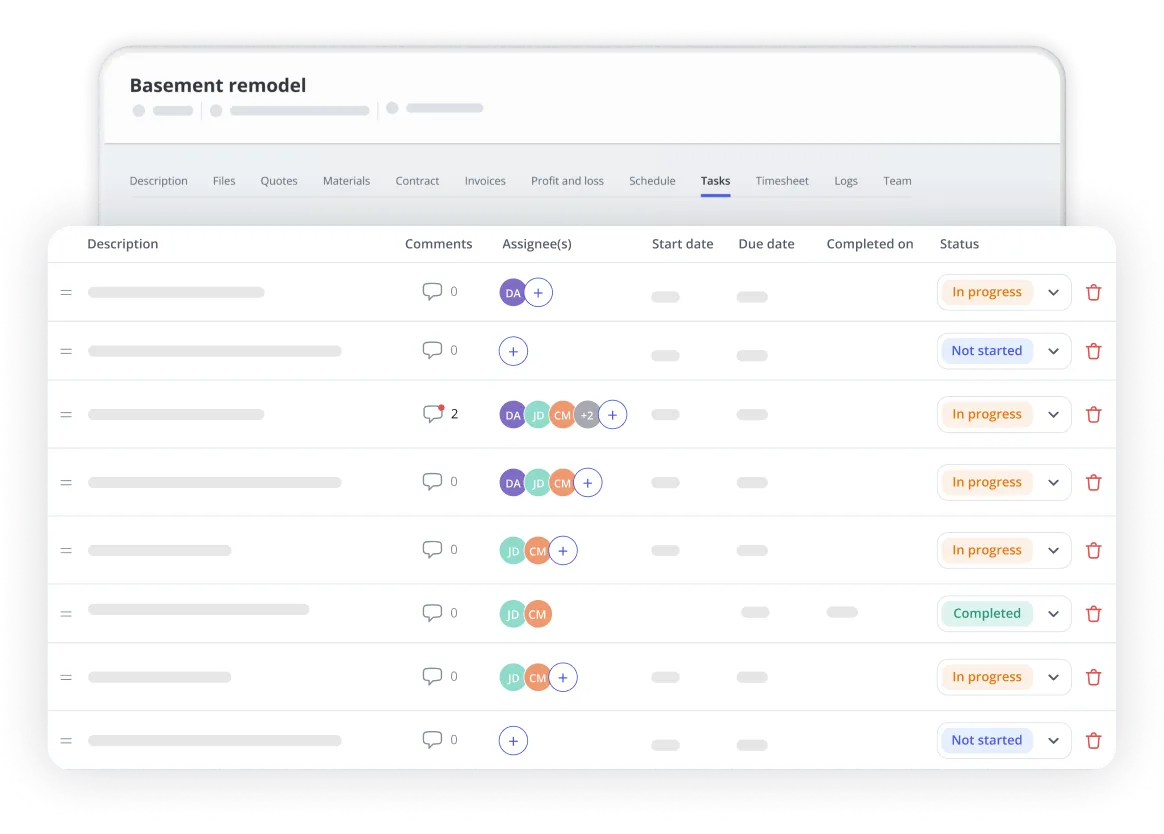
- Texas Lien Law Automation: Texas has specific deadlines for "Notice of Claim" that differ between public and private work. Use Billdr's Task Management to set "hard-stop" reminders for the 15th day of the month. The critical Texas deadline for sending notices to owners and GCs to preserve your lien rights.
2026 Texas Commercial Startup Costs (Estimated)
| Category | Requirement | 2026 Est. Cost (USD) | Timeline |
|---|---|---|---|
| Legal | Texas SOS Incorporation | $300 - $500 | 1 - 2 Weeks |
| Licensing | Municipal Registrations (Per City) | $200 - $500 | 2 - 4 Weeks |
| Risk | CGL Insurance ($2M/$4M Limits) | $3,500 - $8,000+ | 2 Weeks |
| Bonding | License/Permit Bond Premiums | $500 - $1,500 | 1 Week |
| TOTAL | Estimated Initial Outlay | $4,500 - $10,500+ | 1-3 Months (Setup) |
Note: Costs are estimates and can vary based on credit, experience, and location. Full bonding capacity may take 3-12+ months to establish. Professional fees (CPA, attorney) not included.
Building for the Future
Success in the 2026 Texas commercial sector is defined by the integrity of your systems. By mastering the decentralized regulatory environment and leveraging modern management tools, you can build a scalable powerhouse primed to win the state's most prestigious contracts.
Official Texas Resources
1. Texas Secretary of State (SOS)
Primary Tool: SOSDirect The SOS is the administrative engine for business formation. In 2026, SOSDirect is the mandatory portal for all commercial filings.
- Business Formation: You will use this to file your Certificate of Formation ($300).
- Name Availability: Texas has strict "distinguishable name" rules. You must use the SOS name search to ensure your firm’s name isn't "confusingly similar" to an existing one (e.g., "Texas Builders LLC" vs. "Tejas Builders LLC").
- DBAs: If your legal name is "John Doe LLC" but you want to bid as "Lone Star Commercial," you must file an Assumed Name Certificate through SOSDirect.
2. Texas Comptroller of Public Accounts
Primary Tool: Webfile The Comptroller manages the state’s tax revenue. For GCs, this is where you manage your "Resale" status.
- Sales Tax Permit: Essential for commercial contractors. In 2026, you will use the Comptroller's site to print Texas Sales and Use Tax Resale Certificates.
- Commercial Remodeling vs. New Construction: This is the most audited area for Texas GCs. The Comptroller’s Publication 94-116 is the "Bible" for understanding when to charge tax on labor vs. materials.
- April 2026 Rate Check: Use the site to verify city-specific sales tax rates, which can fluctuate between 6.25% and 8.25% depending on local transit or emergency district surcharges.
3. Texas Department of Licensing and Regulation (TDLR)
Primary Tool: Online Licensing Services TDLR is the oversight body for Electricians and HVAC contractors.
- License Verification: As a GC, you are the primary investigator. Use the TDLR search daily to verify your subcontractors.
- Status Check: A subcontractor might show you a physical card, but in 2026, only the TDLR digital status is legally binding. If their license shows "Expired" or "Suspended" in the database, your site insurance could be voided if an accident occurs.
4. Texas State Board of Plumbing Examiners (TSBPE)
Primary Tool: Public License Search Texas plumbing regulation is independent of TDLR and follows its own set of strict protocols.
- Ask Kevin+: New for 2026, TSBPE has launched an AI-powered technical resource called Ask Kevin+. You can use this to get instant links to specific plumbing code chapters or to verify the required "Master Plumber" on a commercial jobsite.
- RMP Spreadsheet: You can download the Responsible Master Plumber (RMP) spreadsheet from the site. This allows GCs to quickly verify if the plumbing company you are hiring has the mandatory state-required insurance on file with the board.
Disclaimer: This guide is for informational purposes only and is not legal, financial, or licensing advice. Laws change; always consult the specific municipality, TDLR/TSBPE, your attorney, and insurance professional. Billdr is a project management tool and does not provide legal or licensing authority.