

Illinois Commercial GC Licensing: Chicago Tiers, IDFPR Roofing, and Municipal Rules (2026)
Updated April 2026 – Illinois operates under a "Home Rule" system. Requirements vary significantly by municipality. Always verify local mandates in addition to state trade regulations.
Executive Summary
Illinois represents one of the most complex regulatory landscapes for commercial construction in the Midwest. Unlike states with a unified "General Contractor License," Illinois delegates licensing authority to municipalities like Chicago, Naperville, and Peoria. To thrive in 2026, general contractors must navigate state-level trade mandates (roofing and plumbing) while mastering the specific "Class" tiers of local building departments, which underwent significant project-limit increases in early 2026.

Phase 1: State-Level Foundation & Trade Licensing
While Illinois does not license general contractors at the state level, it strictly regulates specific trades and business formations that serve as the foundation of your operations.
1. Business Entity Formation: Building the Legal Shield
Your registration with the Illinois Secretary of State (SOS) is what transforms you from an individual into a commercial entity capable of carrying professional liability insurance.
- LLC vs. Corporation in 2026: Most Illinois GCs choose an LLC for its "pass-through" taxation and flexible management structure. However, if you plan to seek venture capital or have a complex board of directors, a C-Corp may be required.
- The "Certificate of Good Standing" (COGS): This is more than just a piece of paper; it is a real-time snapshot of your company's compliance.
- The 2026 Deadline: You must file your Annual Report before the first day of your anniversary month.
- The Risk: If you fail to file, the SOS will change your status to "Delinquent." Most Illinois municipalities use automated API checks for license renewals; if your COGS isn't active, your local contractor license may be suspended mid-project.
- Assumed Name (DBA): If your legal entity is "Midwest Construction LLC" but you want to brand it as "Build-It Chicago," you must file an Assumed Name Certificate with the SOS and potentially the county clerk.
2. Mandatory State Trade Licensing: The Specialized Gatekeepers
In Illinois, "General Contractor" is a business designation, but "Roofing" and "Plumbing" are regulated professions.
- Unlimited Roofing License (IDFPR):
- Scope: In Illinois, roofing is the only construction trade that requires a standalone state-level contractor license.
- The "Unlimited" Designation: To work on commercial or industrial buildings, you must pass the Unlimited exam. A "Limited" license restricts you to residential structures of 8 units or fewer.
- Financial Security: You must maintain a $25,000 bond specifically for this license, which must be on file with the IDFPR.
- Plumbing Contractor Registration (IDPH):
- The Distinction: Unlike roofing, where the company is licensed, plumbing involves a Licensed Plumber (the individual) and a Plumbing Contractor Registration (the business).
- The Designated Plumber: Your firm must designate a "Plumber of Record" who holds an active Illinois Master Plumber license. If that individual leaves your firm, your ability to pull plumbing permits expires immediately.
- Subcontractor Verification Liability: In 2026, Illinois courts have increasingly held GCs liable for "negligent hiring" if they fail to verify that their trade subs have active state licenses.
The Billdr Advantage: Phase 1 Infrastructure
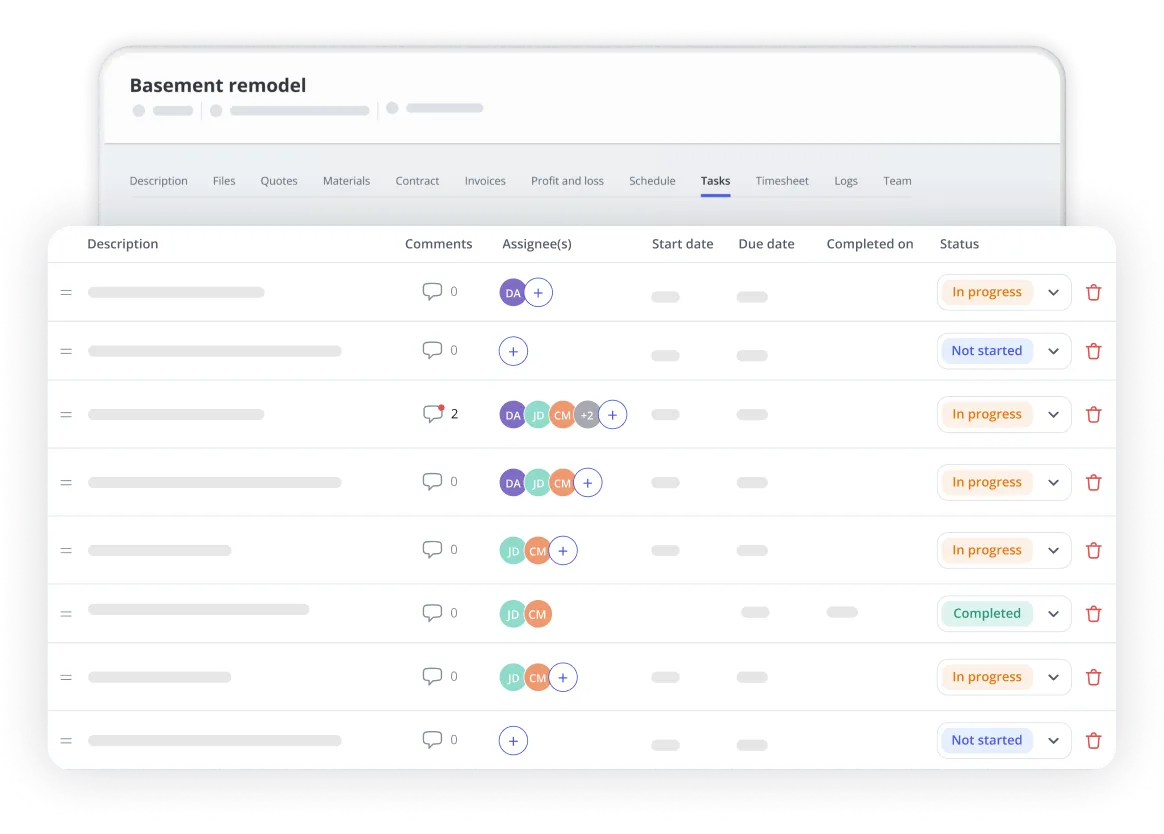
- SOS Compliance Tracker: Don't let your "Good Standing" lapse. Use Billdr's Task Management to set a recurring annual reminder 30 days before your Secretary of State anniversary. Upload your latest Certificate of Good Standing to your company vault so it's ready for any local permit application.
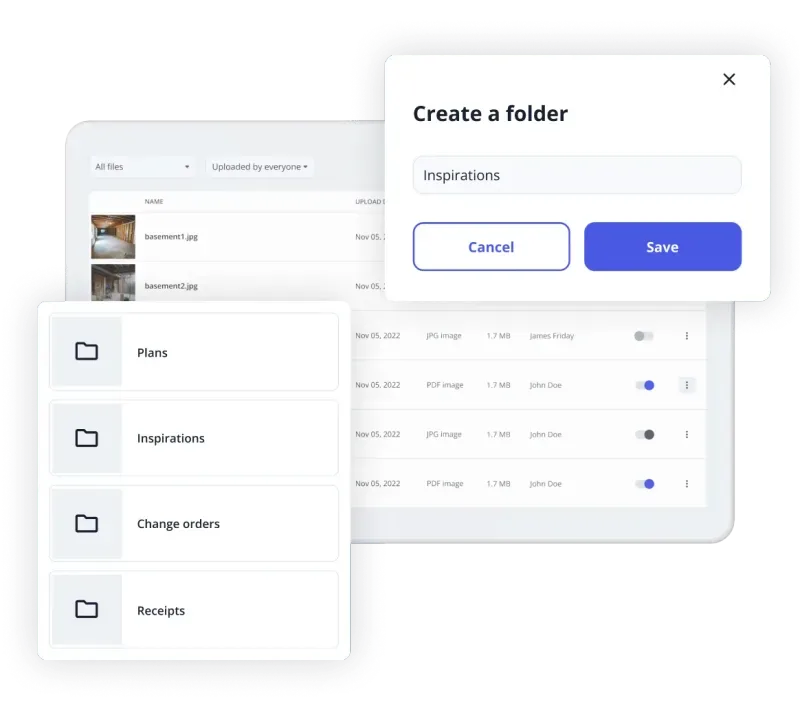
- The "Unlimited" Document Hub: Store your IDFPR Roofing License and the associated $25,000 bond in a dedicated folder. When bidding on a large-scale industrial project, you can share a "Compliance Link" from Billdr that gives the owner instant access to your verified state credentials.
Phase 2: Mastering Chicago GC Licensing Tiers
1. Navigating the Chicago Licensing Tiers
Choosing your license class is a strategic decision that balances your firm's bonding capacity with your growth goals. In 2026, these tiers are strictly enforced based on the total contract value (including all change orders) of the project.
| License Class | Project Value Limit (2026) | Demolition Authority |
|---|---|---|
| Class A | Unlimited | Ordinary or Complex |
| Class B | Up to $20,000,000 | Ordinary or Complex |
| Class C | Up to $10,000,000 | Ordinary Only |
| Class D | Up to $4,000,000 | Ordinary Only |
| Class E | Up to $500,000 | Limited |
Demolition Authority: The "Safety" Filter
Chicago’s 2026 safety mandates clarify exactly what kind of structural work you can lead:
- Ordinary Demolition: Includes interior non-load-bearing walls and small-scale structural modifications that do not impact the overall stability of a building. This is the ceiling for Class C and D holders.
- Complex Demolition: Includes the removal of structural elements in buildings over 40 feet in height or projects requiring specialized shoring/bracing. Only Class A and B firms are legally permitted to oversee these high-risk operations.
2. Beyond Chicago: The "Home Rule" Perimeter
Crossing the city limits into the suburbs or other Illinois "Home Rule" cities changes the rules instantly.
- Naperville: Requires a separate registration and a specific Contractor Bond (typically $10,000–$25,000) on file with the City Clerk.
- Peoria & Rockford: These cities often require proof of a "passing grade" on a recognized trade exam (like the ICC National Standard General Contractor exam) if you do not have a reciprocal license from another major Illinois city.
The Billdr Advantage: Phase 2 Operations
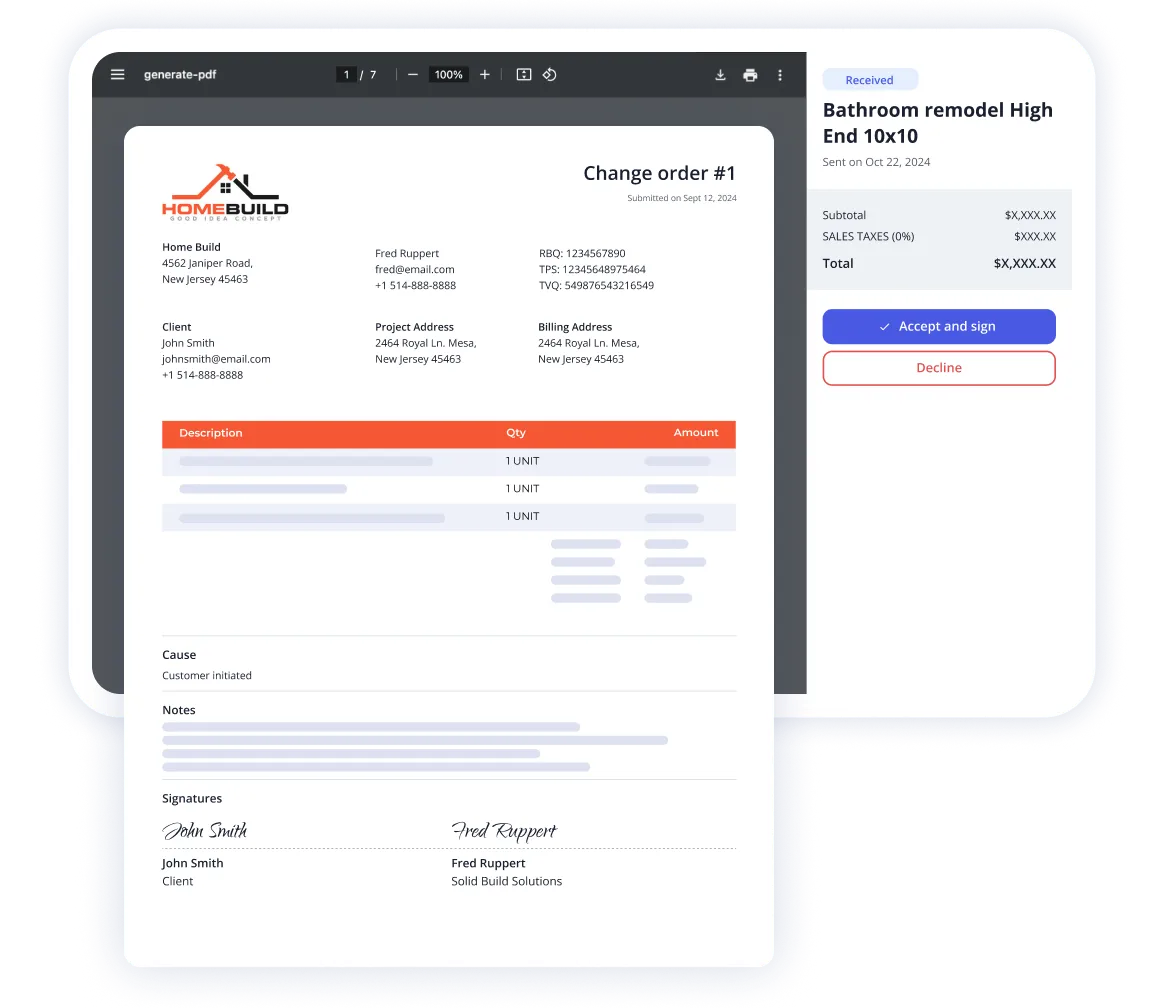
- Change Order Threshold Alerts: In the commercial world, "Scope Creep" is real. If you are a Class D contractor with a $3.8M project, a single major change order could push you over your $4M legal limit. Billdr's Financial Dashboard [automatically flags] when a project’s total value (Original Contract + Approved Change Orders) approaches 90% of your license tier capacity.
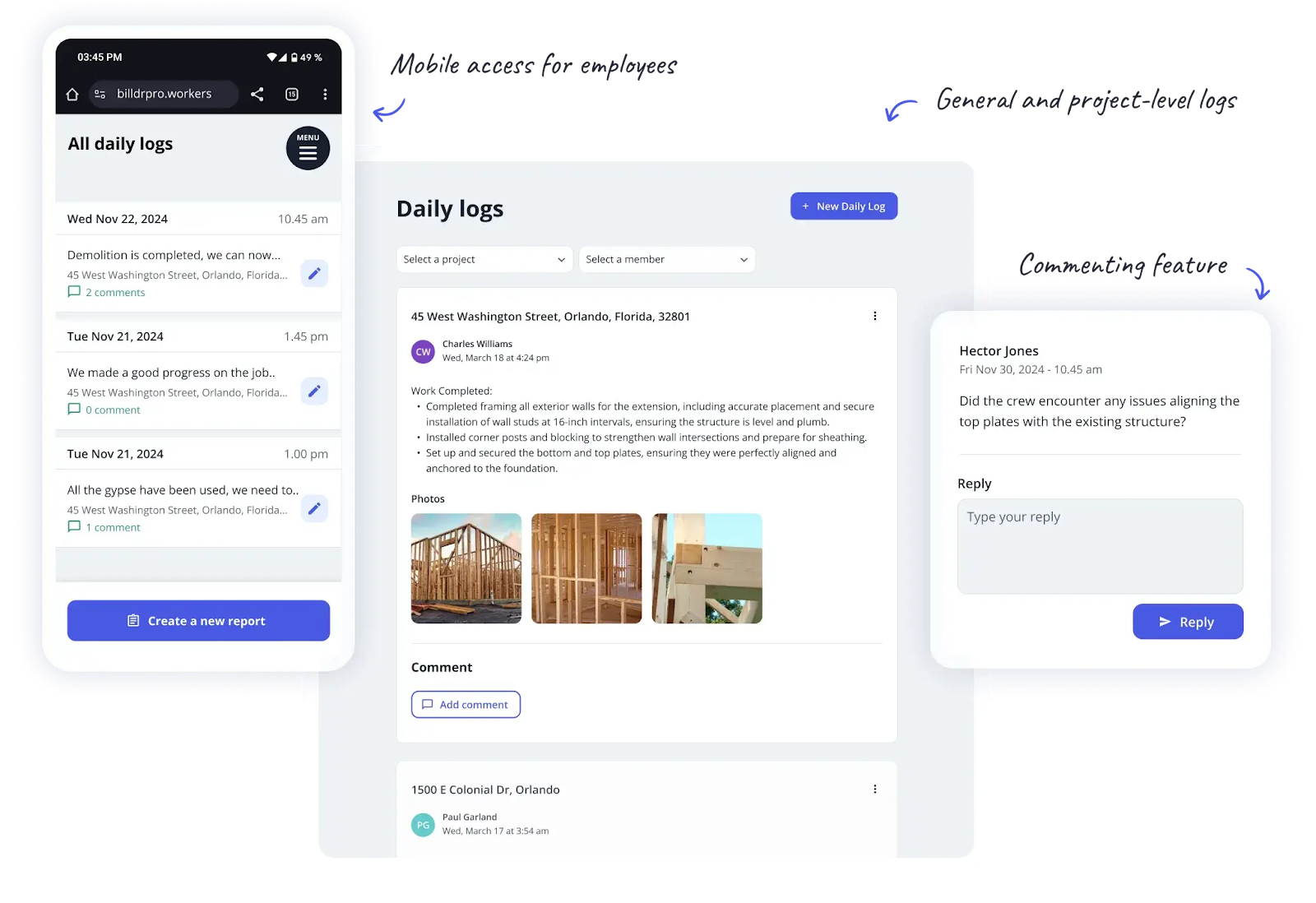
- Demolition Compliance Logs: For Class C and D contractors, proving you stayed within "Ordinary Demolition" limits is vital for liability. Use Billdr's Daily Logs to take time-stamped, GPS-tagged photos of structural elements before and after work. This provides an audit trail that proves your firm never engaged in "Complex Demolition" beyond your license's authority.
Phase 3: Financial Capacity & Prompt Payment
Illinois has rigorous financial requirements for commercial projects, particularly regarding insurance and bonding.
Phase 3 is where "paperwork meets the pocketbook." In Illinois, financial mismanagement isn't just a business risk, it’s a legal one. Between the state's aggressive Workers' Comp enforcement and the strict statutes governing how and when you get paid, your back-office financial strategy must be as precise as your blueprints.
1. Insurance & Bonding: The 2026 Liability Shield
In 2026, Illinois insurance requirements have scaled to match the rising costs of urban litigation and materials.
- The "Per Occurrence" Mandate: For a Class A firm in Chicago, having a $5,000,000 per-occurrence limit is no longer just a "best practice". It is a requirement of Municipal Code Section 4-36-090. If your policy drops below this mid-project, your permit can be pulled instantly.
- Workers' Compensation Enforcement: Illinois is notorious for its Workers' Compensation Commission (IWCC) audits.
- The Penalty: Failing to carry insurance can result in fines of $500 per day of non-compliance, with a minimum penalty of $10,000.
- The 2026 Risk: With the rise of the "gig economy" in construction, the IWCC is strictly scrutinizing "independent contractor" status. If you misclassify a worker in Illinois, you face massive back-tax liabilities and stop-work orders.
2. Public Works & The $150,000 Threshold
If you are bidding on government work (schools, libraries, or state roads), the Illinois Public Construction Bond Act (30 ILCS 550) is your primary guide.
- The Temporary Increase: Through the end of 2028, the threshold for mandatory Performance and Payment bonds is $150,000. This was designed to help smaller GCs compete for mid-sized public contracts without the heavy burden of bonding.
- The 2029 Reversion: Be prepared on January 1, 2029, this threshold is scheduled to drop back to $50,000.
- Local Overrides: Many "Home Rule" municipalities still require bonds for any project over $25,000. Always check the specific Request for Proposal (RFP).
3. Contractor Prompt Payment Act (815 ILCS 603)
This act is a General Contractor's best friend in the private sector. It is designed to prevent "cash-flow strangulation" by owners.
- The 30-Day Clock: Once you submit an "approved" invoice, the owner has 30 days to pay. If they don't, you are legally entitled to interest (typically 1% per month).
- The Retainage Cap: Illinois law is very specific about "holding money back."
- Phase 1: You can only hold 10% retainage.
- Phase 2: Once the project is 50% complete, that retainage must be reduced to 5%.
- The Subcontractor Flow: You must pass these same terms down to your subs. If you are only being held to 5%, you cannot legally hold 10% from your plumber.
Phase 4: Operational Compliance & Close-Out
The final phase of any Illinois project is the "Close-Out," where retainage is released and liens are waived under strict statutory timelines.
1. Illinois Lien Law (770 ILCS 60): The 4-Month & 90-Day Clock
Illinois law is designed to protect those who provide value to real estate, but it is unforgiving of clerical errors or missed dates.
- For General Contractors (The 4-Month Window): To maintain "perfection" of your lien against third parties (like lenders or subsequent buyers), you must record your lien claim with the County Recorder within 4 months of your last day of substantial work. If you miss this, you might still have a claim against the owner, but you lose your priority status against the bank.
- For Subcontractors (The 90-Day Notice): Under Section 24, subcontractors must serve a "Notice of Claim" to the owner and the lending agency within 90 days of their last date of work.
- The Owner's Trap (Section 5): In Illinois, an owner can demand a "Sworn Statement" from the GC listing all subs and amounts due. If you provide an inaccurate statement and the owner pays based on it, you could be liable for the shortfall to your subs.
2. Safety Documentation: The IL-OSHA Shield
As of 2026, IL-OSHA has significantly ramped up enforcement on commercial sites, particularly regarding fall protection and "Qualified Supervision."
- Site Logs: You must be able to prove that a competent supervisor was on-site during all active work hours.
- "Toolbox Talks": Generic safety manuals are no longer sufficient. Inspectors now look for proof of site-specific safety briefings (Toolbox Talks) that are signed by the workers present that day.
- Incident Records: Under 2026 mandates, electronic recording of injuries is required for most commercial firms, and these records must be accessible for immediate inspection during a site visit.
2026 Illinois GC Startup Costs (Approximate)
| Category | Requirement | 2026 Est. Cost (USD) | Timeline |
|---|---|---|---|
| Legal | IL SOS Incorporation | $150 - $500 | 1 - 2 Weeks |
| State License | Unlimited Roofing License | $350 - $650 | 4 - 6 Weeks |
| Local License | Chicago Class A License | $3,500 Annually | 4 - 8 Weeks |
| Risk | CGL & Workers' Comp | $6,000 - $18,000+ | 2 Weeks |
| TOTAL | Estimated Initial Outlay | $10,000 - $22,500+ | 2-4 Months |
Note: Fees are subject to 2026 increases and vary by credit history, insurance history, and experience requirements. Roofing estimates include application fees ($125) plus initial bond premiums.
Building the Future
The Illinois commercial landscape in 2026 is defined by a shift from traditional building to data-driven operations. With the state’s aggressive push toward carbon neutrality via the Climate and Equitable Jobs Act (CEJA) and the increasing complexity of "Home Rule" municipal mandates, a General Contractor’s value is now measured by their compliance agility.
To build the future of the Illinois skyline, firms must move beyond the "truck and clipboard" era. By centralizing credentials, automating the brutal 90-day lien notice cycles, and maintaining an audit-proof financial trail through Billdr, you transform regulatory friction into a competitive edge. While the market grows more complex, the path to scaling is clear: lead with technical expertise, protect your cash flow with digital safeguards, and stay "Permit-Ready" for every municipality across the Prairie State.4. City of Chicago Department of Buildings (DOB)
Primary Portal: Contractor Licensing & Web-Permitting This is the most critical site for "Phase 2" operations in the Midwest.
- License Classes A-E: This portal manages the 2026 project-limit tiers (e.g., verifying you are within your $20M Class B limit).
EasyPermit & Hansen: Chicago uses specific portals for permit applications. You must link your GC license number to your digital profile here to "sign off" on permits as the General Contractor of record.
Sources and Ressources
1. Illinois Secretary of State (SOS)
Primary Portal: Business Services Online The SOS is your corporate gatekeeper. For GCs, this isn't a "one and done" stop.
- Certificate of Good Standing: In 2026, most Illinois municipalities (including Chicago) require a digital "Good Standing" certificate dated within 30 days of your license application. You can download this instantly for a small fee through the portal.
- Annual Reports: If you miss your filing deadline here, your legal protections vanish, and your local contractor licenses can be suspended.
- Agent of Record: This site is where you maintain your Registered Agent information. Crucial for receiving legal notices and "Notice of Claim" documents.
2. Illinois Dept. of Financial and Professional Regulation (IDFPR)
Primary Portal: Roofing Contractor Licensing Because roofing is the only construction trade licensed by the state (rather than the city), this is a high-traffic site for GCs.
- Unlimited vs. Limited: Use this site to verify your "Unlimited" status. In 2026, the IDFPR streamlined the digital verification of the mandatory $25,000 bond.
- License Lookup: This is your primary tool for sub-vetting. Before hiring a roofing sub, you must verify their "Active" status on this portal to avoid "Negligent Hiring" liability.
3. Illinois Dept. of Public Health (IDPH)
Primary Portal: Plumbing Program In Illinois, plumbing is a health and safety issue, not just a building issue.
- Contractor Registration: This is where your firm registers as a "Plumbing Contractor."
- Plumber of Record: You must use this portal to link your company to a licensed Master Plumber. If your designated plumber leaves, you must update the IDPH within 15 days or lose your ability to pull plumbing permits across the state.
4. City of Chicago Department of Buildings (DOB)
Primary Portal: Contractor Licensing & Web-Permitting This is the most critical site for "Phase 2" operations in the Midwest.
- License Classes A-E: This portal manages the 2026 project-limit tiers (e.g., verifying you are within your $20M Class B limit).
- EasyPermit & Hansen: Chicago uses specific portals for permit applications. You must link your GC license number to your digital profile here to "sign off" on permits as the General Contractor of record.
Important Platform Disclaimer
The information provided in this guide is for educational and informational purposes only and does not constitute legal, financial, or professional licensing advice. Using Billdr does not guarantee the issuance, renewal, or maintenance of a municipal or state-level contractor license in Illinois. Licensing remains subject to the approval of the respective government agencies (such as the City of Chicago DOB or the IDFPR) based on their specific criteria, exams, and background checks. Billdr is a project management tool designed to facilitate administrative organization, document storage, and operational compliance; however, the user remains solely responsible for ensuring all legal deadlines are met and all statutory requirements are satisfied according to Illinois "Home Rule" and state laws.