
How to Get Your Home Builder License in Alberta (2026 Guide)
Becoming a licensed home builder in Alberta is a multi-step process managed through the New Home Buyer Protection System (NHBPS). Operating without a license in Alberta is illegal and will prevent you from pulling building permits in any municipality, from Calgary to Fort McMurray. This guide breaks down the four essential phases: Education, Warranty Underwriting, Provincial Licensing, and Project Registration.

Phase 1: Education & Experience (The Foundation)
In Alberta, getting your home builder license isn't just about checking boxes on a mandatory course list. Instead, the Provincial Registrar and Warranty Providers look for a demonstrable level of competency. While there is no single "legal" curriculum you must follow, the most successful Alberta builders follow a "Professional by Choice" model to ensure their applications are approved without delay.
1. Recommended Training (The Industry Standard)
To satisfy the "Fit and Proper Person" assessment, most Alberta home builders complete training through the Professional Home Builders Institute (PHBI) or SAIT. Mastering these areas isn't just a suggestion. It is how you pass the rigorous "Underwriting Audit" in Phase 2. Key focus areas include:
- Alberta Building Code (NBC-AE): Navigating Part 9 and the specific 9.36 Energy Efficiency standards unique to Alberta’s climate.
- Building Science: Understanding moisture control and the "Building Envelope" to prevent expensive structural failures.
- Business & Law: Mastering the Alberta Builders’ Lien Act, Consumer Protection Act, and project-specific financial management.
2. Demonstrating Experience (The Supervisory Track Record)
Unlike other provinces, Alberta does not have a rigid "24-month" rule, but they do evaluate your supervisory track record. The Registrar wants to see that you or your Designated Nominee have a history of managing residential projects, budgets, and trades.
- The Evidence: You will be asked to provide a project history. The goal is to prove you have the "on-site" seniority to manage a safe and ethical build.
Strategic Value: Using Billdr for Phase 1
In a province where education isn't a "hard" requirement, digital data is your best resume. Billdr allows you to turn your past experience into a professional, verifiable portfolio:
- Verified Experience Portfolio: Use Billdr's Daily Logs to export a time-stamped, photo-documented history of your previous projects. Instead of a simple resume, you’re providing the Registrar with concrete proof of your site supervision.
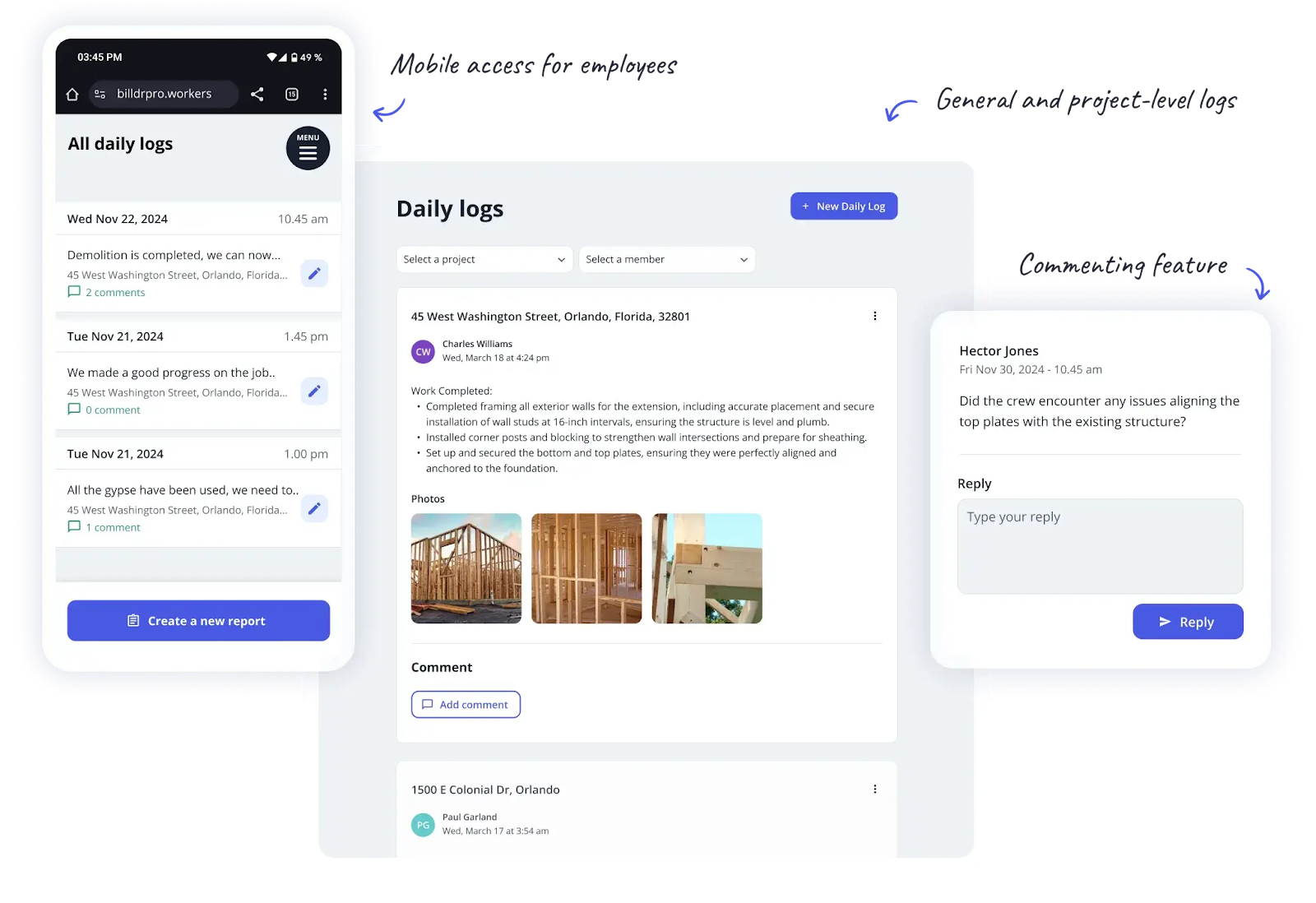
- The "Professional" Signal: Including a Billdr Project History in your application shows the Registrar that you have a structured management system. In Alberta, demonstrating that you use professional software is often the factor that separates a "High-Risk" applicant from an "Approved" one.
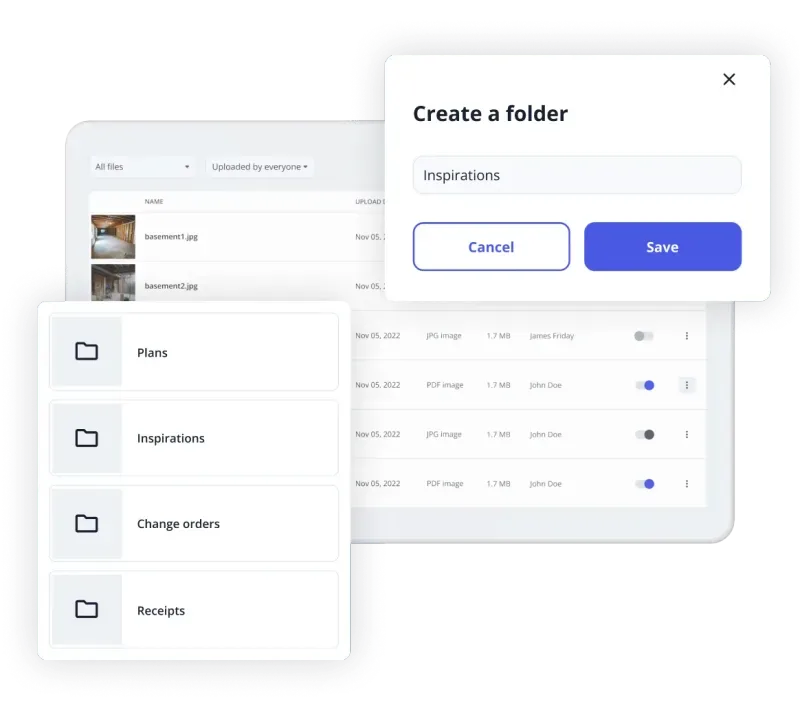
- Operational Readiness: Alberta focuses heavily on the "Fit and Proper" assessment. Showing you already have a Document Hub for site safety and contracts proves you are ready to operate a legitimate business from Day 1.
2026 Phase 1 Cost & Timeline Recap
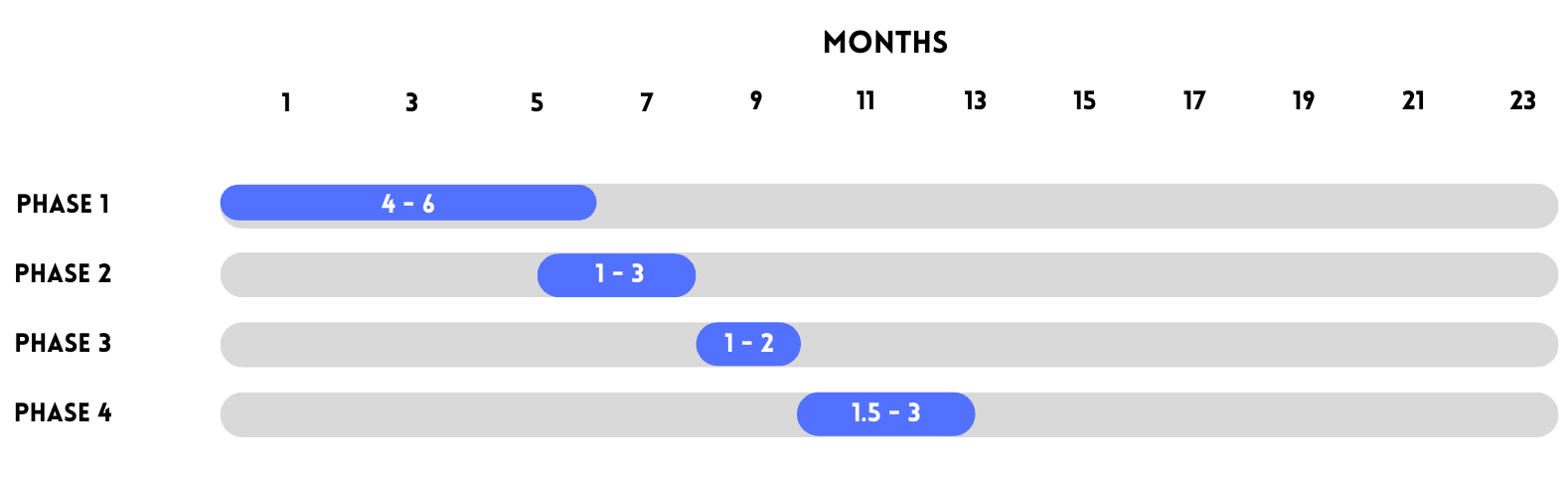
- Training Fees: $3,500 – $5,500 (highly recommended to pass warranty audits).
- Time Commitment: 4–6 months (if pursuing certifications part-time).
- Benefit: Dramatically increases your odds of lowering your Phase 2 Security Deposit.
Phase 2: Warranty Underwriting (The Business "Stress Test")
In Alberta, the provincial government doesn’t just want to know if you are smart; they want to know if your company is financially stable. This is why Alberta is an "Insurance-First" province. You cannot complete your license application until a third-party warranty provider (the "Gatekeeper") has officially accepted you into their program.
1. The "1-2-5-10" Rule
Alberta’s New Home Buyer Protection Act mandates a specific tiered coverage system. As a builder, you are legally responsible for these timelines, and your warranty provider acts as the backstop if your company fails to perform repairs.
- 1 Year: Labour & Materials – Covers defects in finishes (e.g., flooring, trim, cabinets, and paint).
- 2 Years: Delivery & Distribution Systems – Covers the "veins" of the house (e.g., electrical, plumbing, and HVAC systems).
- 5 Years: Building Envelope – Covers the shell of the home, including the roof and exterior walls, protecting against water penetration.
- 10 Years: Major Structural Components – Covers the "bones," including the foundation and framing.
2. The Underwriting Audit
Warranty providers like ANHWP (Alberta New Home Warranty Program), Travelers, and WBI are essentially high-level insurance underwriters. When you apply, they will perform a deep-dive audit into three areas:
- Technical Expertise: Do you actually know how to build to the Alberta Building Code?
- Track Record: Have you successfully completed projects before without major claims?
- Financial Capacity: Do you have enough liquidity to handle a $50,000 "envelope" repair if a sub-contractor messes up?
3. The Security Deposit (The "Pay-to-Play" Bond)
For new or smaller builders, warranty providers almost always require a Security Deposit or a Letter of Credit. This acts as a performance bond.
- Typical Range: While this often ranges from $10,000 to $50,000+, it is entirely dependent on your financial strength and experience level.
- Why so high? Alberta has a high rate of soil-related structural issues. The provider wants cash on hand to fix your houses if your company disappears.
How Billdr Helps Lowers Your Underwriting Risk
The biggest reason warranty providers demand high security deposits is Perceived Risk. If you look unorganized, your deposit goes up. Billdr helps you prove you are a low-risk professional:
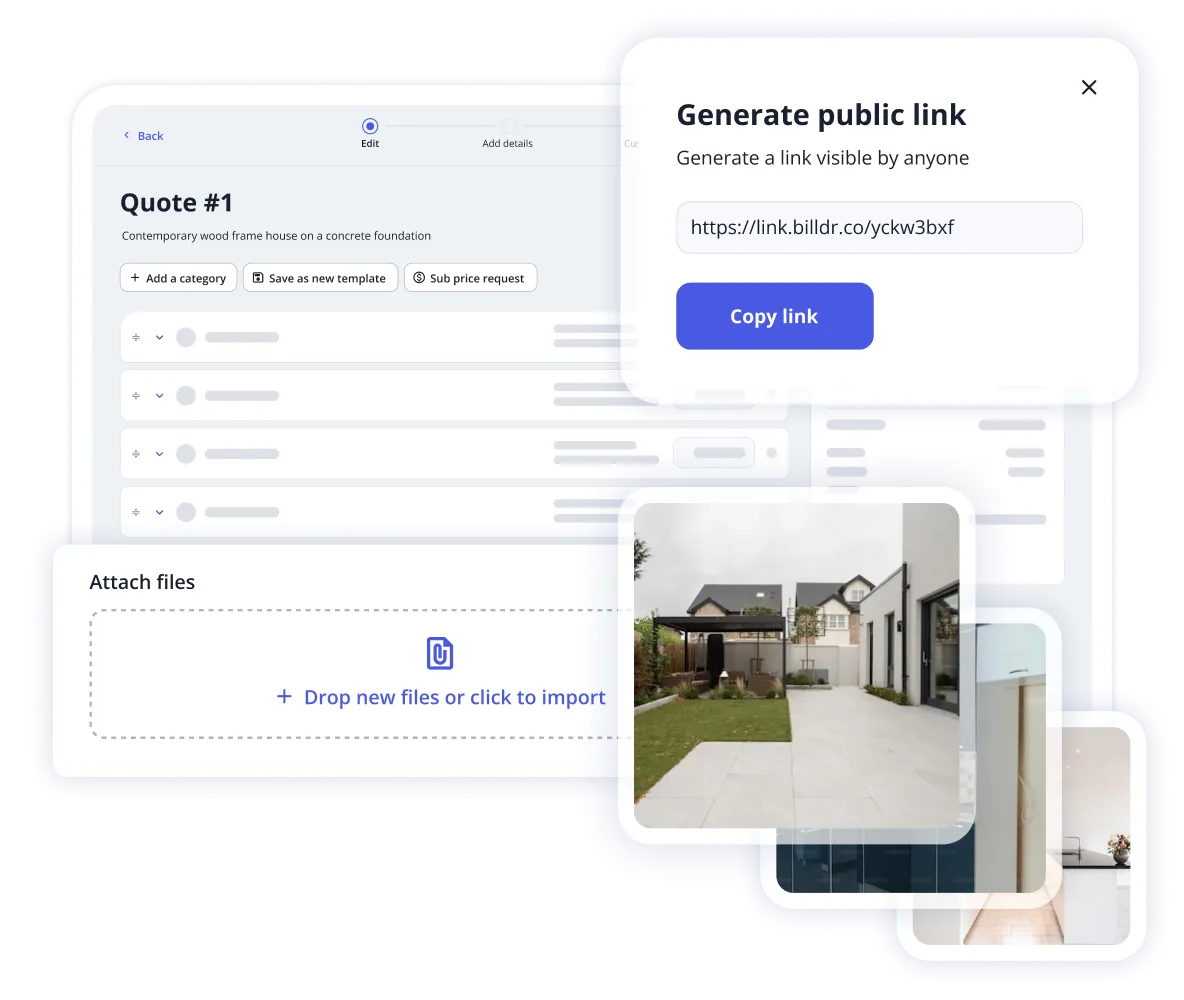
- Quality Control Documentation: Use the Files Management feature to store your "Pre-Delivery Inspection" (PDI) reports and site photos. Showing an underwriter that you have a rigorous digital QC process can make them more comfortable with your technical capacity.
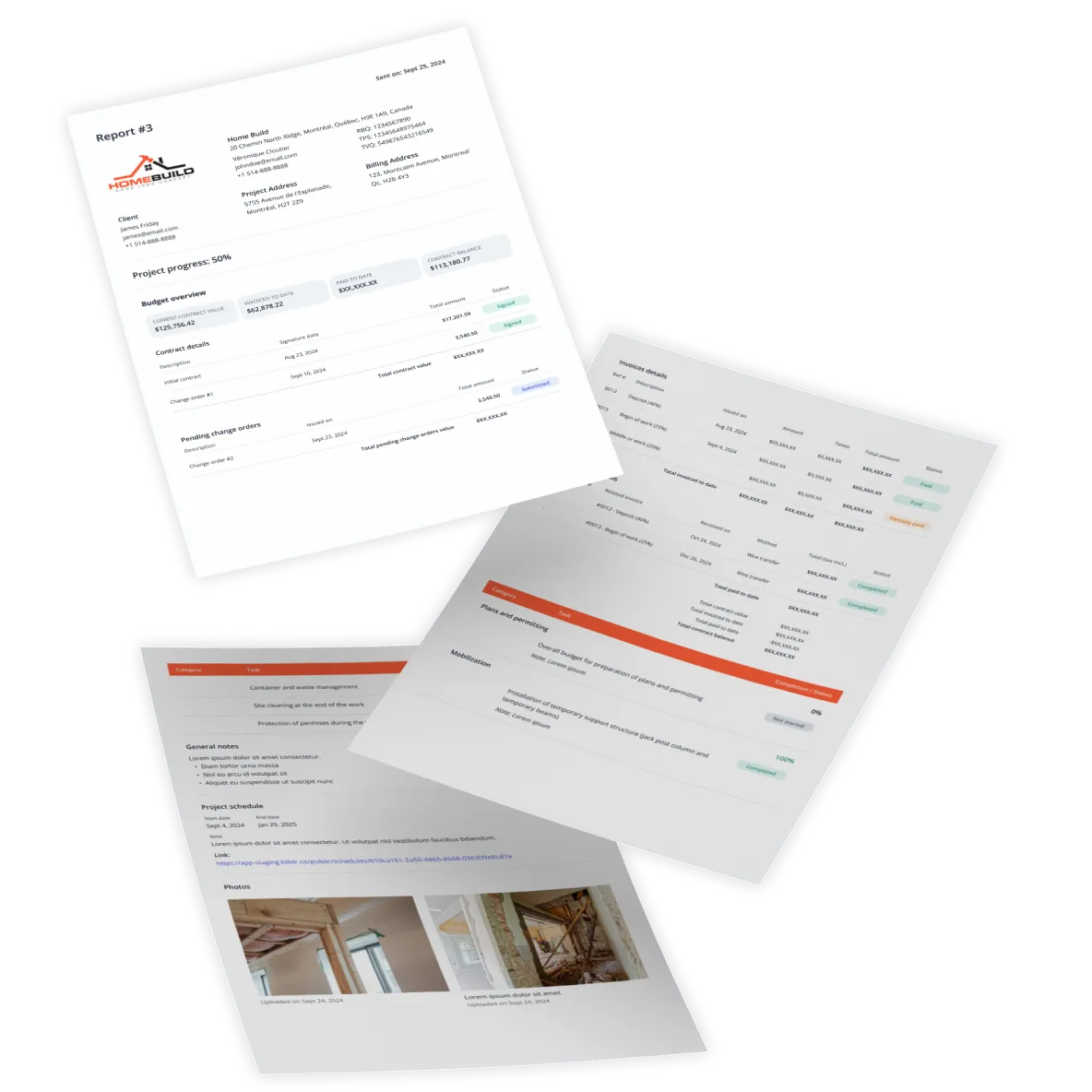
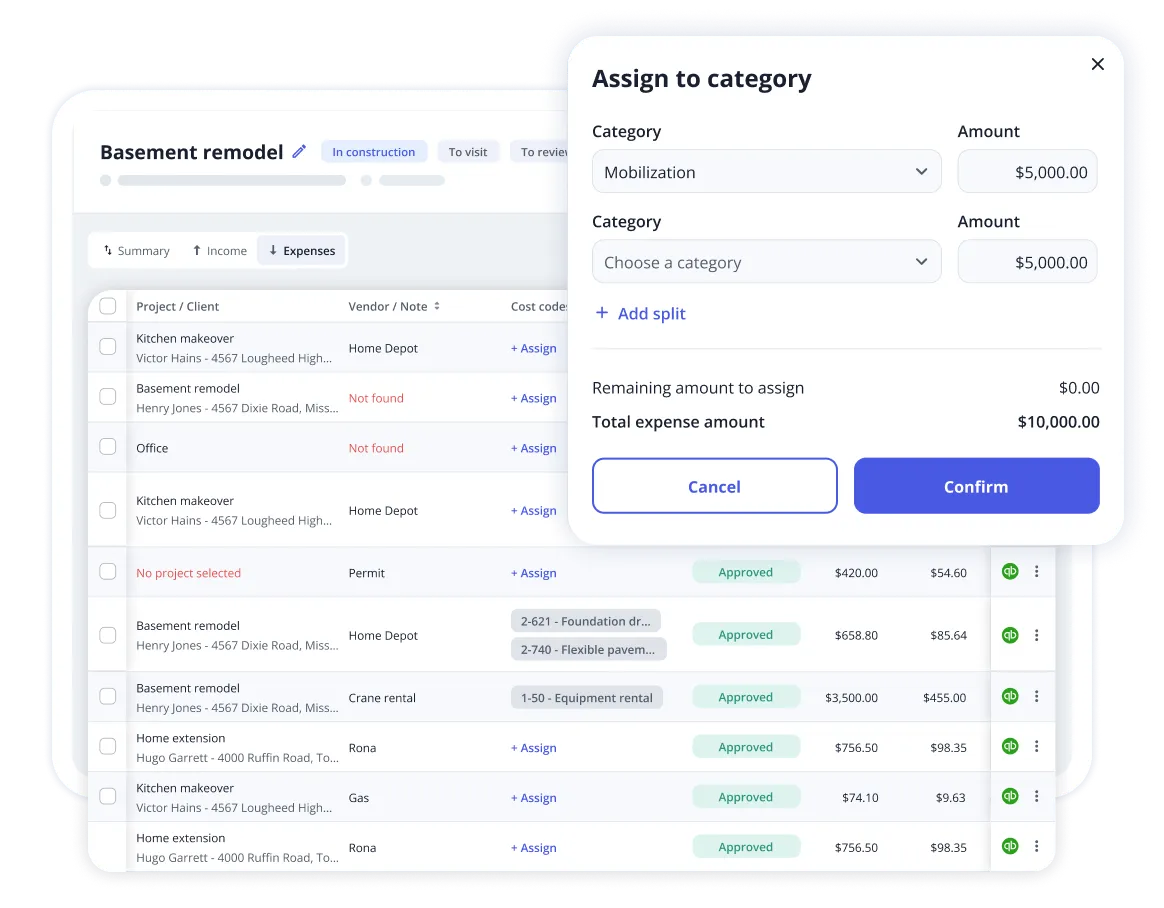
- Financial Transparency: Provide your underwriter with clean, professional Project Financial Reports exported directly from Billdr. If they see that you track every penny and manage change orders digitally, they are less likely to worry about your business going insolvent mid-build.
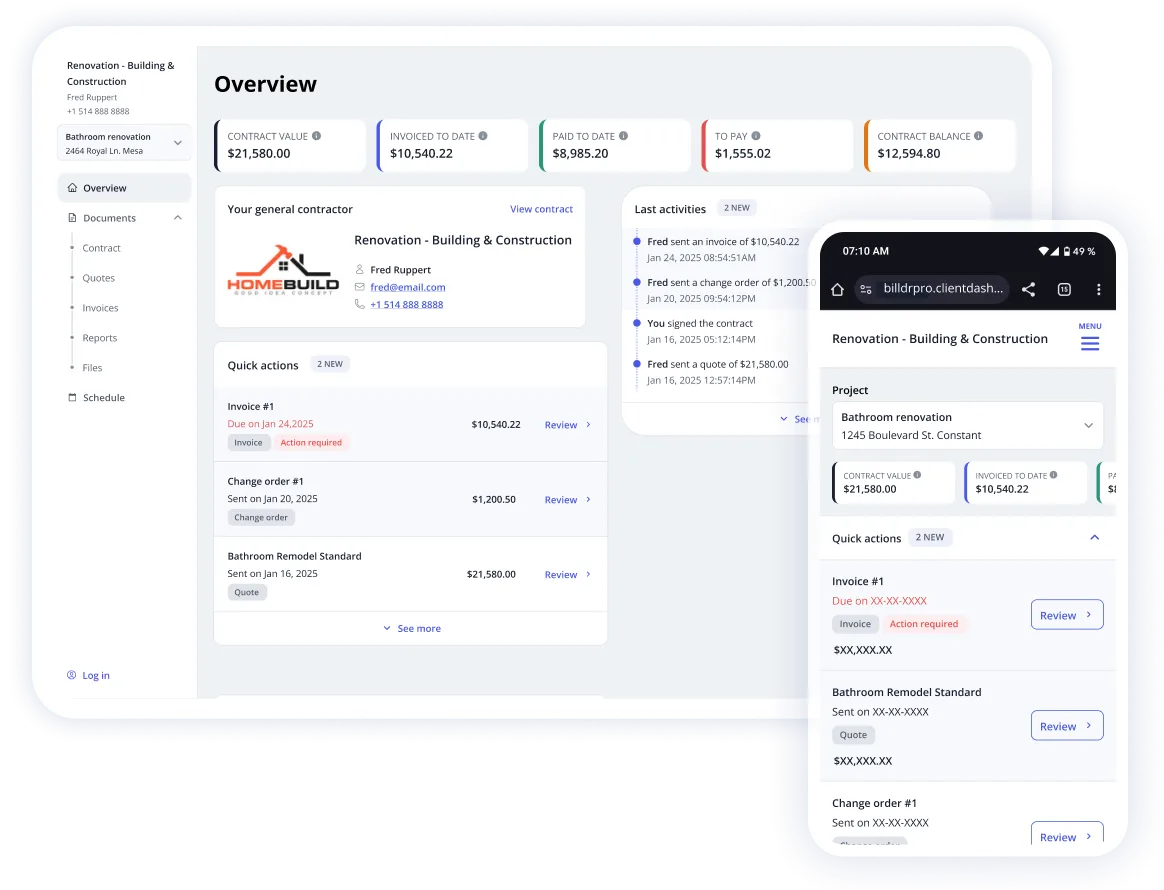
- After-Sales Service: Use the Client Portal to track homeowner requests. Warranty providers love builders who have a clear "system of record" for communication, as this prevents small issues from turning into expensive provincial claims.
Phase 3: The Alberta Builder License Application
Once your warranty provider has officially given you the "green light," you can move into the final stage of state approval. In Alberta, you submit your application to the Government of Alberta via the New Home Buyer Protection System (NHBPS) portal.
This phase is more than just a form; it is a vetting process where the Registrar evaluates your corporate history, financial stability, and legal integrity.

- Timeline: 4–8 weeks for processing (can take longer during the spring and summer construction rush).
- Official Application Fee: $600 for new licenses; $500 for annual renewals.
- License Classes: You must select the correct class for your business model:
- General Contractor License: For those building single-family homes or multi-family dwellings up to 4 units (standard houses, duplexes, etc.).
- Developer License: Mandatory for projects with 5 or more units (condos or townhome developments) where a "Coordinating Registered Professional" is required by the Alberta Building Code.
Key Requirements for a Successful Application
- Fit and Proper Person Check: The Registrar will review the background of all company directors and officers. You must disclose any history of fraud, building-related court proceedings, undischarged bankruptcies, or past safety code violations.
- Action Item: You must upload current government-issued ID (Driver's License) for all directors during this stage.
- Financial Stability & CPA Verification: Alberta requires proof that your business is a "going concern" with enough liquidity to handle warranty obligations.
- Requirement: Most new builders need to submit CPA-prepared financial statements (Notice to Reader or Review Engagement). This proves you aren't just a "shell company" but a financially sound entity.
- Proof of Corporate Status: Your legal entity must be active and in good standing with the Alberta Corporate Registry. Ensure your business name in the NHBPS portal matches your incorporation documents exactly.
- Warranty Acceptance Link: The NHBPS portal is digitally linked to warranty providers. You must select your provider (e.g., ANHWP, Travelers, WBI) within the portal, and the provider must "validate" your account before the government will issue your license.
How Billdr Helps Strengthen Your Application
Alberta regulators and warranty providers both focus heavily on Consumer Protection and Risk Mitigation. Using professional software isn't just a convenience. It’s proof of competence.
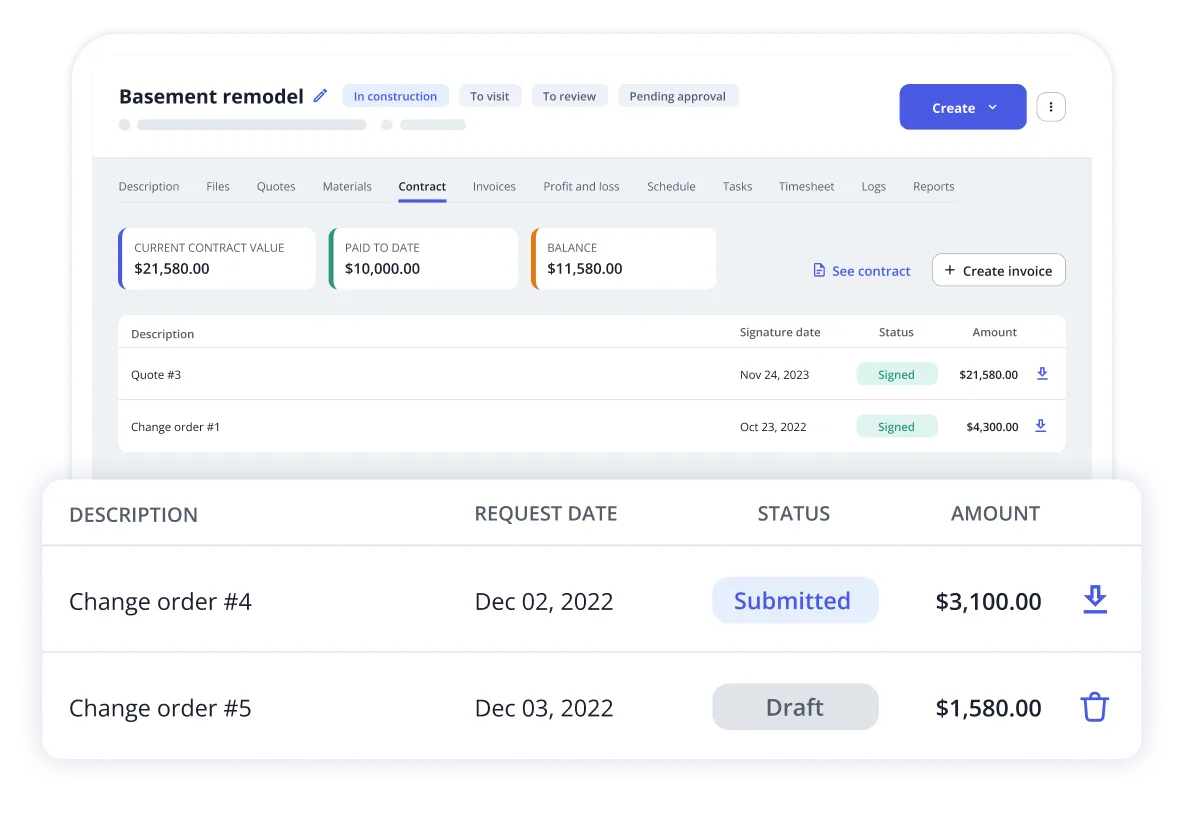
- Transparency to Prevent Disputes: A major reason for license revocations or warranty claims in Alberta is poor communication leading to financial disputes. Use Billdr's Change Order and Payment Tracking features to create a transparent digital paper trail. This demonstrates to the Registrar that you have a professional system to manage client expectations and prevent the "he-said, she-said" scenarios that lead to complaints.
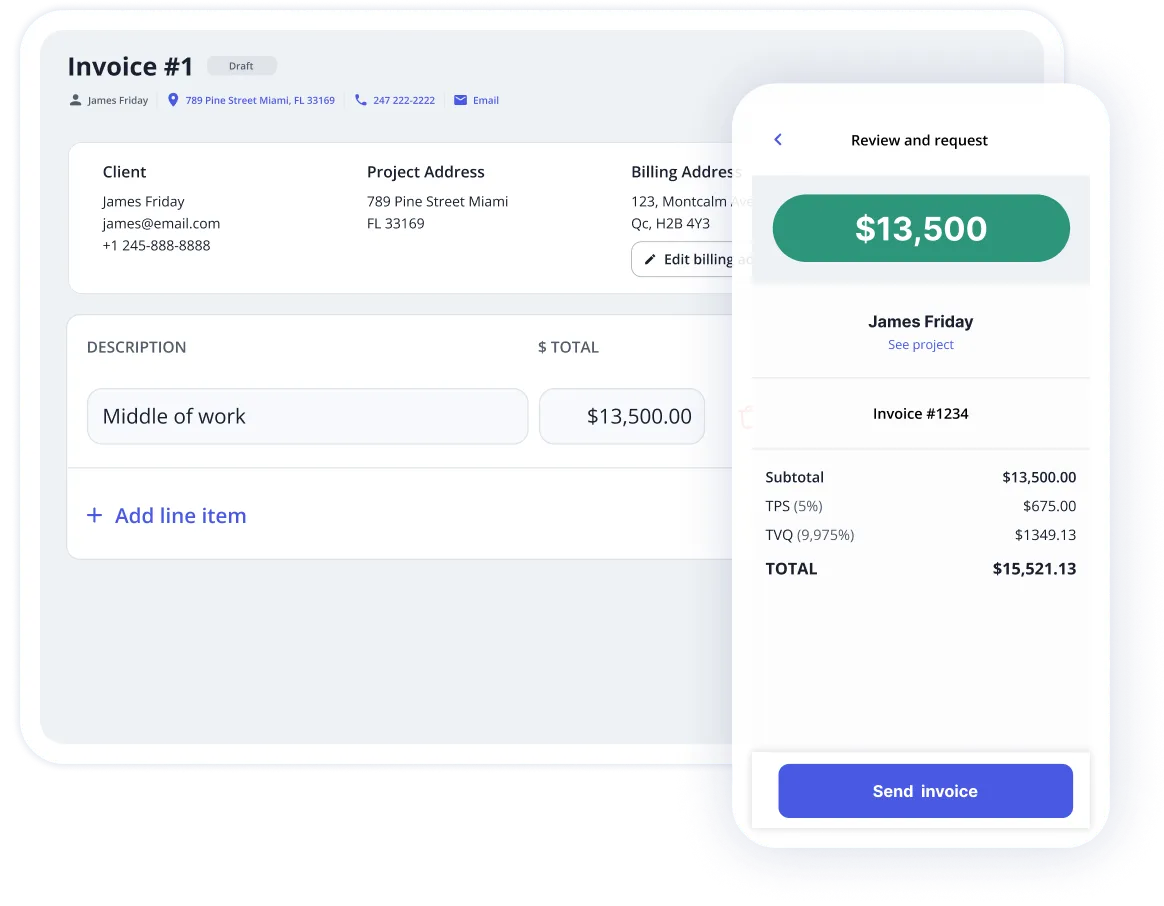
- Financial Integrity: When your CPA performs their audit for your license application, they need clean data. Billdr's automated invoicing and expense tracking provide the "clean books" that accountants love, making your financial verification faster and less expensive.
- Fit and Proper Documentation: Store all your director IDs, corporate registry documents, and previous project records in the Billdr Document Hub. When it's time to apply, everything you need is categorized and ready for upload.
Phase 4: Project Registration & Municipal Permits
In Alberta, your Builder Licence is the key that unlocks the permit office, but the lock itself is the New Home Buyer Protection System (NHBPS). You cannot pull a building permit for a new home in any Alberta municipality whether it's Calgary, Edmonton, or a rural MD without a specific Home Registration Certificate for that property.
1. Register the Property (The Portal Step)
Once you have your license and an active file with your warranty provider, you must log into the NHBPS portal to register the specific project.
- The Oversight Fee: You must pay a $95 provincial oversight fee per unit.
- Warranty Link: You select your project’s warranty provider. The system will then verify with the provider (e.g., ANHWP or Travelers) that the project is indeed covered under your policy.
2. Receive Your Certificates
Once the registration is approved and the fee is paid, the Registrar issues two critical digital documents:
- Certificate of Licence: Proof that your company is legally allowed to build in Alberta.
- Approved New Home Registration: Proof that this specific home is enrolled in the mandatory "1-2-5-10" warranty program.
3. Pull Your Municipal Permits
You take these two certificates (usually as PDFs) to your local municipal permit office (e.g., apply.calgary.ca or edmonton.ca).
- Requirement: Most municipalities will not even look at your Building Permit application until they see these provincial approvals.
- Documentation: In addition to the certificates, you will need your Plot Plan, Construction Drawings, and Energy Code (9.36) compliance reports.
How Billdr Facilitates Your Project Launch
Phase 4 is the "paperwork bottleneck." This is where many builders lose weeks of time due to missing documents. Billdr ensures you stay on schedule:
- Permit Document Checklist: Use the Billdr Document Hub to centralize everything required for the municipal application. From your NHBPS Certificates to your Energy Efficiency Reports, having a single source of truth prevents the back-and-forth emails that delay permit issuance.
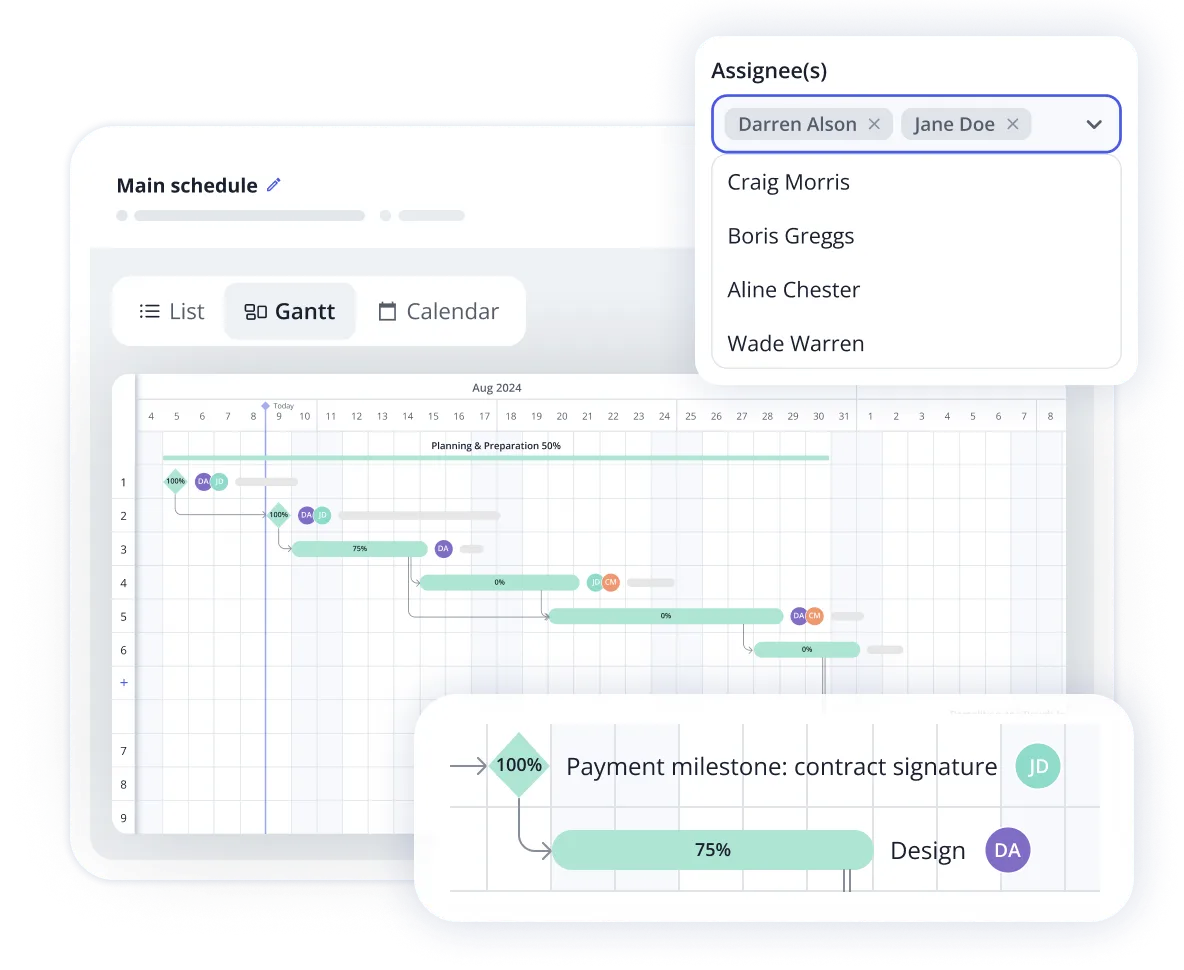
- Pre-Construction Scheduling: While you wait for permit approval (which can take 4-8 weeks), use the Billdr Gantt Chart to schedule your trades. By the time the permit arrives, your excavator and foundation crew are already locked into the calendar.
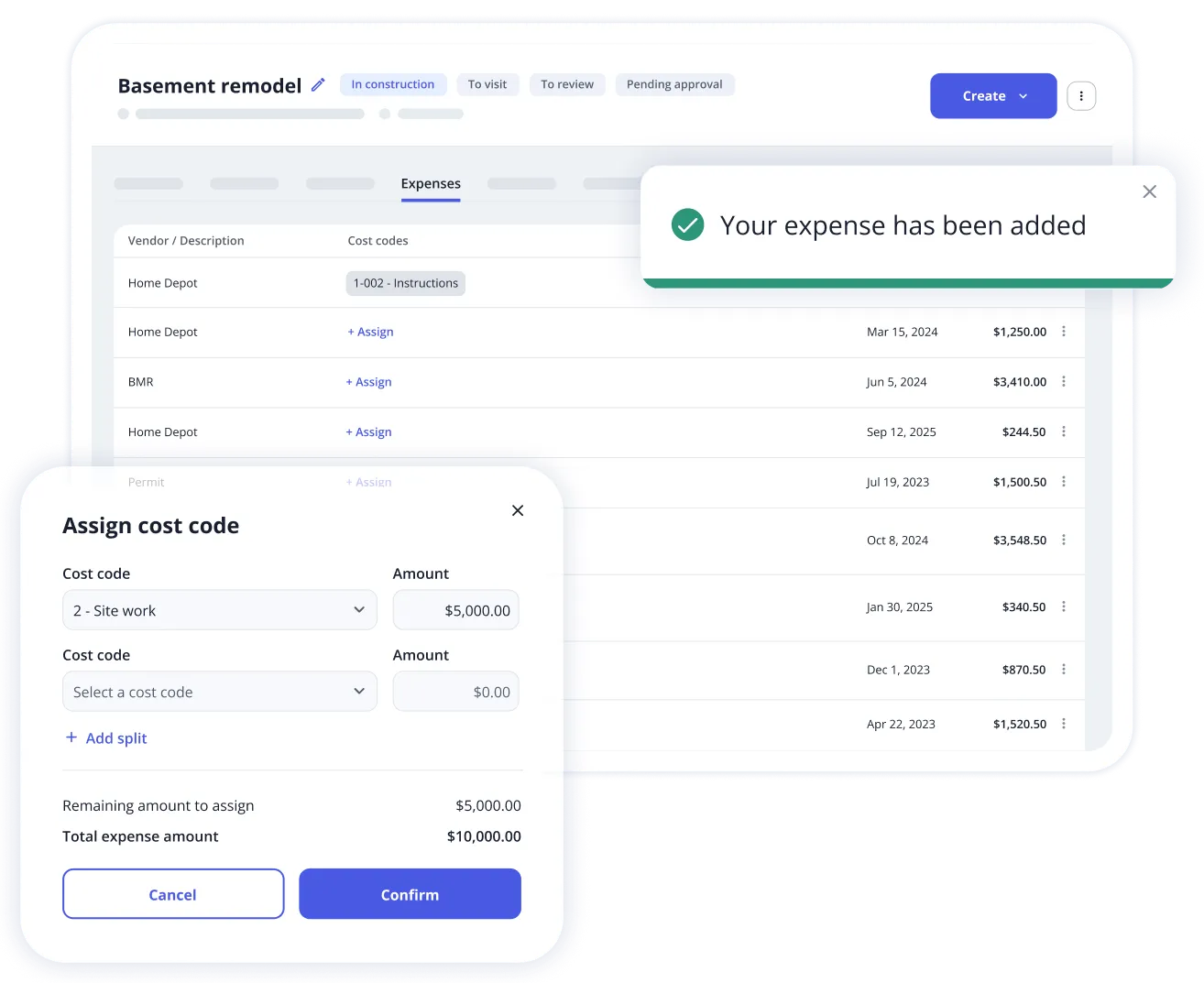
- Project Fee Management: Track your $95 Oversight Fees and Municipal Permit Fees within your project budget. Billdr's Expense Tracking ensures these "hidden" pre-construction costs don't eat into your margin before the first shovel hits the dirt.
2026 Summary of Initial Investment (Alberta)
Final Pro-Tip for Alberta Builders
If you plan on doing Prepaid Contracts (taking deposits before work is finished), you may also need a Prepaid Contracting License from Service Alberta. With Billdr's Payment Schedule feature, you can clearly display your deposit requests so they stay within the legal limits of Alberta’s consumer protection laws.
Conclusion
Navigating Alberta’s builder licensing in 2026 requires a balance of technical expertise, financial readiness, and meticulous documentation. While the upfront costs, particularly the warranty security deposit can be significant, they serve as a barrier to entry that ensures only professional, stable builders operate in the province. By leveraging a centralized platform like Billdr, contractors can not only satisfy the Registrar’s demand for a "digital paper trail" but also streamline their path to profitability by automating the very paperwork that typically bottlenecks new projects.
To give your Alberta guide maximum authority, you can include a dedicated "Sources & Regulatory Resources" section. This shows your boss that the article is built on current (2026) government standards and industry-approved training data.
Official Regulatory Sources (Alberta Government)
- Residential Builder Licensing Portal (NHBPS): The primary hub for all license applications and renewals.
- New Home Buyer Protection Act (NHBPA): The provincial legislation that mandates builder licensing and the 1-2-5-10 warranty standards.
- NHBPS Builder Manual: The technical "How-To" for navigating the New Home Buyer Protection System.
- Resource: NHBPS Builder Quick Reference Guide
Approved Education & Training Providers
- Professional Home Builders Institute (PHBI): The leading provider for the seven mandatory competency modules (Building Code, Business Law, etc.).
- Catalog: PHBI Alberta Courses
- SAIT (Southern Alberta Institute of Technology): Approved academic partner for residential construction management and technology certifications.
- Catalog: SAIT Home Building Education
Primary Warranty Providers (The "Gatekeepers")
- The Alberta New Home Warranty Program (ANHWP): The largest and oldest warranty provider in the province.
- Link: ANHWP Builder Portal
- Travelers Canada: A major provider of 1-2-5-10 warranty solutions and surety bonds for Alberta developers.
- WBI Home Warranty: Specialized warranty and deposit insurance provider for Western Canadian builders.
- Link: WBI Home Warranty Ltd.
Municipal Permit Offices (Phase 4 Verification)
- City of Calgary: Builder permit requirements and the "Planning & Development" portal.
- City of Edmonton: Technical requirements for residential building permits and 2026 fee schedules.
Legal Disclaimer
Disclaimer: The information provided in this guide is for general informational and educational purposes only and does not constitute legal, financial, or professional advice. While we strive to ensure the accuracy of the fees, timelines, and regulatory requirements as of January 2026, provincial regulations in Alberta (NHBPS) are subject to change without notice. Use of Billdr features does not guarantee licensing approval or warranty acceptance, which are determined solely by the respective provincial authorities and third-party insurance providers. Readers are strongly encouraged to verify all requirements with official government portals and consult with a qualified Chartered Professional Accountant (CPA) or legal counsel before making financial commitments or submitting applications.