

How to Become a Homebuilder in Texas (2026): A 4-Phase Licensing Guide
Texas is famous for its "pro-business" climate, but don't let the lack of a state license fool you. Builders in 2026 face rigorous local inspections, strict specialized trade laws (Electrical, Plumbing, HVAC), and a complex web of municipal registrations. To succeed, you must move through four distinct phases of business development.

Phase 1: Business Formation & Legal Foundation
Since there is no "State Builder License," your first step is establishing a legal entity. Most Texas builders choose an LLC to protect personal assets from construction-related liabilities.
1. LLC Formation: The Certificate of Formation
In Texas, you don't file "Articles of Organization"; you file a Certificate of Formation (Form 205) with the Secretary of State.
- The "Governing Authority" Choice: You must decide if your LLC will be Member-Managed (you run the day-to-day) or Manager-Managed (you hire someone to run it). For small-to-midsize builders, Member-Managed is the standard for maintaining direct control over project quality.
- Registered Agent: You are legally required to appoint a Registered Agent with a physical Texas address (no P.O. Boxes) to receive service of process.
2. The "Tax Trap": Lump-Sum vs. Separated Contracts
This is the most critical financial decision for a Texas builder. How you draft your contracts dictates how much sales tax you owe the Texas Comptroller.
- Lump-Sum Contracts: You charge the client one flat fee. In this case, you are the consumer of all materials and must pay sales tax to your suppliers. You do not charge the client tax.
- Separated Contracts: You list "Labor" and "Materials" as separate line items. In this scenario, you act as a Retailer. You can buy materials tax-free using a Resale Certificate, but you must collect sales tax from your client on the material portion of the bill.
- 2026 Recommendation: Most high-volume builders use Separated Contracts to preserve cash flow, but this requires impeccable bookkeeping to avoid heavy penalties during a state audit.
3. RCLA Compliance (The Builder’s Shield)
Texas does not have a state builder's license, but it does have the Residential Construction Liability Act (RCLA). This law governs how construction defect claims are handled.
- The Notice Requirement: To be protected by the RCLA, your contracts must include specific statutory language (usually in 10-point bold font) that requires homeowners to give you a 60-day notice and an opportunity to repair before they can file a lawsuit. Failing to include this language in Phase 1 can leave you legally exposed.
Billdr Advantage: Legal and Tax Automation
Texas is a "paperwork-heavy" state despite its low-regulation reputation. Billdr ensures your Phase 1 foundation is unbreakable.
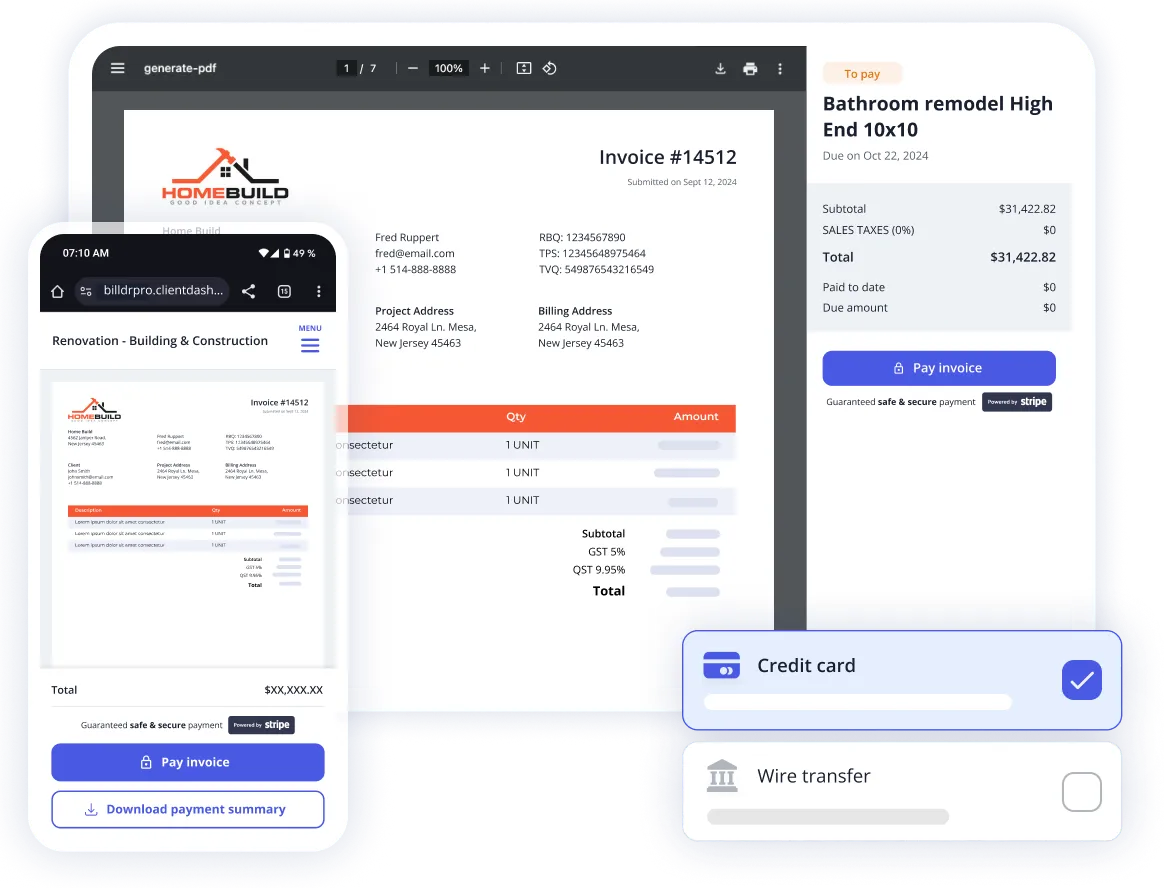
- Tax Categorization: When setting up a project in Billdr, you can toggle between Lump-Sum and Separated billing. The app then automatically tracks the sales tax owed on materials, so you’re always "Audit-Ready" for the Texas Comptroller.
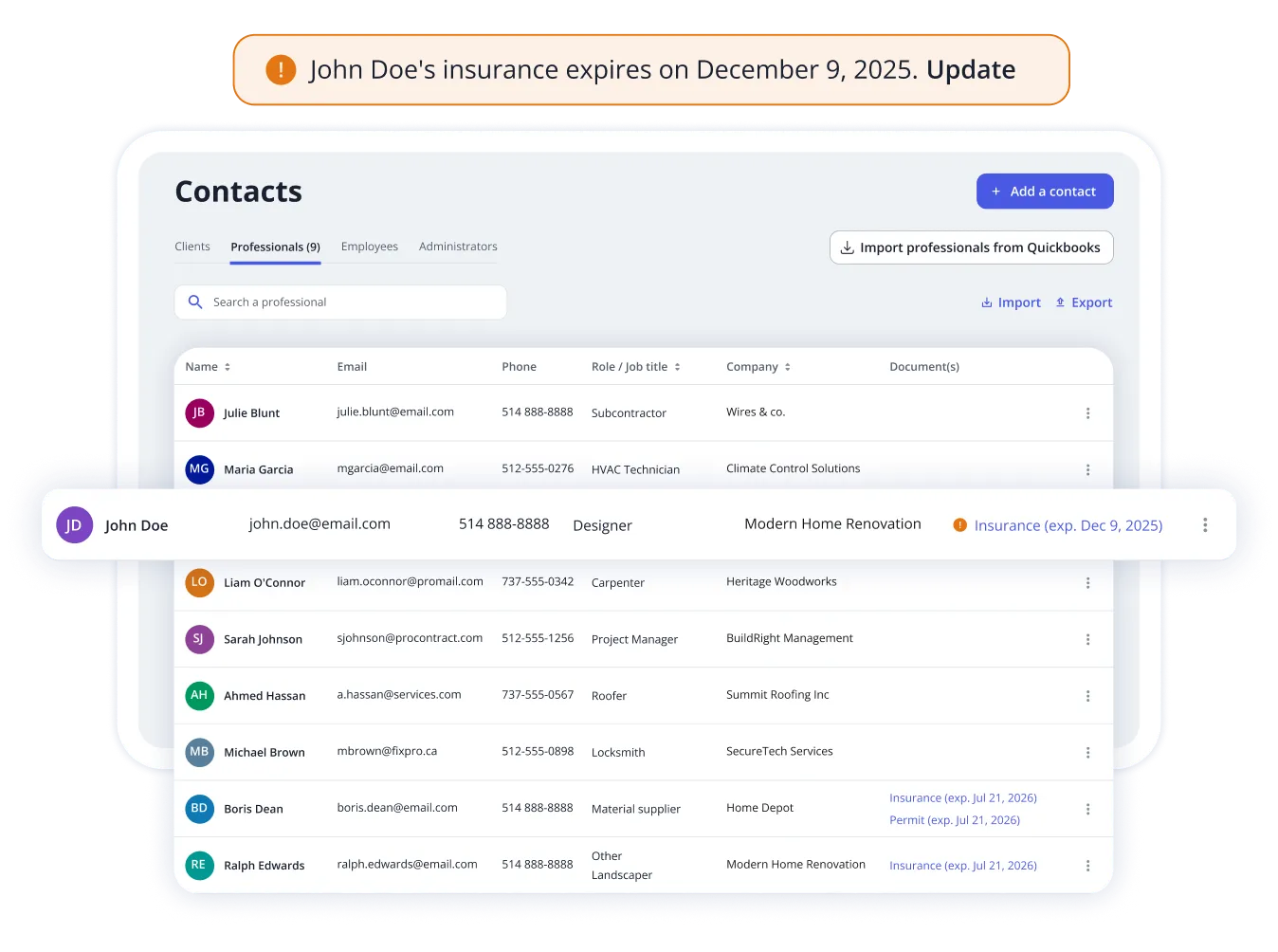
- Licensed Trade Verification: Texas law requires specific licenses for "The Big Three" (HVAC, Plumbing, Electrical). Billdr's Subcontractor Portal allows you to upload their TDLR or TSBPE license once, and it will automatically verify the status against state databases, keeping you compliant with local building departments.
Phase 2: Municipal Registration & Local Licensing
In Texas, the "License" happens at the city level. Major hubs like Houston, Dallas, San Antonio, and Austin each have their own specific requirements for homebuilders.
1. The "Texas Triangle" Registration Breakdown
While every small town has a permit office, the four major hubs have distinct, non-transferable registration protocols.
- Houston (The Permitting Center): Houston does not require a "General Contractor License," but it does require all trades and builders to register with the Houston Permitting Center. You must provide proof of $300,000+ in General Liability insurance and project references before you can pull a single permit.
- Dallas (Oak Cliff Municipal Center): Dallas requires a formal Contractor Registration ($120 fee). Crucially, you must provide a Certificate of Occupancy for your business office or a signed affidavit for a home-based business. Dallas also assigns you a unique PIN number to request inspections via their automated system.
- San Antonio (DSD): This is the most rigorous hub. To register as a Residential Building Contractor, you must pay a $170 biennial fee and meet two major 2026 hurdles:
- FBI National Background Check: You must submit fingerprints to the FBI (within 30 days of applying) to prove you have no record of "moral turpitude" (fraud, theft, etc.).
- ICC Certification: You (or a "Certified Agent" on your staff) must hold an ICC Residential Building Contractor (B) or (C) certification unless you have 5+ years of violation-free history in the city.
- Austin (Development Services): Austin requires you to register with Building and Trade Contractor Services. While less restrictive on exams than San Antonio, Austin’s Green Building and Tree Preservation ordinances are the strictest in the state, failing to register correctly can lead to massive environmental fines.
2. Mastering the ICC "Residential Contractor" Exam
The International Code Council (ICC) exam is the "gold standard" that cities use to vet your technical knowledge.
- The Exam (F11/F13): Most Texas cities require the National Standard Residential Building Contractor exam. It is an open-book test based on the 2021/2024 International Residential Code (IRC).
- What it covers: Foundations, wood framing, roofing, and most importantly in 2026, energy conservation and fire-resistive construction.
- Strategy: Don't just take the test for one city. Passing the ICC exam makes you "portable." Many mid-sized Texas cities (like Plano or Sugar Land) will waive their own testing requirements if you show an active ICC certification.
3. The "Insurance Certificate" Standard
In Texas, the "Certificate Holder" box on your insurance form is the most important field.
- City-Specific Listing: You cannot use a "General" insurance cert. Each city (e.g., City of Dallas, 1500 Marilla St.) must be named as the Additional Insured and Certificate Holder.
- Texas Minimums: While the state is lax, cities like San Antonio require $500,000 per occurrence for builders, which is higher than the standard $300,000 found in many basic policies.
Billdr Advantage: Tactical Local Management
Phase 2 is a logistical nightmare if you're building in multiple cities. Billdr turns this chaos into a streamlined process.
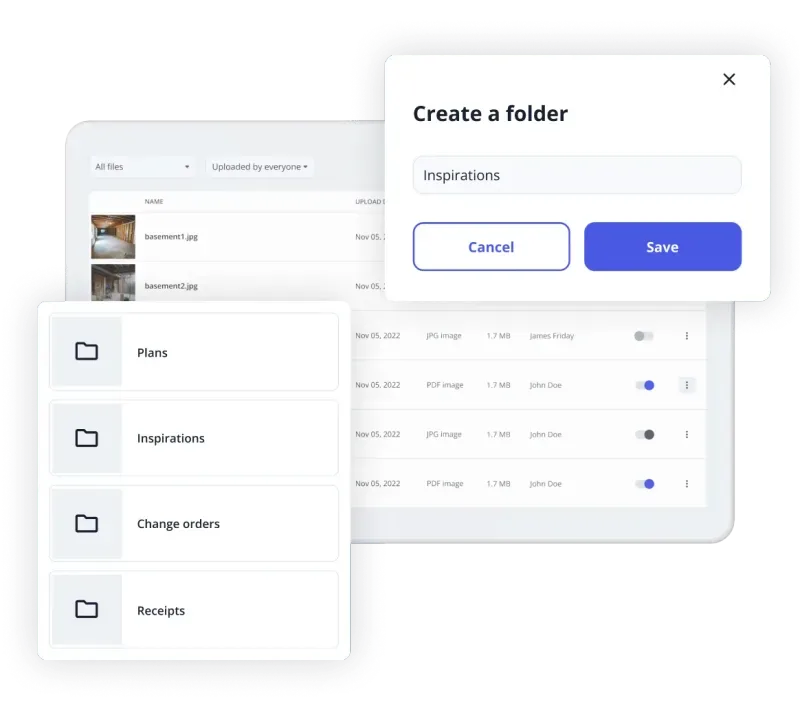
- The PIN & PIN Security: In cities like Dallas, your PIN is the key to your business. Store all municipal PINs and login credentials in a Secured Document Folder within the app so your project managers can request inspections without calling you for the password.
- ICC Certificate Management: Keep a digital, verified copy of your ICC Certification in your Billdr profile. When you expand into a new Texas city, you can "One-Click Share" your credentials with the local building official directly from the job site.
Phase 3: Financial Responsibility & Insurance
Texas law is aggressive regarding Mechanic’s Liens (Chapter 53 of the Texas Property Code). To protect your business, you must have robust financial and insurance systems in place.
1. Navigating the Texas Mechanic’s Lien Laws (Chapter 53)
Texas has one of the most complex lien systems in the country. If you don't pay a subcontractor, they can "trap" funds by sending a notice to the homeowner, potentially forcing the owner to pay twice.
- The "15th Day" Rule: For residential projects, subcontractors must send a formal notice of non-payment by the 15th day of the second month after the labor or materials were provided. If you miss these notices as a GC, your client’s property title becomes "clouded."
- Statutory Retainage: Texas law previously required owners to withhold 10% of the contract price as "statutory retainage." While 2026 laws have simplified this, builders are still often contractually required to hold back funds to ensure all subs and suppliers are paid before the final draw.
- Homestead Protection: To file a valid lien on a homestead (the owner's primary residence), the contract must be in writing, signed by both spouses (if applicable), and filed with the County Clerk before any work begins.
2. The "Non-Subscriber" Dilemma (Workers' Comp)
Texas is the only state in the U.S. that does not mandate Workers' Comp. This creates a high-stakes choice for you.
- The "Subscriber" Path: You pay premiums into the state system. In exchange, you get "Exclusive Remedy" protection, meaning an injured employee generally cannot sue you for gross negligence.
- The "Non-Subscriber" Path: You opt out to save on premiums. However, you lose your "Assumption of Risk" defense. If a worker is injured and you are even 1% at fault, you could be liable for 100% of the damages, including "pain and suffering" which has no cap in Texas civil courts.
- 2026 Reality: Most high-end Texas builders subscribe to Workers' Comp because it acts as a fixed-cost insurance policy against a business-ending lawsuit.
3. Permit Bonds and "Bonding Around" Liens
- Municipal Permit Bonds: Cities like Houston and San Antonio often require a $10,000 to $20,000 Surety Bond specifically to guarantee that you will restore the public right-of-way (sidewalks/curbs) if they are damaged during construction.
- Bonding Around a Lien: If a sub files a "frivolous" lien that halts your project, Texas allows you to file a "Bond to Indemnify Against Lien" (Section 53.171). This "indemnity bond" moves the claim from the property title to the bond, allowing your client to close on their mortgage while the dispute is settled.
Billdr Advantage: Financial Risk Mitigation
In Texas, the "paper trail" is your only defense against Chapter 53 lien claims. Billdr is built to automate this defense.
- The "Notice to Owner" (NTO) Tracker: If a subcontractor's supplier sends a notice to your client, it can cause a panic. Billdr's Communication Hub allows you to upload these notices immediately and link them to the specific subcontractor's payment profile, ensuring you resolve the debt before the homeowner's lawyer gets involved.
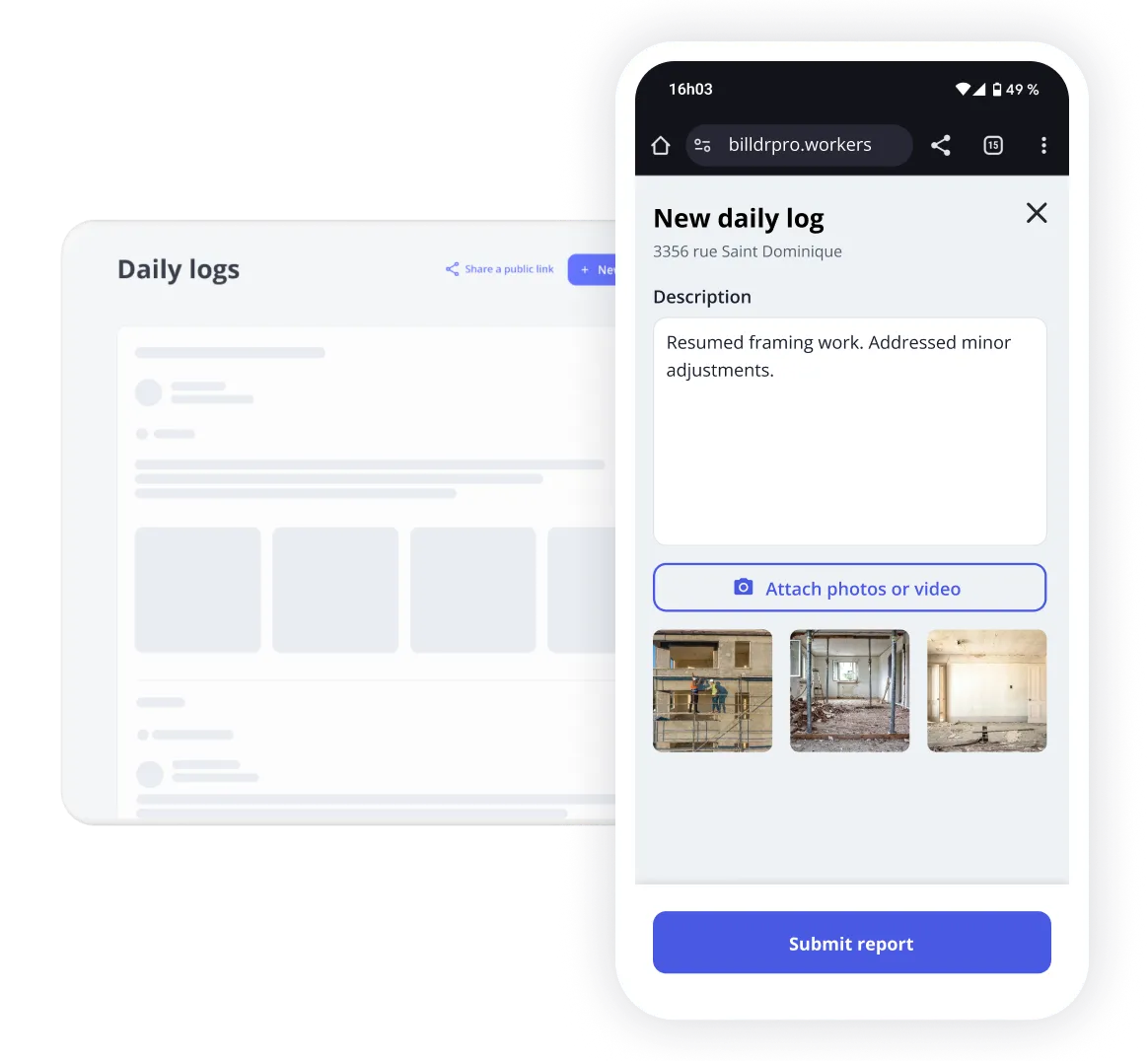
- "Non-Subscriber" Risk Logs: If you choose to be a non-subscriber, your safety documentation must be bulletproof. Use Billdr's Daily Logs to record daily safety briefings and worker sign-ins. If an accident happens, these time-stamped records are your primary evidence that you provided a safe workplace and proper training.
Phase 4: Texas Building Code & Inspections (HB 882)
Building codes and inspection requirements in Texas vary significantly by jurisdiction. Most cities adopt versions of the International Residential Code (IRC), often the 2021 or 2024 editions with local amendments, while unincorporated areas depend on county decisions. Many counties have no mandatory building permits or inspections for new single-family homes, though some voluntarily enforce limited standards under Texas Local Government Code Chapter 233, Subchapter F (in place since 2009). HB 882 (introduced in the 2025 legislative session) proposed updating codes, authorizing fees, and requiring a minimum of three inspections in certain unincorporated counties, but it was left pending in committee and did not pass. Always verify requirements directly with your specific city or county, as rules can differ widely even within the same region.
- Inspections in Unincorporated Areas
In counties that have opted into Subchapter F standards (via resolution or order), new residential construction (single-family homes or duplexes) must conform to the International Residential Code (typically the 2008 version or the county seat's adopted version). Builders are responsible for arranging compliance inspections, often a minimum of three for new homes on vacant lots:
- The 3-Inspection Protocol (Typical in Opted-In Counties):
- Foundation Stage: Inspected before the placement of concrete (checking rebar, vapor barriers, and plumbing rough-ins).
- Framing & Mechanical: Inspected before covering with drywall (checking structural integrity, electrical wiring, and HVAC ducting).
- Final Completion: A total walkthrough to ensure the home is safe for occupancy.
- Who Inspects? Counties generally do not have full-time building departments for enforcement in unincorporated areas. Builders must contract with independent, qualified third-party inspectors (e.g., a Texas-licensed engineer, registered architect, ICC-certified inspector, or other listed professionals). Notices of construction start and final compliance may need to be filed with the county if required locally, but no prior county approval or fees are typically involved.
- 2026 Energy Standards: The Blower Door Test
In jurisdictions that adopt the International Energy Conservation Code (IECC), common in cities and some counties, residential construction must meet air leakage requirements. A blower door test is often mandatory to verify the home's envelope sealing.
- The Goal: To measure "Air Changes per Hour" (ACH) at 50 Pascals pressure. A home that is too "leaky" wastes energy; one that is too "tight" without proper ventilation can cause air quality issues.
- The Standard: In most Texas climate zones (especially Zone 2, covering much of the state including major cities), the maximum leakage rate is typically 5.0 ACH50 or lower (some areas aim for 3.0 ACH50 under stricter adoptions).
- The Consequence: You generally cannot receive a Certificate of Occupancy (CO) without a signed report from a certified energy auditor or tester proving the home passed the blower door test.
- The "Texas Windstorm" Requirement (WPI-8)
If you are building in one of the 14 first-tier coastal counties (e.g., Galveston, Nueces, Brazoria), you face an additional layer: the Texas Department of Insurance (TDI) Windstorm Inspection.
- You must have an appointed engineer or TDI inspector verify that the roof, windows, and doors meet high-wind load requirements.
- Without a WPI-8 Certificate of Compliance, your client will be ineligible for windstorm insurance through the Texas Windstorm Insurance Association (TWIA).
Billdr Advantage: Passing Inspections on the First Try
In the Texas heat, a failed inspection doesn't just hurt your pride, it halts your subcontractors and burns through your "carry costs." Billdr acts as your pre-inspection "internal auditor."
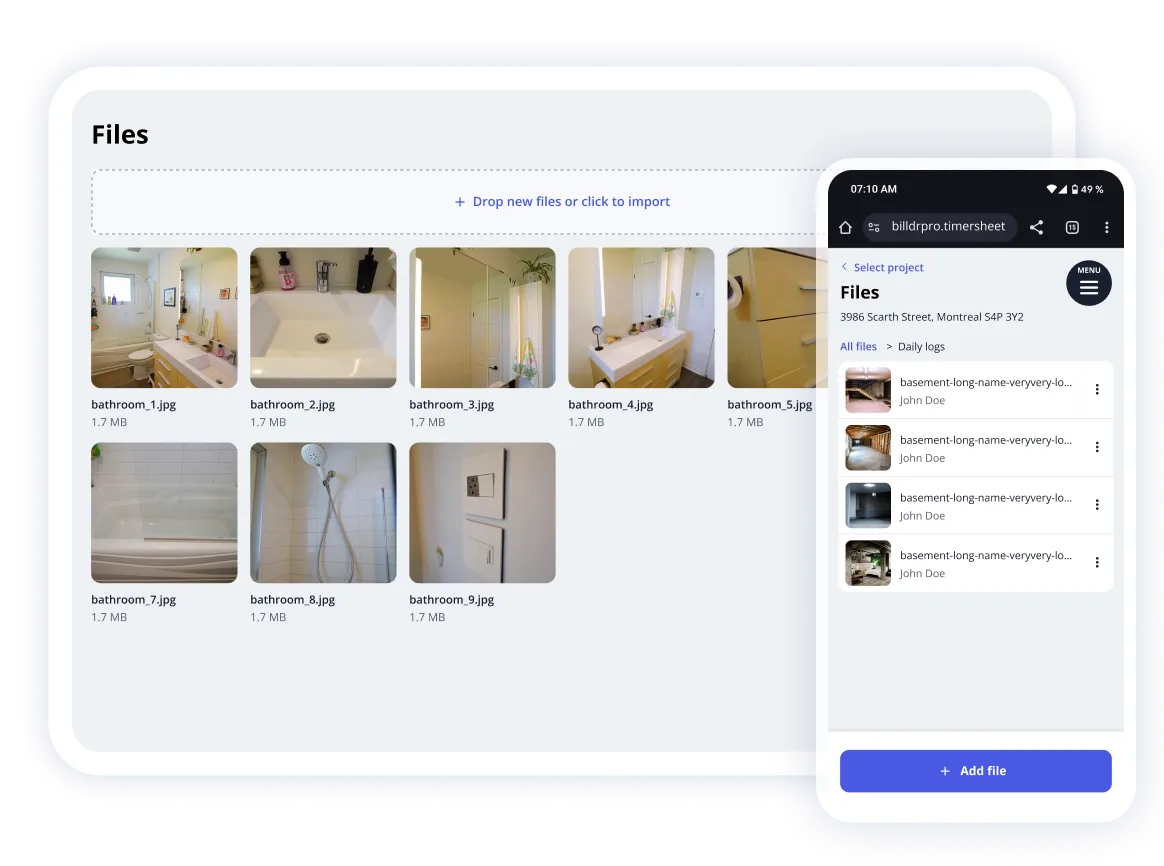
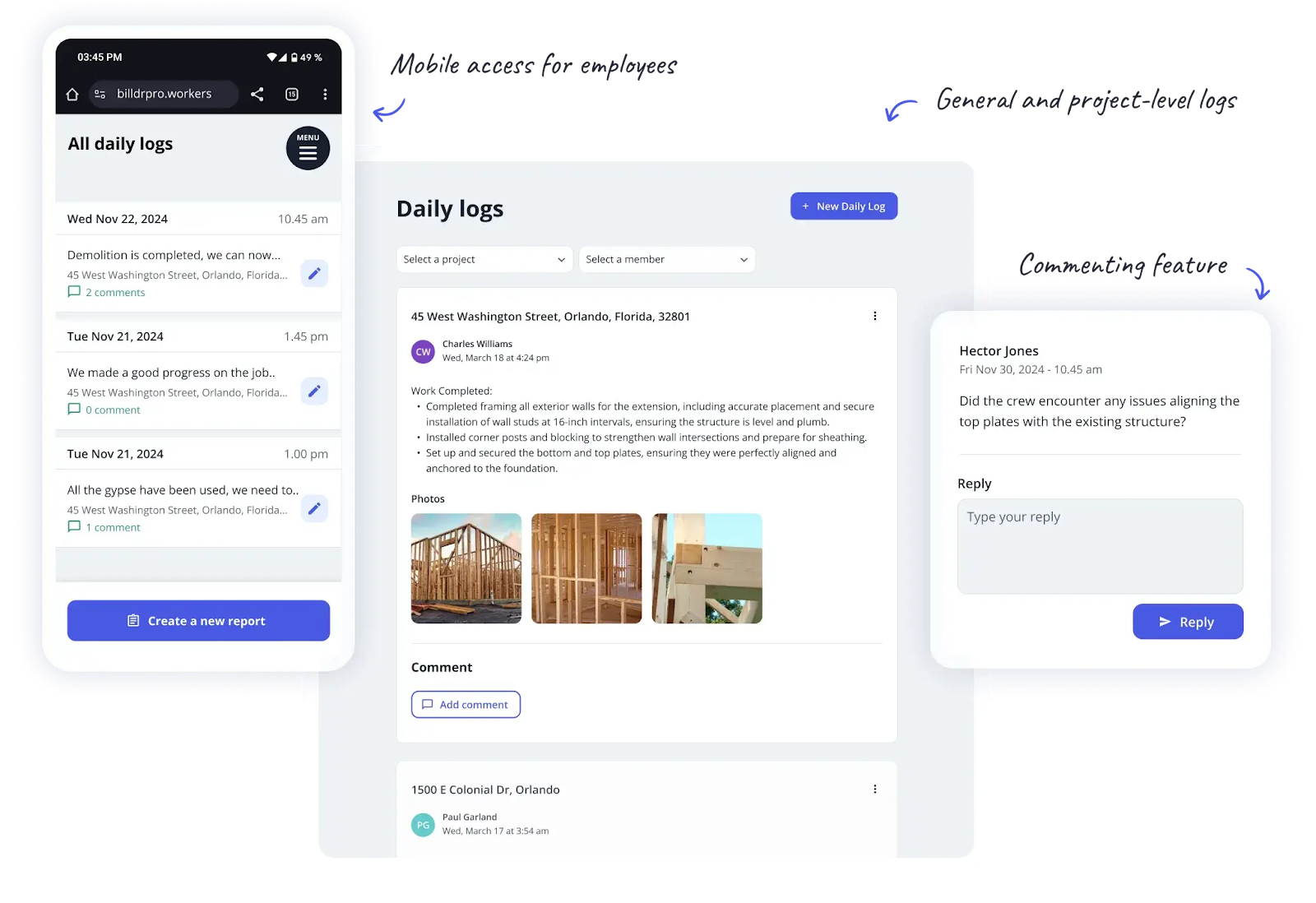
- Photo-Verified Milestones: Before you call the inspector, use Billdr's Daily Logs to document your rebar spacing and "Ufer" ground. If an inspector questions a detail that has already been covered by concrete or drywall, you can pull up the high-resolution, time-stamped photo in the app as "digital proof."
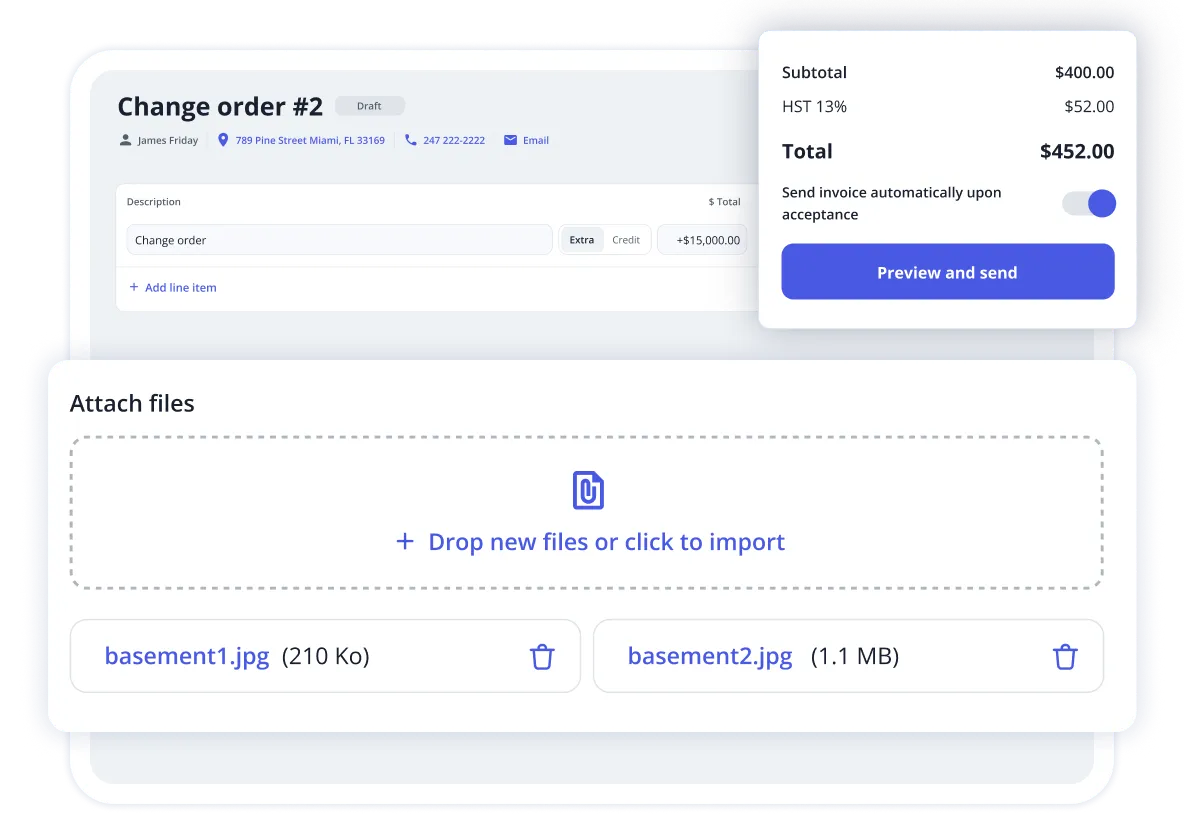
- Failed Inspection Workflows: If you do get a "Red Tag," Billdr allows you to instantly convert the inspector's notes into Punch List items assigned to the relevant sub. You can track the fix in real-time and request a re-inspection the moment the sub uploads a photo of the corrected work.
2026 Summary of Initial Investment (Texas)
| Item | Estimated Cost (USD) | Notes |
|---|---|---|
| SOS Business Registration | $300 | One-time fee for LLC formation. |
| City Registration Fees | $150 – $350 | Per municipality; usually expires every 1-2 years. |
| ICC Exam (If Required) | $250 | National standard exam for building contractors. |
| General Liability Insurance | $2,000 – $5,000 | Varies by project volume and coverage limits. |
| Surety Bond (Permit Bond) | $100 – $250 | If required by the specific city. |
| TOTAL STARTUP COST | $2,800 – $6,150+ | Lower than CA/FL due to lack of state-level fees. |
Lower than CA/FL due to lack of state-level fees.
Official Sources & Resources
Texas Comptroller - Contractor’s Tax Guide:
- Sales and Use Tax for Contractors – Critical for understanding Lump-Sum vs. Separated Contracts, which dictates whether you pay sales tax on materials or collect it from the client.
Texas State Board of Plumbing Examiners (TSBPE):
- Responsible Master Plumber (RMP) Lookup – In Texas, you cannot pull a plumbing permit without an RMP. Use this to verify your subs.
Texas Department of Insurance (TDI) - Windstorm Inspections:
- TWIA / Windstorm Manual – If you build along the Texas Gulf Coast (Tier 1 counties), you must have a WPI-8 certificate to be eligible for insurance.
Texas Department of Licensing and Regulation (TDLR):
- Electrician and HVAC Licensing – The state agency that regulates the other two "Big Three" trades you'll be hiring.
Texas Legislature Online (HB 882 Text):
- HB 882 Bill Information – The source for the 2026 Three-Inspection Mandate for unincorporated areas.
Texas Association of Builders (TAB):
- TAB Model Construction Contracts – These are the industry standard for Texas and are specifically written to comply with the Texas Residential Construction Liability Act (RCLA).
Disclaimer
The information provided in this guide is for educational and organizational purposes only. While Billdr provides the documentation, subcontractor management, and financial tracking tools necessary to streamline a construction business, its use does not guarantee municipal approval, passing of local exams, or successful project completion. Texas building requirements vary significantly by city and county; builders must independently verify all local ordinances and state trade laws.