How to Become a Homebuilder in Florida: 2026 Requirements & DBPR Guide
Florida's housing market remains a primary engine of the state's economy, but the path to becoming a licensed builder is rigorous. In Florida, "Home Builders" typically hold a Certified Residential Contractor (CRC) or Certified General Contractor (CGC) license, overseen by the Florida Construction Industry Licensing Board (CILB).
As of 2026, Florida continues to intensify its focus on structural resilience and financial responsibility. This guide provides a technically accurate, SEO-optimized roadmap for navigating the Florida Department of Business and Professional Regulation (DBPR) requirements.

Phase 1: Experience & Eligibility (CRC vs. CGC)
1. The "Four-Year" Rule: Breakdown of Paths
While "four years" is the standard, Florida allows three distinct pathways to reach this milestone:
- The Field Route: 4 years of hands-on experience (at least 1 year as a Foreman).
- The Degree Route: A 4-year accredited degree in construction management, engineering, or architecture + 1 year of supervisory experience.
- The Combined Route: 1 year of foreman experience + any combination of college credits and skilled worker experience totaling 3 additional years.
2. Certified Residential Contractor (CRC) Scope
Florida defines "Residential" strictly as detached one-, two-, or three-family residences not exceeding two habitable stories.
- Technical Proof: You must demonstrate proficiency in 3 of these 5 structural areas:
- Foundation/Slabs/Structural Formwork
- Masonry walls
- Structural Demolition
- Column erection
- Truss/Roofing installation
3. Certified General Contractor (CGC) Scope
The "Unrestricted" license requires the highest level of structural proof. You must prove you have supervised construction on buildings 4 stories or higher.
- The "4 of 6" Structural Rule: You must document experience in at least four of these specific categories:
- Steel Erection: Structural steel frameworks.
- Foundation/Slabs: Specifically slabs exceeding 20,000 square feet.
- Masonry Walls: Load-bearing structural masonry.
- Precast Concrete Structures: Tilt-wall or pre-molded structural elements.
- Elevated Slabs: Structural slabs not supported by the ground (e.g., second floor and above).
- Column Erection: Structural vertical support systems.
4. Defining "Foreman" (Supervisory Role)
Florida law defines a Foreman as a person in charge of a group of workers who is responsible to a superintendent or contractor.
- What they audit: The CILB doesn't just check your title; they check your W-2s. They will cross-reference your employment dates with the license status of your employer at that time. If your employer wasn't a licensed General, Building, or Residential contractor while you were a "Foreman," your application will be flagged.
Billdr Advantage: Precision Documentation
Florida applications are often rejected for being "vague." Billdr solves this by turning your daily work into a CILB-ready audit trail.
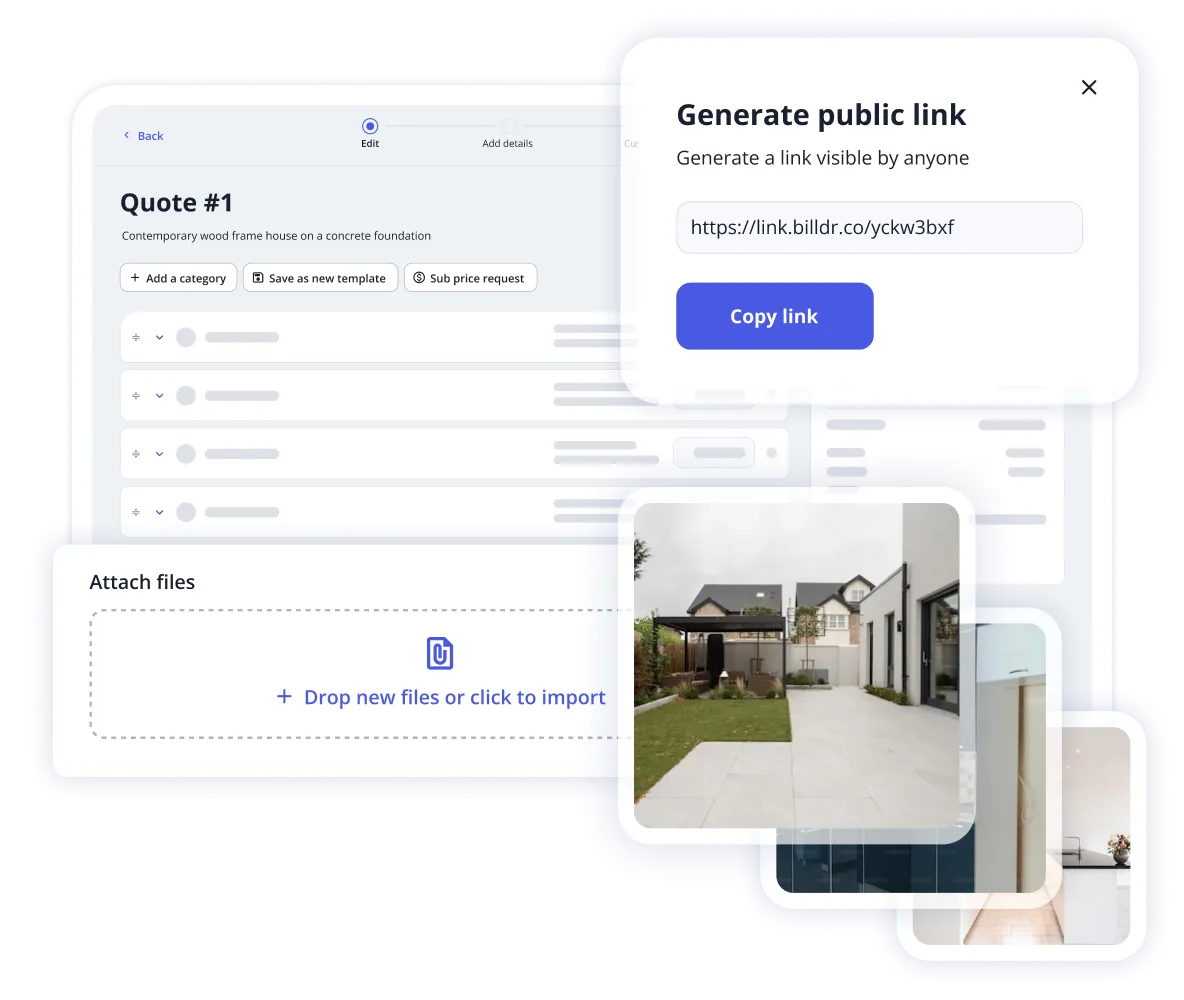
- Structural Tagging: When you upload photos to the Project Hub, tag them by structural category (e.g., #ElevatedSlab or #Masonry). When you apply, you’ll have a filtered list of every project where you performed that specific work.
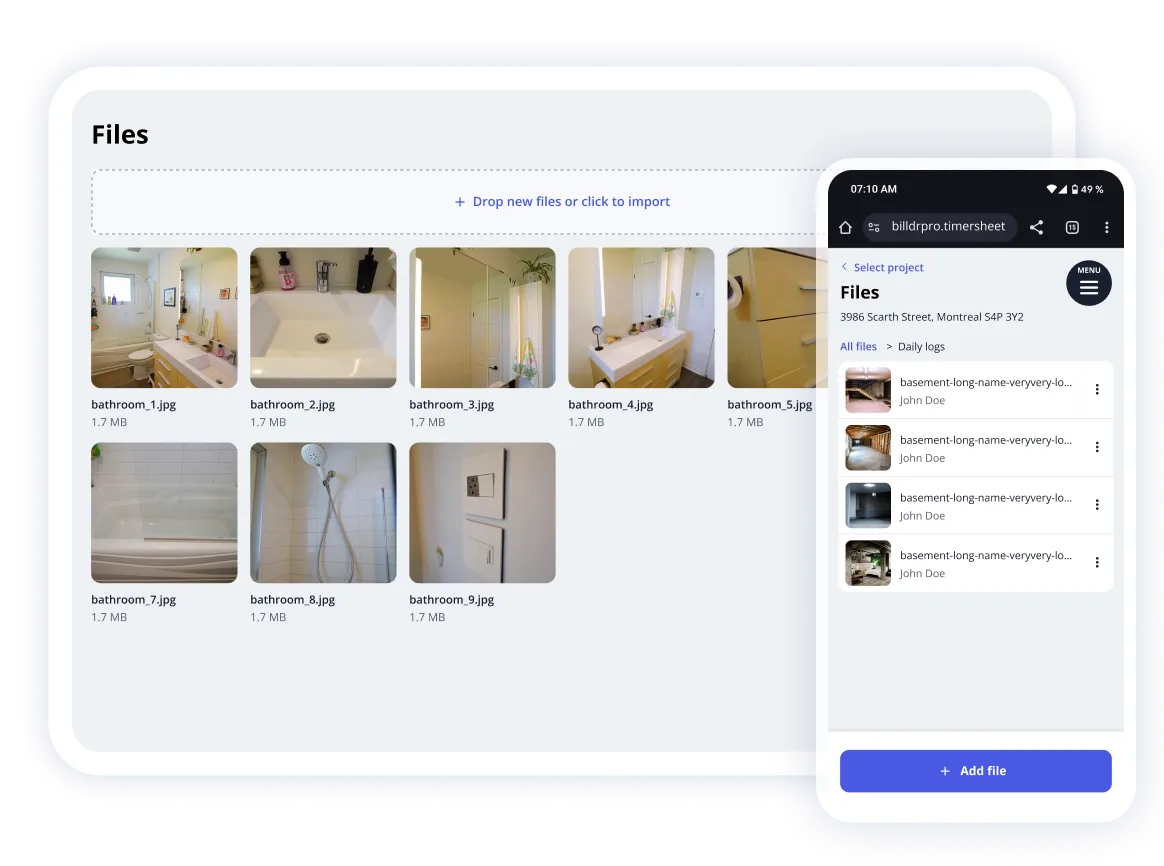
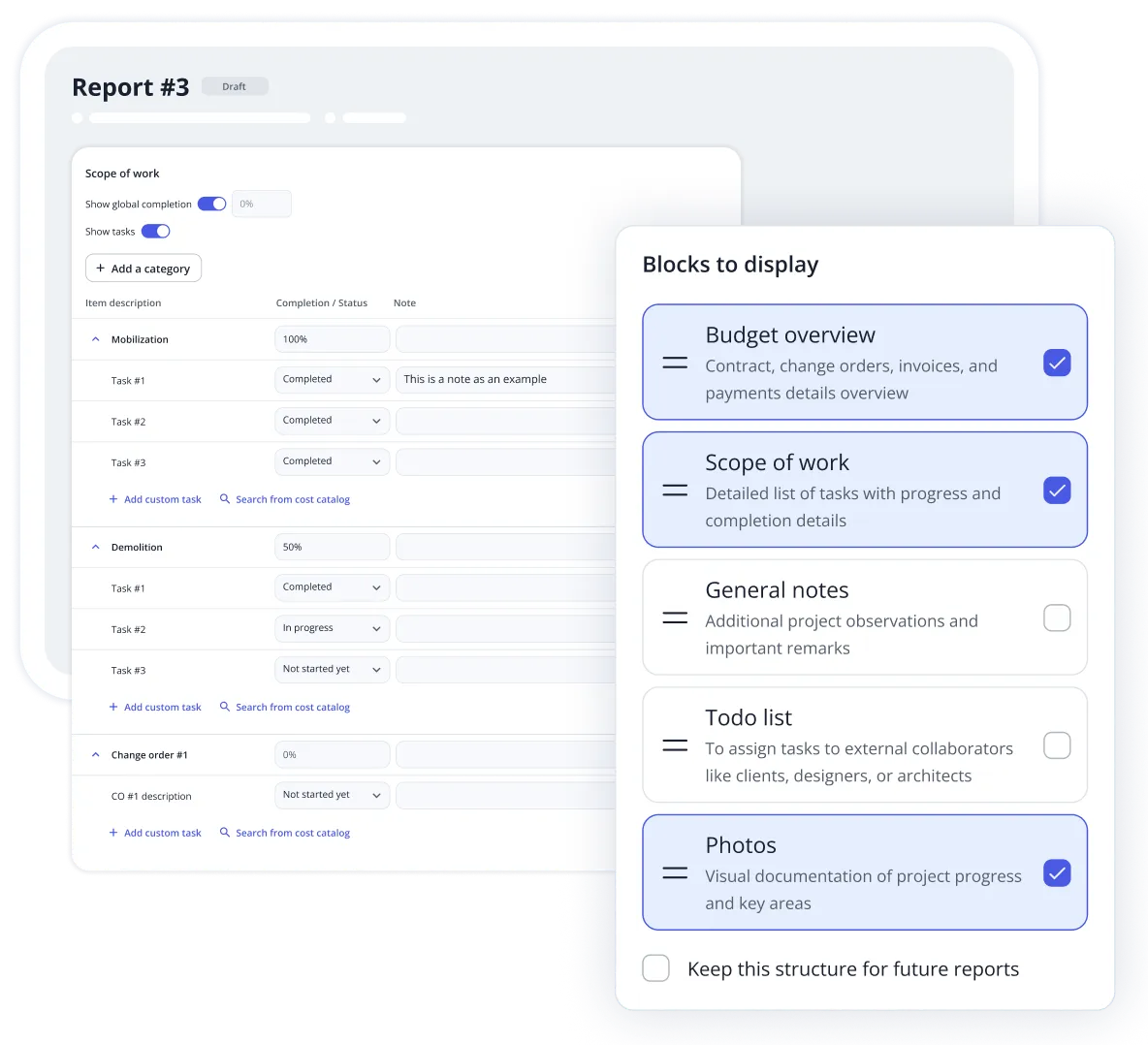
- The "receipts" for the CILB: If the board asks for proof of your 20,000 sq. ft. slab experience, you don't have to go digging. You can export a Project Summary that includes site addresses, square footage, and project dates, exactly what is required on the official Experience Pages.
Phase 2: The Licensing Process & 2026 Exam Updates
1. 2026 Application Fee Logic
The DBPR uses a biennial (two-year) cycle. Depending on the date you hit "Submit," your fee changes to ensure your license expires on the state's master schedule (August 31 of even-numbered years).
- The "Even-Year" Rule: If you apply between September 1st (odd year) and April 30th (even year), you typically pay the lower fee of $145.
- The "Odd-Year" Rule: If you apply during the second half of the cycle (May 1st to August 31st of even years), the fee jumps to $245–$350 because it includes the upcoming renewal.
- Fingerprint Tip: Live Scan results are only valid for a specific window. Do not get fingerprinted more than 30 days before submitting your application to avoid having to pay twice.
2. The "Triple Exam" Reality for Builders
While specialty trades take two exams, Division I Contractors (CGC, CBC, CRC) actually face three separate tests (though many prep schools group them into two sessions).
Exam A: Business & Finance (The "Career Killer")
- Format: 120 questions | 6.5 hours.
- Success Rate: This has the highest failure rate because it is heavy on math.
- 2026 Focus: 32% of the exam is Accounting Functions. You must be able to calculate percentage-of-completion billing, payroll taxes, and net worth liquidity on the fly.
- Pro Tip: You are allowed to bring a non-programmable calculator. Bring two; one as a backup.
Exam B: Contract Administration (Trade Knowledge Pt. 1)
- Format: 50–60 questions | 4.5 hours.
- Focus: Legalities of the job. Bidding, lien laws, and the Florida Construction Lien Law (Chapter 713).
Exam C: Project Management (Trade Knowledge Pt. 2)
- Format: 50–60 questions | 4.5 hours.
- Focus: Site operations. Safety (OSHA), excavation, and the 8th Edition Florida Building Code.
- 2026 Hurricane Update: Expect heavy testing on wind-load calculations and the 2025 updates to Chapter 16 (Structural Design) for coastal high-velocity zones.
3. The "Open-Book" Trap
Many builders fail because they assume they can "look up the answers" during the test.
- The Reality: You have roughly 2 to 3 minutes per question. If you haven't tabbed and highlighted your books correctly, you will run out of time.
- The 2026 Reference List: Ensure your books are the 2025/2026 editions. Using a 2023 code book on a 2026 exam will lead to incorrect answers on energy efficiency and roofing secondary water barriers.
Billdr Advantage: Tactical Preparation
Billdr helps you bridge the gap between "studying a book" and "running a job."
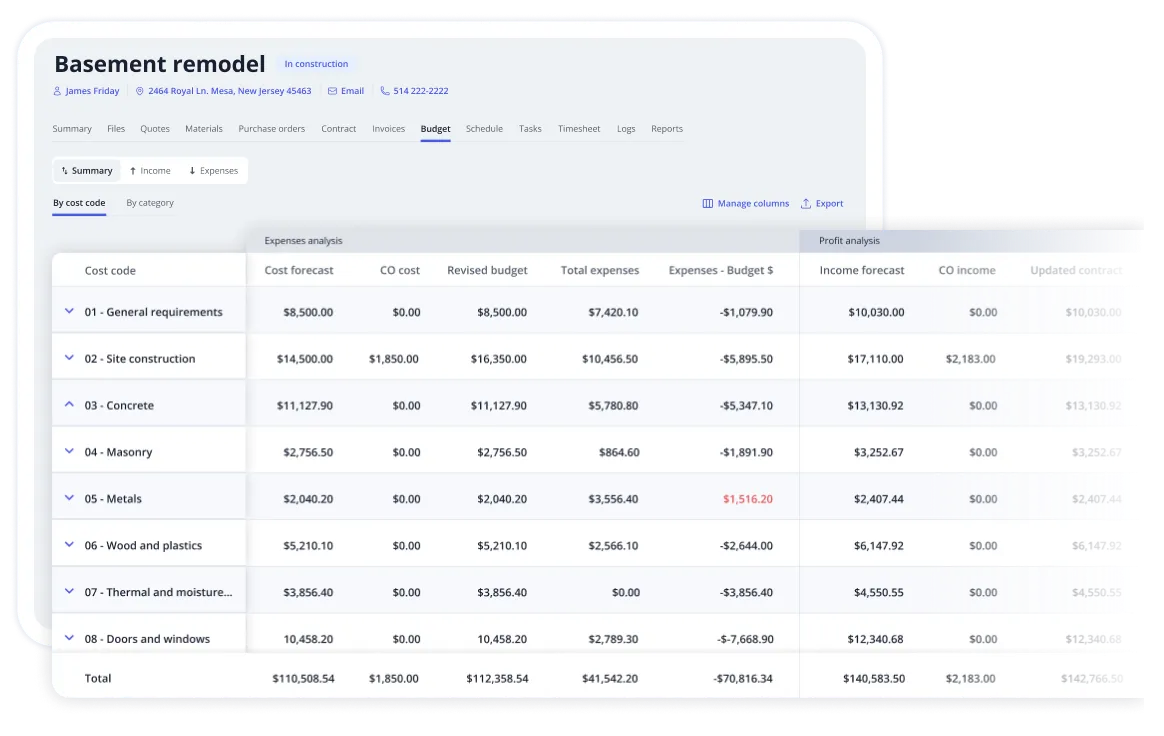
- Accounting Accuracy: When the Business & Finance exam asks you to calculate "Over/Under Billings," you’ll understand the logic because Billdr's Financial Dashboard tracks your project cash flow in real-time. Seeing these numbers every day in the app makes the exam formulas intuitive.
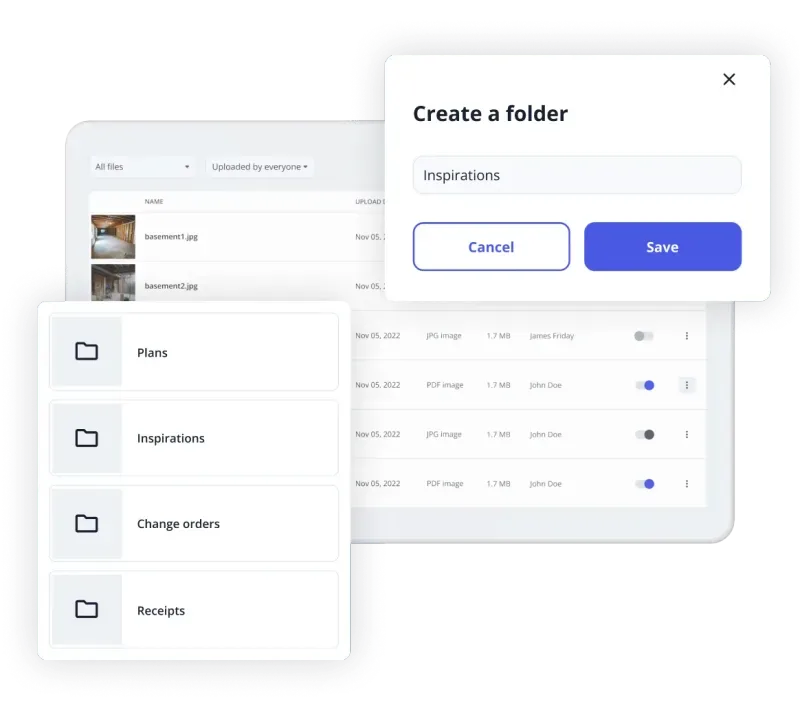
- Lien Law Readiness: Florida's Notice to Owner (NTO) process is a major exam topic. Billdr's document management helps you track NTO deadlines for your subs, cementing the "Lien Law" timeline in your head for the Contract Administration exam.
Phase 3: Financial Responsibility & Insurance
Florida requires every contractor to demonstrate "financial stability." This is primarily verified through your credit score.
1. The "660 Rule" & The 14-Hour Alternative
Florida is one of the few states that uses your personal credit score as a primary gatekeeper for licensing.
- The Benchmark: You must submit a credit report from a nationally recognized agency (like TransUnion or Equifax) showing a FICO score of 660 or higher.
- The "Course" Path: If your score is between 580 and 659, you are not automatically disqualified. In 2026, the CILB mandates that you complete an approved 14-hour Financial Responsibility & Stability Course.
- The "Denial" Zone: If your score is below 580, the DBPR will generally deny the application. You must repair your credit or resolve any outstanding liens/judgments before reapplying.
2. General Liability Insurance (The 2026 Reality)
While the state-mandated minimums are low, the "street reality" of Florida construction is very different.
- State Minimums: For General/Building/Residential Contractors, you must carry at least $300,000 in Public Liability and $50,000 in Property Damage.
- The "Contractual" Standard: In practice, most Florida developers, lenders, and municipalities require a $1,000,000 per occurrence / $2,000,000 aggregate policy.
- Endorsement Tip: Ensure your policy includes "Products/Completed Operations" coverage. Without it, you may be liable for structural issues that occur years after you finish the build.
3. Workers’ Compensation (No Exemptions for Owners)
Florida has the strictest workers' comp laws in the country for the construction industry.
- The "One Employee" Rule: In most industries, you need four employees to trigger mandatory coverage. In Construction, coverage is mandatory if you have one or more employees (including yourself).
- Sole Proprietors: Unlike other states, a sole proprietor in Florida construction is automatically considered an employee and must be covered.
- Exemptions for Officers: If you are a Corporate Officer or LLC Member with at least 10% ownership, you can file a Notice of Election to be Exempt (Form DWC-250) for a $50 fee. However, this only exempts you. Any other workers on your site must still be covered.
Billdr Advantage: Financial & Risk Management
Phase 3 is where Billdr turns from a "builder tool" into a "legal shield."
- Proof of Responsibility: To pass your credit audit, the CILB looks for a lack of unsatisfied liens or judgments. By using Billdr's automated payment tracking, you ensure your vendors and subs are paid on time, preventing the "surprise liens" that can kill a license renewal.
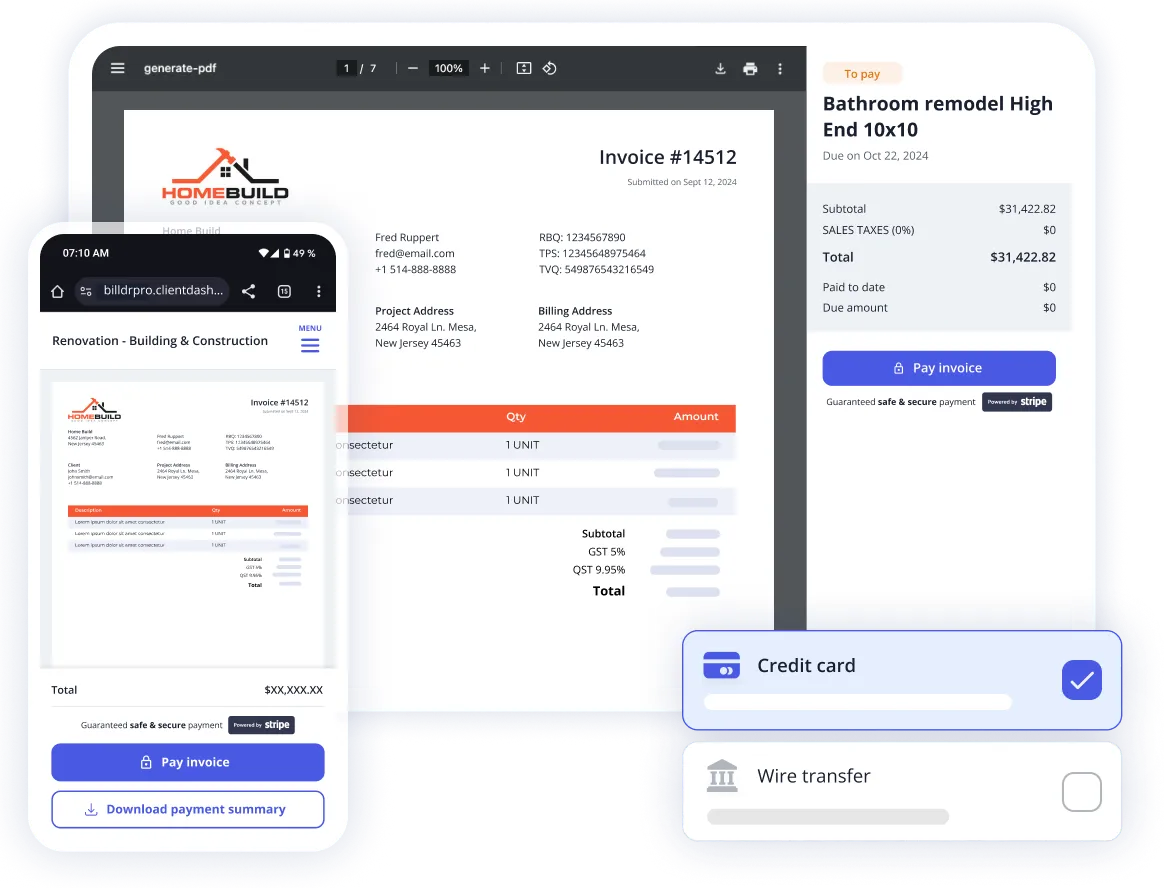
- The "COI" Vault: Florida’s Division of Workers’ Comp performs random site inspections. If an investigator walks onto your job, you can open the Billdr Document Hub and instantly show them the Certificates of Insurance (COI) for every sub on-site.
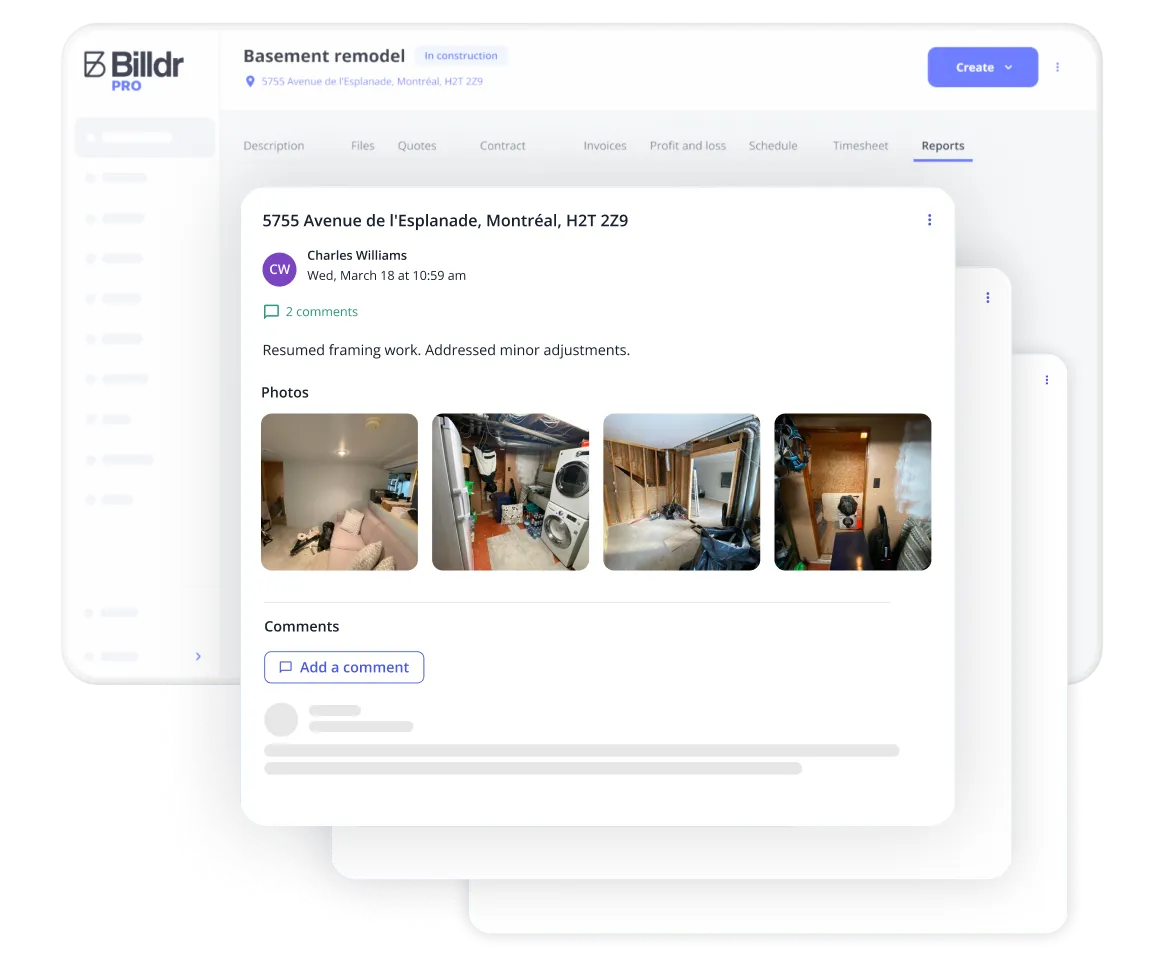
- Liability Defense: If a "property damage" claim arises, you have the Project Archive in Billdr. High-resolution, time-stamped photos of your structural work (pre-drywall) are the best evidence your insurance carrier can use to settle or dismiss a claim without raising your premiums.
Phase 4: Permits & 2026 Code Transition
1. The 9th Edition (2026) FBC Transition
Florida updates its code every three years to reflect the latest in storm-resistance and energy technology.
- Effective Date: The 9th Edition (2026) FBC becomes the mandatory law on December 31, 2026.
- The "Coastal Tightening": Expect stricter mandates for "Zone Zero" mechanical equipment (elevated HVAC) and expanded HVHZ (High-Velocity Hurricane Zone) requirements for counties previously considered "marginal" risk.
- Energy Mandates: The new code pushes for higher R-values in attic insulation and "Solar-Ready" infrastructure for new residential builds.
2. Permit Reform: The 30-Day "Speed" Law (HB 267)
The biggest win for Florida builders in 2026 is the full implementation of HB 267, which ended the "infinite loop" of permit delays.
- The 30-Day Mandate: For single-family residential dwellings under 7,500 sq. ft., local governments must approve, approve with conditions, or deny your permit within 30 business days.
- Financial Penalties for Cities: If the local building department misses the deadline, they must reduce your permit fee by 10% for every business day they are late.
- The "3-Request" Limit: Building officials can no longer send endless "Request for Information" (RFI) letters. They are generally limited to three requests for additional information before they must reach a decision.
3. Private Provider "Fast-Tracking"
Under Florida Statute 553.791, you can bypass the city's backlog entirely by hiring a Private Provider (a licensed engineer or architect) to perform your plan review and inspections.
- The 10-Day Advantage: If you use a Private Provider for a single-family home, the local government review period drops from 30 days to just 10 business days.
- Efficiency: While Private Providers charge a fee, the cost is often offset by the weeks or months of "carry cost" you save by breaking ground earlier.
Billdr Advantage: Staying "Permit-Ready"
In a 30-day "speed" environment, the burden is on the builder to provide a perfect application. One missing document can reset the clock.
- Automated Product Approvals: Florida requires a "Product Approval" form for every window, door, and roof shingle. Store these in your Billdr Document Hub so you can instantly attach the FL# (Florida Product Approval Number) to your permit application without hunting through manufacturer websites.
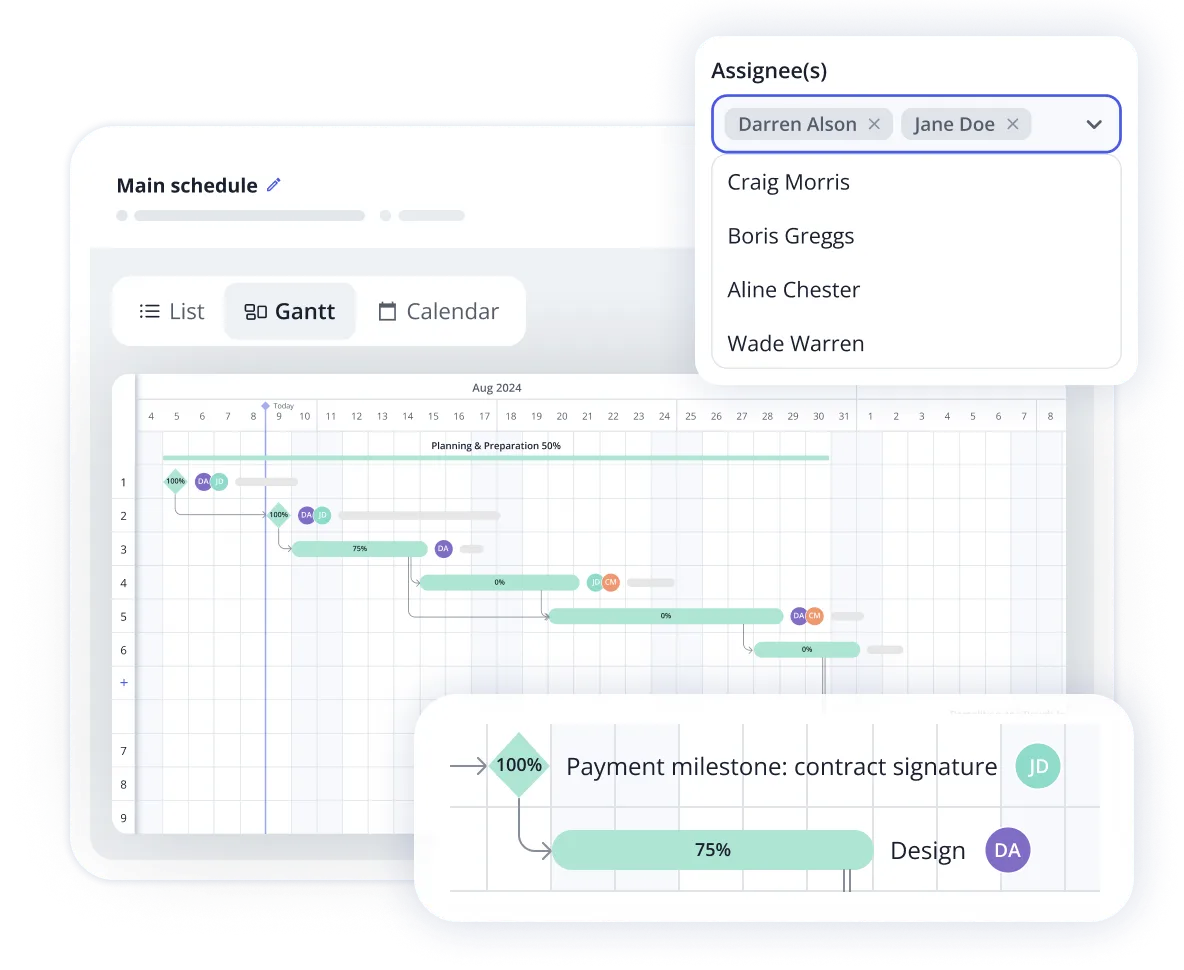
- Milestone Tracking: If a municipality is dragging its feet, use your Billdr Project Timeline as proof of when the "Complete Application" was submitted. This digital trail is essential if you need to request a 10% fee reduction for a late permit.
2026 Summary of Initial Investment (Florida)
| Item | Estimated Cost (USD) | Notes |
|---|---|---|
| DBPR Application Fee | $145 – $350 | Varies by biennial cycle date. |
| Exam Fees (Business & Trade) | $215 – $350 | Paid to Professional Testing and PSI. |
| Live Scan / Fingerprints | $50 – $90 | Paid to FDLE-approved vendor. |
| Financial Responsibility Course | $100 – $200 | Required only if FICO score is < 660. |
| General Liability | $1,500 – $5,000 | Varies based on project scope and location. |
| TOTAL STARTUP COST | $2,010 – $5,990+ | Excludes tools, vehicles, and prep courses. |
Excludes tools, vehicles, and prep courses.
Conclusion: Building Resiliency in the Sunshine State
Florida rewards builders who are as meticulous with their paperwork as they are with their craftsmanship. With the 2026 shift toward enhanced hurricane resilience and energy efficiency, the "old way" of building is being phased out.
Billdr is built for this high-compliance, high-risk environment. Whether it's managing Change Orders to keep up with evolving hurricane standards, using our Document Hub for FHBS compliance, or leveraging our Financial Reports to satisfy DBPR audits, we help you spend less time in the office and more time building Florida's future.
Official Regulatory Sources (Florida)
- Florida Department of Business and Professional Regulation (DBPR):
- Main Licensing Portal – The primary site for applying, verifying existing licenses, and checking application status.
- Construction Industry Licensing Board (CILB) – Official board page for the CILB, which oversees contractors in Florida.
- Florida Building Commission:
- Florida Building Code 8th Edition (2023/2026) – Free access to all volumes of the 8th Edition code, including Residential and Energy Conservation sections.
- Florida Department of Financial Services (DFS):
- Division of Workers' Compensation – Official coverage requirements for construction industry employers (mandated for 1 or more employees).
- Florida Department of State (Division of Corporations):
- Sunbiz.org – The official site for registering your LLC or Corporation and maintaining "Active" standing.
Exam & Testing Resources
- PSI Exams Online:
- PSI Exams– The definitive guide for exam registration, scheduling, and authorized reference lists for Trade and Business/Finance exams.
- Florida Exam (Professional Testing, Inc.):
- FL Construction Exam Board – The testing company contracted by the DBPR to score and develop the CILB exams.
Builder Compliance & Industry Tools
- Billdr:
- Billdr Website – Resource for project management, photo-verified compliance (FHBS/HVHZ defense), and Florida-specific change order tools.
- Surety & Bonding Resources:
- Surety One - Florida Bond Reductions – Information on how the 660 FICO bond mandate works and how to request bond reductions.
Technical References for 2026 Updates
- Florida Home Builders Association (FHBA):
- Hurricane Resilience & FHBS Standards – Industry-leading resources on building to Florida's "Fortified" standards.
- NCCI Florida Workers' Comp Rates:
- NCCI State Advisory Forum – Annual filings detailing the 2026 rate reductions and classification changes for Florida employers.
Disclaimer: While Billdr provides the organizational structure, documentation tools, and financial tracking necessary to streamline the licensing process, use of the platform does not guarantee CILB approval or a passing score on state exams. Success ultimately depends on the applicant’s personal experience, test performance, and meeting all DBPR legal and financial criteria.