
How to Become a Commercial General Contractor in New York (2026): A Step-by-Step Guide
The Complete Roadmap to NYC Tiers, Scaffold Law Insurance, and Municipal Compliance
Updated April 2026 – New York operates under a "Home Rule" system, meaning there is no unified statewide "Commercial General Contractor License." Instead, firms must navigate a complex regulatory framework involving decentralized county registrations and the extensive oversight of the NYC Department of Buildings (DOB). Success in 2026 requires mastering hyper-local permitting and the state's unique liability and prompt payment statutes.
Phase 1: State-Level Foundation & NYS Mandates
Before seeking local permits, your firm must establish its legal and tax standing at the state level.
1. Business Entity & The "Publication Trap"
New York is one of the few states that still enforces a colonial-era publication law. For commercial GCs, this is a critical hurdle.
- The County Clerk’s Role: You cannot pick just any newspaper. You must contact the County Clerk where your office is located. They will designate two specific newspapers (one daily, one weekly) in which your notice must run.
- The 120-Day Clock: If you do not file your Affidavits of Publication and the $50 state filing fee within 120 days of forming your LLC, your "Authority to do Business" is suspended. This means any contract you sign during that suspension could be rendered legally unenforceable.
- Manhattan vs. Albany: In 2026, publication costs in New York County (Manhattan) often exceed $1,500 due to high advertising rates. Many GCs choose to establish their primary office in lower-cost counties like Albany or Westchester to significantly reduce these startup overheads.
2. Tax & Fiscal Standing: The Certificate of Authority
Before you can pull a single permit or buy tax-exempt materials, you must interface with the NYS Department of Taxation and Finance.
- Sales Tax Registration: You must obtain a Certificate of Authority. This allows you to issue Form ST-120.1 (Contractor Exempt Purchase Certificate) to suppliers.
- The Risk: Without this certificate, you will be forced to pay sales tax on all materials for commercial projects, which can instantly erode your 5–10% profit margin.
3. Specialized NYS DOL Credentials
In New York’s aging commercial infrastructure, you are almost guaranteed to encounter hazardous materials. The NYS Department of Labor (DOL) treats these with extreme scrutiny.
- Asbestos Abatement (The "Hard" License): If your renovation involves disturbing "Presumed Asbestos Containing Material" (PACM), your firm must be licensed as an Asbestos Handling Contractor. This requires specialized insurance (pollution occurrence coverage) and proof of worker training.
- Mold Remediation (The "Worker-Protector" Rule): Under NY Labor Law Article 32, the person who assesses the mold cannot be the same person who remediates it. As a GC, if you hold a Mold Remediation license, you can perform the cleanup, but you must ensure a third-party consultant performs the initial assessment to avoid a conflict-of-interest violation.
The Billdr Advantage: Phase 1 Infrastructure
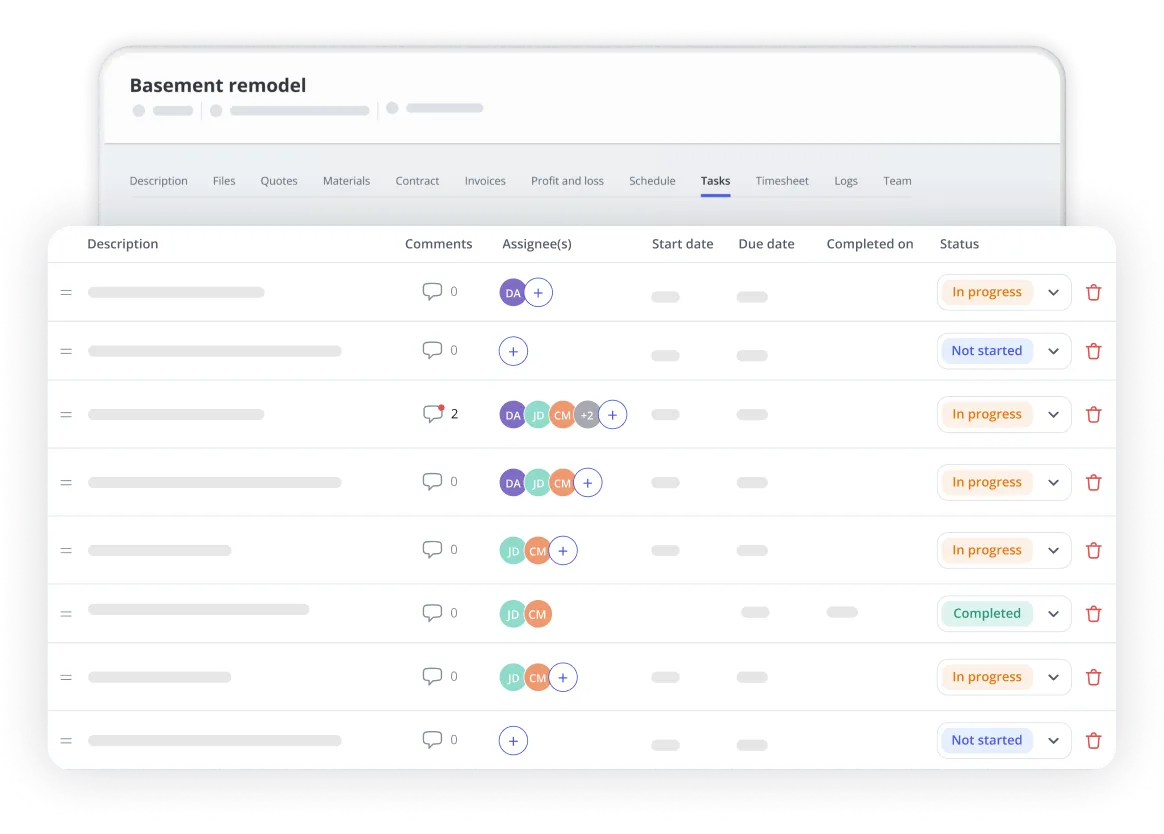
- The Publication Tracker: Don't let the 120-day clock run out. Use Billdr's Task Management to set a "Hard Deadline" for your publication affidavits. You can assign this task to your legal or admin team and require a "File Upload" of the affidavits before the task is marked complete.
Phase 2: Navigating NYC DOB Requirements
For work within the five boroughs, the NYC Department of Buildings (DOB) is the primary gatekeeper.
1. The Registration Reality: GC vs. Sub-Permitting
While the General Contractor Registration is legally tied to 1–3 family homes for "New Building" permits, don't be misled: you still need it for commercial work to act as the primary responsible party for a site.
- The Legislative Gap: Because Int 0771-2026 is still in committee, the "Commercial GC" remains a specialized designation rather than a standalone license. This means you often operate as an "Owner’s Representative" or "Construction Manager," while using your GC registration to pull the primary permits.
- The Tracking Requirement: In 2026, the DOB has increased its use of DOB NOW: Build, an online platform where every project participant from the GC to the concrete tester must be linked to the project in real-time.
2. Financial Solvency & "The $25,000 Threshold"
The NYC DOB requires proof of financial standing to ensure that a GC won't abandon a site due to insolvency, leaving a half-finished structure as a public hazard.
- The Verification: You must provide the last three months of business bank statements. If your balance dips below $25,000, you must provide a notarized letter of credit or other assets to prove your liquidity.
- Audit Risk: The DOB increasingly performs "spot checks" on financial standing during license renewals. If your firm’s financial health has deteriorated, your renewal can be blocked.
3. On-Site Supervision: The "One-Job Rule"
As of January 1, 2026, the days of a Construction Superintendent (CS) "signing off" on ten different sites are over.
- The Restriction: A CS can only be designated on one primary job at a time. This has created a massive demand for qualified superintendents in the NYC market.
- The "Major Building" Leap: Once you cross into "Major Building" territory (10+ stories or 125,000+ sq. ft.), the requirements shift from a CS to a Licensed Site Safety Manager (SSM) or Coordinator (SSC). These individuals must be on-site whenever active work is occurring, no exceptions.
4. The Insurance Reality: The Scaffold Law (Section 240)
In NYC, insurance isn't just a cost of doing business; it’s the largest cost.
- Strict Liability: Under NY Labor Law §240, if a worker falls from a height or an object falls on a worker, the GC and owner are often held 100% liable, regardless of the worker's own negligence.
- The "Action Over" Exclusion: Be extremely careful with "Action Over" exclusions in your policy. If your policy has this, it may not cover you if an injured employee sues the building owner, who then sues you for indemnification. Most NYC commercial landlords will reject any GC whose policy contains this exclusion.
The Billdr Advantage: Phase 2 Operations
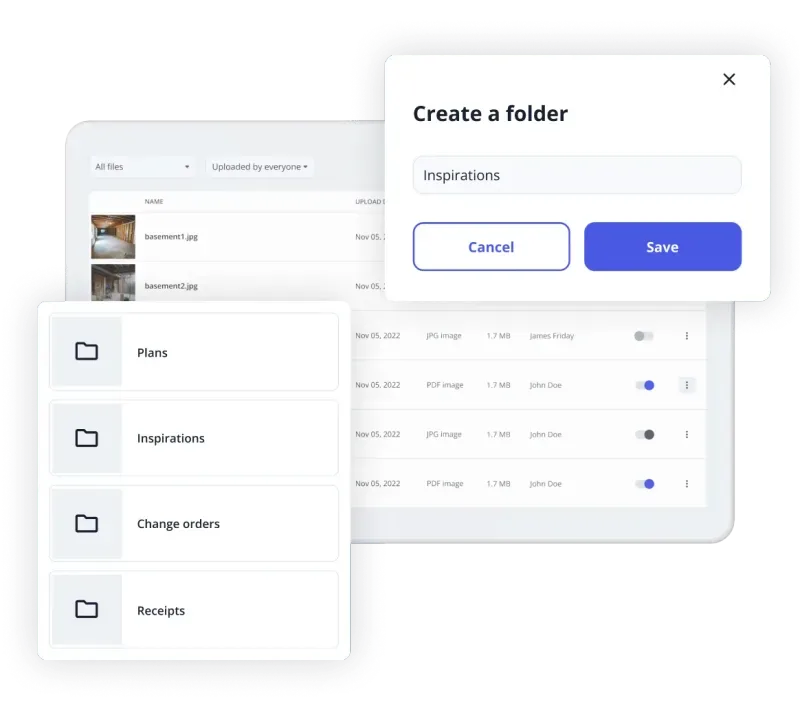
- The Zonal Hub: New York is a city of "blocks and lots." Use Billdr's Document Management to store project-specific permits and Site Safety Plans (SSP). When a DOB inspector arrives for a "Sweep," your super can show the active permit and the CS designation directly on their tablet.
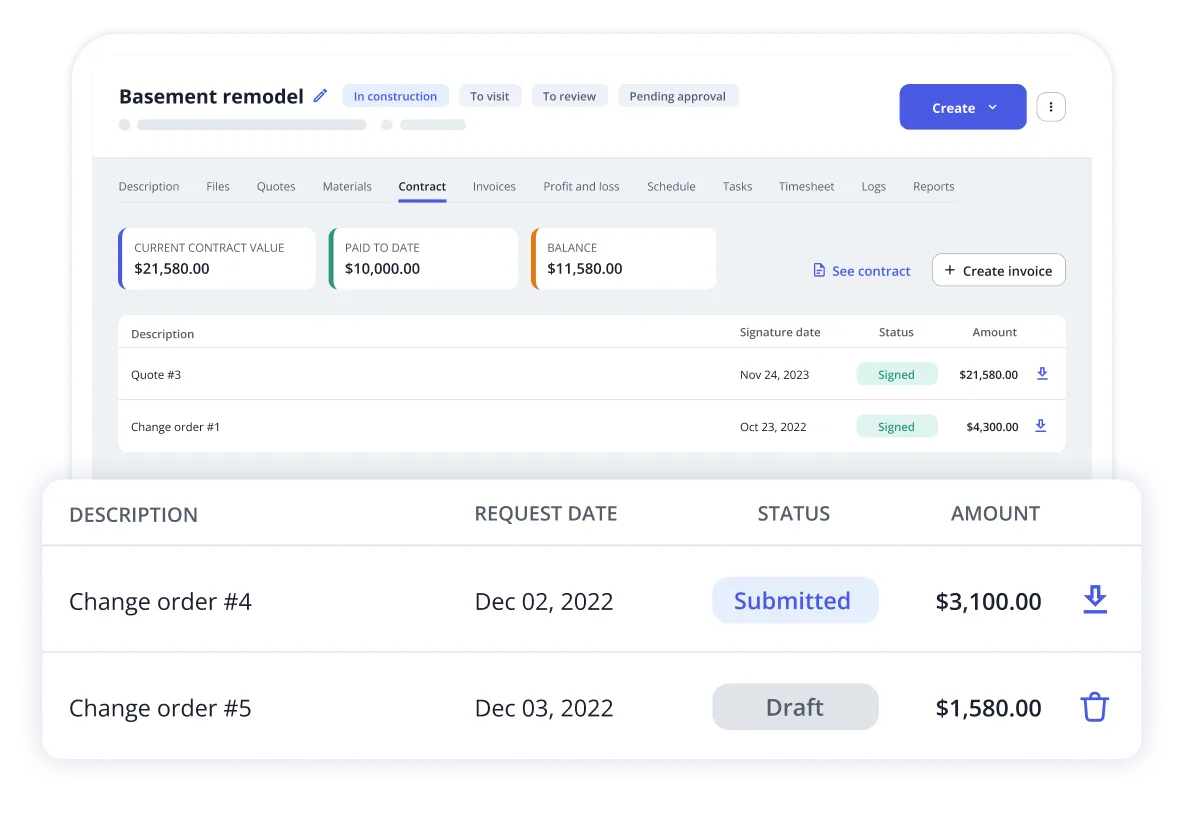
- Change Order Threshold Alerts: NYC projects are notorious for scope creep. Use the Financial Dashboard to monitor your contract values. If a change order pushes you into a higher safety bracket (e.g., nearing the 125,000 sq. ft. Major Building mark), the system can alert you to the need for an SSM before you violate DOB rules.
Phase 3: Financial Capacity & Prompt Payment
New York has recently strengthened laws to protect contractor cash flow and limit "predatory" retainage.
1. The NYS Prompt Payment Act: The "Tick-Tock" of Getting Paid
The General Business Law (§§ 756-a, 756-b) isn't just a suggestion; it is a statutory mandate that overrides whatever "pay-when-paid" or "pay-if-paid" clauses might be tucked into your contract.
- The 12-Day Review: Once you submit a proper invoice, the owner has 12 business days to approve or provide a written disapproval. If they remain silent, the invoice is deemed "statutorily approved."
- The 30-Day Payment Clock: After approval (or the expiration of the 12-day review), the owner has 30 calendar days to cut the check.
- The 1% Interest Penalty: If the owner misses these windows, they are liable for interest at a rate of 1% per month (12% per year). In a high-interest 2026 environment, this is a massive lever for GCs to ensure they aren't being used as a bank by the developer.
2. The 5% Retainage Revolution (SB 5655)
The most significant shift in 2026 is the full enforcement of SB 5655. This law ended the era of the 10% "industry standard" retainage in New York.
- Mandatory Cap: For private commercial projects over $150,000, retainage is strictly capped at 5%. Any contract clause attempting to charge more is "void and unenforceable" as a matter of public policy.
- Subcontractor Parity: You cannot hold more from your subs than the owner holds from you. If the owner is holding 5%, you must flow that 5% cap down to your plumber, electrician, and steel-fitter.
- Substantial Completion Release: Once the project reaches substantial completion, the owner must release all retainage, minus only 150% of the value of the remaining "punch list" items.
3. Right to Stop Work
One of the most powerful, and underused, parts of the NYS Prompt Payment Act is the Right to Stop Work.
- The 10-Day Notice: If you aren't paid within the statutory window, you have the right to provide a 10-day written notice of your intent to suspend performance. If payment isn't made, you can walk off the site without being in breach of contract. In NYC, where site access and crane time are at a premium, this is your ultimate "nuclear option."
Phase 4: Operational Compliance & Close-Out
The final phase involves securing your final payment and ensuring building systems meet environmental benchmarks.
1. The NY Mechanic’s Lien: Perfection is Mandatory
In New York, the Lien Law (§ 10 and § 11) is strictly construed. Courts will often throw out a lien for a minor clerical error, leaving a GC with no leverage against a non-paying owner.
- The 8-Month Clock: For commercial projects, you must file your Notice of Lien with the County Clerk within 8 months of your last day of furnishing labor or materials.
- Warning: "Punch list" work or minor repairs often do not extend this 8-month window. Use the date of "Substantial Completion" as your primary benchmark.
- The Service Trap (§ 11): Filing the lien is only the first step. You must serve a copy of the Notice of Lien on the owner within 30 days of filing.
- The Affidavit of Service: After serving the owner, you must file an Affidavit of Service with the County Clerk within 35 days of the original filing. If you forget to file this affidavit, your lien is automatically extinguished.
2. Local Law 97: The Documentation Burden
As of 2026, Local Law 97 (NYC’s Carbon Mandate) has moved from "planning" to "enforcement." Building owners are now facing massive fines for carbon exceedances, and they are pushing the documentation burden onto the GC.
- The "Prescriptive Path" Proof: For many buildings, GCs must prove they followed a "Prescriptive Path" of energy upgrades. This requires precise documentation of:
- HVAC Commissioning: Certified reports showing systems are balanced and operating at peak efficiency.
- Inspections of the Thermal Envelope: Proof (photos and specs) of high-performance insulation and air sealing.
- Glazing Specs: Verifying that windows meet the specific U-factor and SHGC ratings required by the design.
- The Risk of Back-Charges: If an owner is fined in 2027 because a GC failed to provide the necessary commissioning logs or used non-compliant insulation, owners may attempt to pass those penalties back to the contractor.
The Billdr Advantage: Phase 4 Close-Out
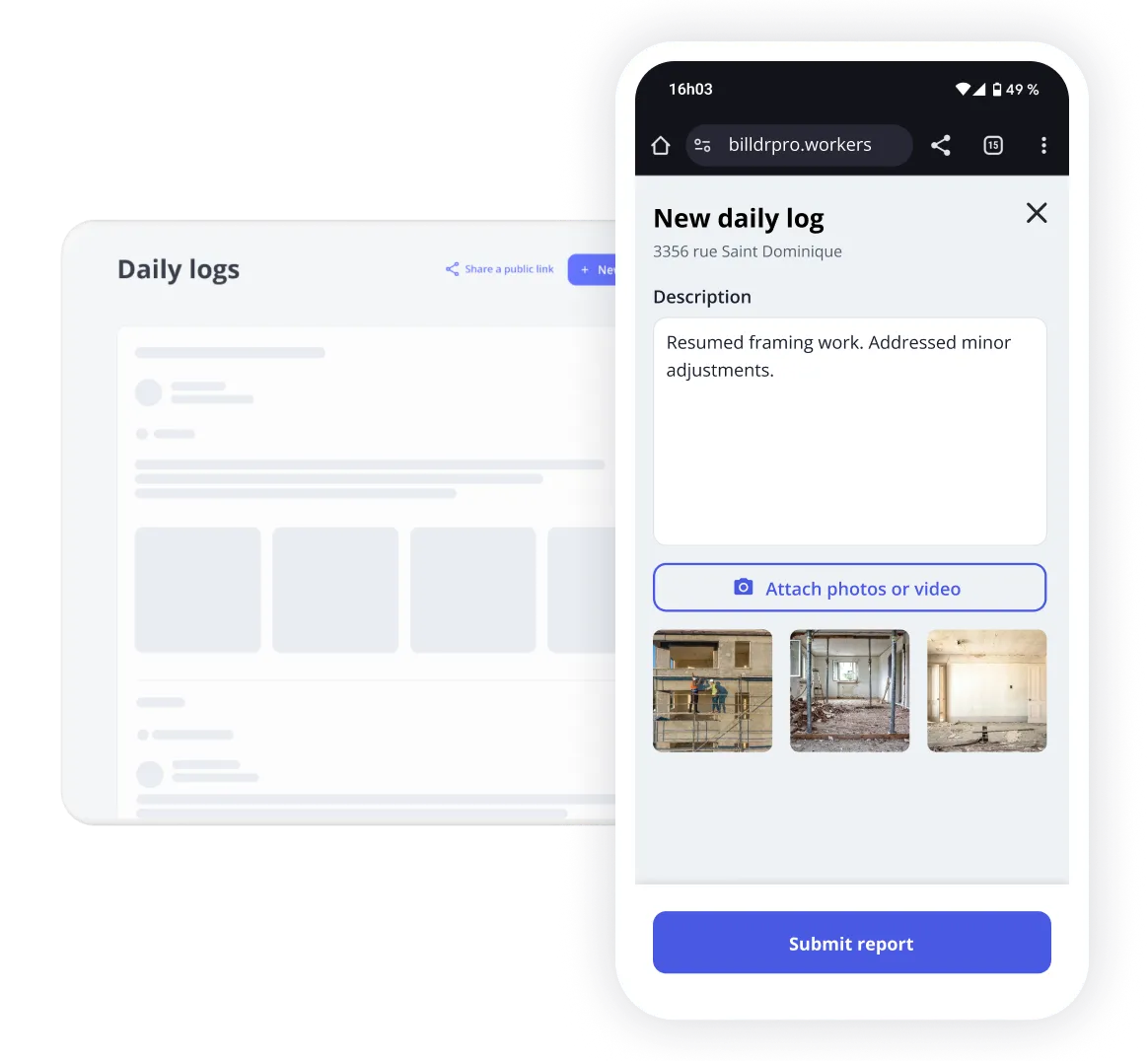
- The "Defensive" Daily Log: To defend the 8-month lien window, you need proof of when work occurred. Billdr 's Daily Logs provide time-stamped, GPS-tagged records of your crew on-site. If an owner argues you missed your 8-month window, your digital logs serve as a "black box" of project history.
2026 New York GC Startup Costs (Final Overview)
| Category | Requirement | 2026 Est. Cost (USD) | Timeline |
|---|---|---|---|
| Legal | NYS LLC & Publication | $1,200 – $2,500+ | 8 – 10 Weeks |
| Registration | NYC GC Registration (Initial) | $300 / 3 Years | 4 – 8 Weeks |
| Insurance | CGL ($5M) & Workers' Comp | $15,000 – $55,000+ | 3 Weeks |
| Filing/Fees | DOB Filing & Solvency Proof | $500 – $2,000 | 2 Weeks |
| TOTAL | Estimated Initial Outlay | $17,000 – $60,000+ | 4 – 6 Months |
(Note: Insurance costs are highly volatile and can swing significantly based on your safety record, claims history, and specific Scaffold Law exposure. DOB also requires proof of financial solvency, typically a $25,000 minimum bank balance.)
Building the Future
The New York commercial market in 2026 is defined by compliance agility. With the full implementation of the "one-job rule" and the new 5% retainage caps, your value as a GC is measured by your digital transparency. By centralizing credentials and automating financial workflows through Billdr, you transform New York’s regulatory friction into a scalable competitive edge.
Official New York Resources
1. NYS Secretary of State (SOS) - Business Search
Primary Portal: NYS SOS Corporation & Business Entity Database The SOS portal is your corporate "Birth Certificate." In 2026, it serves three critical functions for GCs:
- The Good Standing Check: Commercial owners and the NYC DOB will use this portal to verify your LLC is "Active." If your publication requirement wasn't completed, your status here will shift to "Inactive - Dissolution by Proclamation," which halts all bidding.
- Service of Process: This database lists your Registered Agent. This is where legal notices, including Mechanic’s Lien filings from subcontractors, are officially sent.
- The Filing Receipt: When applying for NYC DOB registration, you must upload the digital version of your "Filing Receipt" found here.
2. NYC Department of Buildings (Licensing Hub)
Primary Portal: DOB Licensing & Registration This is the "Rules of the Road" center. For a GC in 2026, this site is used to:
- Initial Registration Classes: Determine if you need a Tracking Number (for non-structural work) or a full GC Registration (for new buildings).
- Tracking License Status: Verify the status of your Construction Superintendent or Site Safety Manager. In 2026, the DOB has intensified "One-Job Rule" enforcement, and this hub allows you to see which projects are currently linked to your staff's licenses.
- Insurance Uploads: This hub provides the specific ELV3 forms required for your insurance broker to upload certificates directly to the DOB.
3. NYS Department of Labor (DOL)
Primary Portal: Safety & Health Division The DOL handles the "High-Risk" side of New York construction. In 2026, this portal is your primary touchpoint for:
- Asbestos & Mold Licensing: The NYSDOL Online Licensing System is where you apply for and renew Asbestos Handling and Mold Remediation licenses.
- Public Work Wage Rates: If your commercial project has a public funding component, this is where you pull Prevailing Wage Schedules.
- Safety Training (OSHA): The DOL verifies the 30-hour or 40-hour Site Safety Training (SST) cards required for every worker on a NYC job site.
4. NYC DOB NOW (The Work Engine)
Primary Portal: DOB NOW Public Portal If the Licensing Hub is where you get your "Driver’s License," DOB NOW is the "Car" you drive. In 2026, this is where 90% of your administrative work occurs:
- Build: Apply for and pull permits, submit "Post Approval Amendments" (PAAs), and request After Hours Work Permits.
- Safety: Submit Site Safety Plans and daily inspection logs for Major Buildings.
- Inspections: Schedule your final plumbing, electrical, and structural inspections required for the Certificate of Occupancy.
Important Platform Disclaimer
The information provided in this guide is for educational and informational purposes only and does not constitute legal, financial, or insurance advice. Using Billdr does not guarantee the issuance or maintenance of a New York contractor license. New York’s construction laws and NYC DOB requirements are subject to frequent changes; we strongly recommend consulting with a qualified attorney, a licensed insurance broker specializing in New York Scaffold Law, and the NYC Department of Buildings directly before beginning any licensing or project work. Billdr is a project management tool designed to facilitate administrative organization; the user remains solely responsible for ensuring all legal deadlines and statutory requirements are satisfied according to NYS and local laws.